
Michigan’s Supreme Court has overturned lower court rulings, enabling Republicans and the RNC to sue Flint’s election board for allegedly violating poll worker parity laws, setting a new legal precedent for election oversight in the state.
At a Glance
- Michigan’s highest court ruled the GOP and RNC have standing to sue Flint’s election board for violating poll worker parity laws.
- The case centers on Flint’s failure to appoint a balanced number of Republican and Democrat poll workers in 2022.
- This sets a new statewide precedent, giving political parties more power to enforce election law compliance.
- The ruling is already influencing local election boards and could affect election administration nationally.
Legal Precedent and Implications for Flint
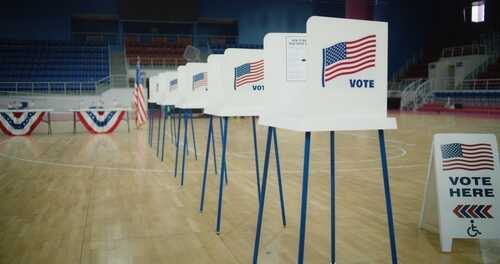
Michigan law has long required that local election boards staff polling places with a balanced number of Republican and Democrat poll workers to ensure fair oversight. In 2022, Flint’s Board of Election Commissioners was accused of failing to comply with this requirement, particularly by not appointing enough Republican inspectors. When the GOP and the Republican National Committee sued, lower courts dismissed the case due to lack of standing.
On July 14, 2025, the Michigan Supreme Court reversed these dismissals, stating that major political parties possess a “special right and substantial interest” in ensuring that election laws are enforced. Bloomberg Law reports that the court’s decision returns the case to trial, where Flint’s election board will need to respond to the allegations.
This decision extends beyond Flint, warning other Michigan election boards that failure to comply with parity laws may lead to legal challenges. WZZM13 has noted that the ruling has prompted local election boards to reevaluate their staffing practices to ensure compliance.
GOP’s Legal Challenge and Broader Impact
The legal challenge from the GOP and the RNC focuses on Act 116 of 1954, which mandates partisan balance in poll staffing. The Michigan Advance highlights that the Supreme Court’s 5-1 decision overturned previous lower court rulings that barred the lawsuit from proceeding.
The decision emphasizes that political parties have the right to challenge election board decisions that potentially violate statutory requirements. Michigan Public reports that this clarification of legal standing strengthens the ability of political parties to ensure election laws are upheld.
The Washington Examiner adds that the RNC views this ruling as a significant affirmation of their role in maintaining election integrity. This judicial decision may serve as a template for similar legal actions in other states where poll worker parity and election oversight are contentious issues.
Potential Nationwide Effects
Experts suggest that this ruling could influence other states to adopt similar standards regarding poll worker parity and political party oversight. By reinforcing the accountability of local election boards, the court’s decision may contribute to greater transparency in election administration.
While some critics argue that this could lead to increased partisan litigation, supporters assert that ensuring compliance with established election laws is essential for public trust. The decision underscores the importance of legal mechanisms that allow political parties to hold election authorities accountable.
The Michigan Supreme Court’s ruling represents a pivotal development in election law enforcement, potentially reshaping the dynamics between political parties and election oversight bodies in Michigan and beyond.