

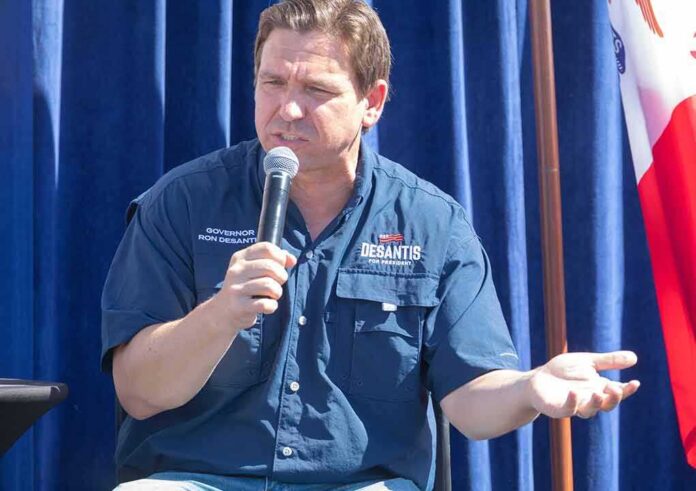
Florida Governor Ron DeSantis told a crowd at the University of Notre Dame that much of conservative media is a “grift” built on “pay-to-play” deals, demanding sweeping change just days after Republicans suffered major midterm losses.
Story Snapshot
- DeSantis said conservative media needs a “big change” because “a lot of that is a grift” and “pay-to-play.”
- He wants coverage to focus less on the presidency and more on grassroots conservative organizations and ideas.
- A 2023 example shows DeSantis’s own campaign network paid $95,000 to a group that later endorsed him.
- The comments follow DeSantis calling the GOP’s midterm defeat an “extinction-level event.”
- Reporting shows pay-for-play arrangements already exist across political media, from Florida news sites to online influencers.
DeSantis Fires a Warning Shot at Right-Wing Media
Speaking November 7, 2026, DeSantis told his Notre Dame audience the conservative media world has lost its way. “I think we need a big change in kind of the conservative media culture,” he said, adding that “a lot of that is a grift, and it’s pay-to-play, and it’s just not offering very much in the way of strong ideas and things that are really going to illuminate your understanding”.
DeSantis did not stop at a general complaint. He called for media coverage that is “more bottom-up,” with “less focus on the presidency” and more attention paid to the people running conservative organizations and the ideas they champion. For a governor who built his brand through heavy national media exposure, the critique lands as a direct challenge to the industry that helped make him a household name.
A Pay-to-Play Example Hits Close to Home
DeSantis’s own political history gives the claim real teeth. During his 2024 presidential run, his campaign, a linked super PAC, and a supporting nonprofit paid $95,000 to the Family Leader Foundation, an influential Iowa conservative group that went on to endorse him. Bob Vander Plaats, the group’s leader, confirmed the payment. DeSantis said the money covered advertising and event participation, denying the endorsement was bought.
That episode cuts both ways. It gives DeSantis a concrete, real-world case to point to when he warns about money blurring the line between coverage and advocacy. But it also hands critics an easy counterpunch, since the same financial arrangement he now flags as a problem once benefited his own campaign directly.
A Media Landscape Already Reshaped by Money
DeSantis’s complaint fits a trend researchers have already documented. One investigation found a Florida political news outlet collected nearly $900,000 from more than 150 politicians and political action committees since 2010 for advertising and content work, with some paid material never labeled as an ad. Reporting has also detailed political influencers, including Trump ally Laura Loomer, charging thousands of dollars per post without disclosing who paid them.
Media analysts have also noted a split forming inside the conservative media world itself, between traditional outlets like Fox News built on institutional credibility and newer online influencers chasing viral reach. Seattle Times reporting found no federal rule requires influencers to disclose political payments, meaning audiences often have no way to know when an endorsement is bought rather than earned.
Timing Raises the Stakes for the GOP
DeSantis delivered his critique just after Republicans took a beating in the 2026 midterms, a result he separately called an “extinction-level event” for the party. That timing matters. Conservative voters who trusted certain commentators and outlets to guide them through the election cycle are now hearing a sitting Republican governor say parts of that same media ecosystem may have been more interested in cashing checks than informing the public.
DeSantis did not name specific outlets or commentators, leaving the exact scope of his accusation open. Still, for a conservative base already frustrated by inflation, open borders, and years of broken promises from Washington, the idea that even trusted media voices might be chasing payouts instead of truth strikes a nerve. Accountability, voters increasingly argue, should not stop at the border of politics — it belongs in the media covering it too.
Whether DeSantis follows through with specifics, or whether this becomes another unresolved applause line in a crowded field of 2028 hopefuls, remains to be seen. For now, his words put conservative media on notice that its own audience is starting to ask the same questions it has long asked of the mainstream press.
Sources:
mediaite.com, politicalwire.com