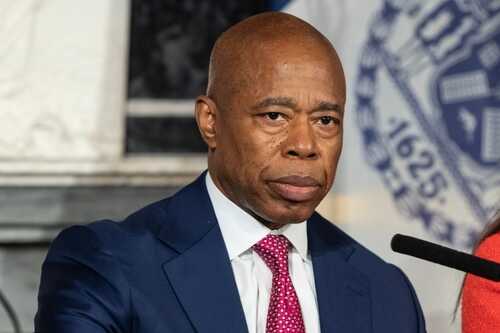
New York City Mayor Eric Adams has announced his endorsement of former Governor Andrew Cuomo as his successor in the upcoming mayoral election. This decision places him in opposition to Zohran Mamdani, who is currently leading in the polls. The endorsement highlights existing tensions between progressive and centrist factions within the Democratic Party in New York City.
Story Highlights
- Mayor Eric Adams has endorsed Andrew Cuomo in the NYC mayoral race, opposing current frontrunner Zohran Mamdani.
- The endorsement underscores the ideological differences between progressive and centrist Democrats in New York City.
- Adams and Cuomo have publicly criticized Mamdani’s previous statements, framing the election as a stand against perceived extremism.
Adams and Cuomo Align Against Progressive Challenger
In a recent development, New York City Mayor Eric Adams publicly endorsed Andrew Cuomo for mayor. This endorsement comes as Zohran Mamdani, a democratic socialist and the city’s first Muslim mayoral candidate, maintains a lead in voter surveys. During a joint press conference held in Harlem, both Adams and Cuomo characterized the election as an effort to counter division and extremism, specifically referencing Mamdani’s political positions and past comments.
Mayor Adams cited Mamdani’s previous defense of the slogan “Globalize the intifada,” which Mamdani subsequently retracted, as an indication of indifference toward Jewish residents. Governor Cuomo questioned Mamdani’s alignment with Democratic principles, suggesting his campaign contributes to internal party divisions. This endorsement represents a departure from typical party protocol, as it involves a sitting mayor supporting a former governor who has faced his own controversies.
FOX NEWS ALERT: New York City Mayor Eric Adams endorses Andrew Cuomo in the mayoral race and goes scorched earth on Muslim socialist Zohran Mamdani. “We’re not going backwards folks.”
“Am I angry I’m not the one taking down Zohran the socialist and the communist? You're darn… pic.twitter.com/s1y8KHT31f
— RedWave Press (@RedWave_Press) October 23, 2025
Political Implications
The endorsement highlights the ongoing political dynamic between progressive and centrist Democrats at both the local and national levels. Mamdani is seen as a representative of a new generation of progressive leaders challenging established political figures, while Adams and Cuomo are positioned as advocates for traditional Democratic values. This alliance appears to be an attempt to consolidate centrist votes and mitigate Mamdani’s growing influence among the city’s younger, diverse voter base.
Despite the efforts of Adams and Cuomo, Mamdani continues to lead in public opinion polls. His campaign priorities include police reform, affordable housing initiatives, and climate action, which have resonated with voters expressing dissatisfaction with established political structures. However, the formation of the Adams-Cuomo alliance introduces a new element that could influence the dynamics of the race, particularly among centrist and establishment voters.
Focus on Identity in the Mayoral Race
The New York City mayoral election has brought issues of identity politics to the forefront, with considerable attention directed at the candidates’ positions on religious and ethnic matters. Adams and Cuomo have referenced Mamdani’s Muslim identity and his earlier controversial statements in an effort to galvanize support against what they describe as extremism. This approach has the potential to intensify existing divisions within the Democratic Party and among New York City’s various communities.
The outcome of this election is expected to have an impact on the city’s policies concerning public safety, economic disparities, and social cohesion. It may also have broader implications for the national political landscape, reflecting wider tensions between progressive and centrist factions within the Democratic Party.
Watch the report: Foes become allies: Adams endorses Cuomo to stop Mamdani in mayor’s race
Sources:
- Announcing Cuomo endorsement, NYC Mayor Eric Adams
- Adams endorses Cuomo despite recently calling him a ‘snake and a liar’
- abcnews.go.com