
A Navy carrier landing mishap off Virginia injured four sailors as two aviators ejected and were safely recovered, the service confirmed.
Story Highlights
- The Navy fixed the mishap at 6:18 p.m. Eastern on Sept. 28 off Virginia
- Two aviators ejected during carrier recovery and were rescued back aboard
- Four shipboard sailors were injured; one was sent ashore with non-life-threatening injuries
- An investigation is underway; early reports noted an arresting-gear failure
Navy Confirms Time, Place, and Injuries
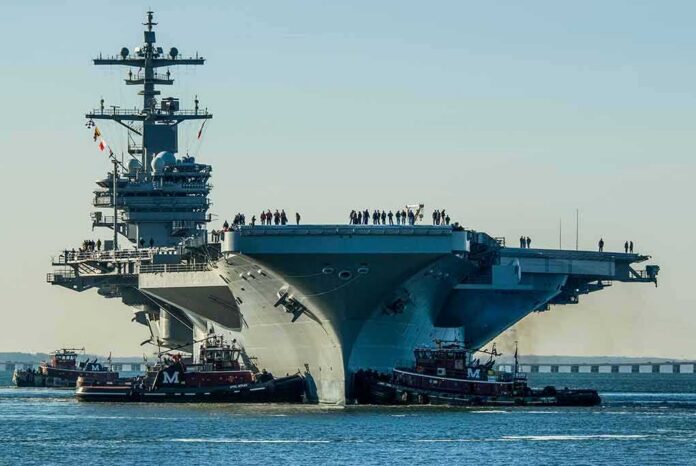
The United States Navy said a mishap occurred during aircraft recovery aboard the aircraft carrier USS Dwight D. Eisenhower at about 6:18 p.m. Eastern on September 28 off the coast of Virginia. Two aviators from Carrier Air Wing 3 ejected from their aircraft and were recovered by search and rescue crews. The Navy said both aviators returned to the ship for medical evaluation. The Navy added that four shipboard personnel were injured, and one sailor was moved to a Norfolk-area hospital with non-life-threatening injuries.
Major news outlets repeated the Navy’s account and added limited technical detail based on what officials shared at the time. The Associated Press reported the two aviators were flying an E/A-18G Growler and ejected after a failure of the arresting gear, which is designed to stop the jet after landing. Other outlets matched the Navy’s timeline and injury count, confirming that the focus remained on medical care and shipboard safety while the cause was still under review.
What We Know and What Is Under Review
Officials have not released the aircraft’s final status or damage details. The Navy said the cause is under investigation, which is standard for carrier aviation mishaps. Some secondary reports differed on how many sailors were evaluated, but the Navy’s public statement identified four injured and one ashore with non-life-threatening injuries. Early arresting-gear references came from media citing Navy information, but the Navy’s initial statement did not name the aircraft model or describe the failure in its own text.
Carrier flight decks are high-risk workplaces where seconds matter and procedures are strict. Past investigations into similar incidents found that several factors can combine in a short window, including equipment issues, training gaps, or human error. That is why the Navy holds back specific causal details until investigators gather deck logs, maintenance records, and witness statements. This approach helps protect crews, preserve evidence, and produce clear fixes that improve safety across the fleet.
Why This Matters to Readiness and Families
Rapid, factual updates help families and crews trust the process while leaders focus on care and readiness. Clear timelines, prompt rescue, and quick medical support show the system working under stress. The Navy’s record here notes fast recovery of both aviators and medical care for injured sailors. Strong maintenance, training, and gear checks keep our carriers ready to deter threats and win wars. Transparent findings and fixes, when released, strengthen that readiness for the next launch and recovery cycle.
For conservative readers, two points stand out. First, the crew’s skill and discipline saved lives in a hard moment. Second, accountability will matter once investigators finish. Facts, not spin, should guide any changes to equipment or procedures. That protects our service members and our tax dollars, and it keeps the fleet strong. The Navy’s final report should explain the sequence, identify any failure points, and map fixes so the Eisenhower and every other carrier can return to full-speed operations with confidence.
Sources:
usatoday.com, x.com, stripes.com