
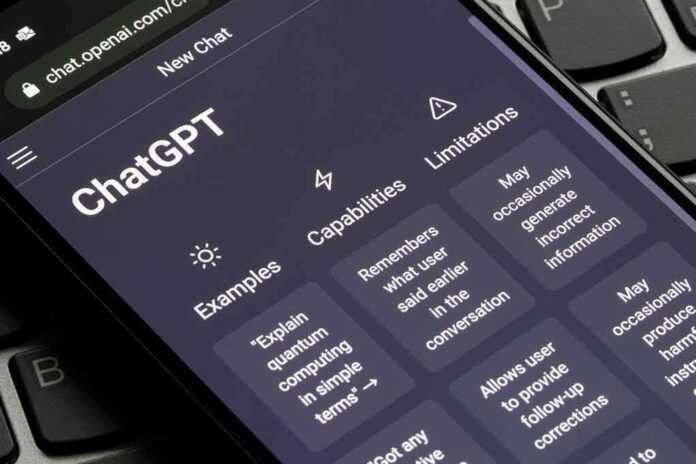
Florida moved to block minors from ChatGPT and demand real age checks, putting Big Tech on notice in court.
Story Highlights
- Florida asked a judge to bar minors from using ChatGPT and require stronger safeguards.
- The motion also seeks limits on OpenAI’s model development until independent safety checks exist.
- OpenAI says it paused training its most advanced models and has teen protections built in.
- Child-safety advocates say real age assurance is needed, not self-reported birthdays.
Florida’s Court Push: Age Checks and Limits on New AI Models
Florida Attorney General James Uthmeier filed a motion for a temporary injunction that would bar minors from accessing ChatGPT in Florida and restrict OpenAI’s development of new models until independent third-party safety checks are in place. The filing landed in Highlands County Circuit Court and expands an ongoing state lawsuit that began in June. The motion argues current guardrails are not enough and asks the judge to act while the case proceeds to protect children from risk online.
The requested order includes six limits, with two drawing the most attention: stopping OpenAI from offering ChatGPT to minors in Florida, and halting new model development without outside safety review and approval. The Attorney General frames the request as a narrow, temporary step. He says the court should prevent further harm as facts are tested at trial. The case centers on whether today’s tools do enough to screen underage users and filter content that could harm children.
OpenAI’s Response: Paused Training and Teen-Focused Features
OpenAI says it already paused training its most capable models and will resume only when stronger safeguards are in place. The company adds that it supports government roles in setting safety standards and wants rules that apply across the entire industry. OpenAI points to product changes designed for minors, including a “ChatGPT for Teens” experience, defaulting uncertain users into stricter settings, and tools to help parents guide teen access and usage.
OpenAI further explains that its age-prediction system estimates whether someone is under 18 by using account and behavior signals, such as account age and use patterns over time. If the system is unsure, it defaults to the under-18 experience. OpenAI says it does not receive a user’s identification card or selfie when applying these protections, and in some places may ask for identification while admitting that can be a privacy tradeoff for adults.
The Policy Divide: Child Safety Versus Privacy Tradeoffs
Child-safety experts and parents have heard these debates for years: platforms often rely on self-declared birthdays, and teens can bypass soft checks. Research and advocacy groups argue that effective age assurance must go beyond self-attestation, be proportionate to clear risks, and protect privacy by minimizing data collection. They also say age verification is key to unlocking real guardrails, like safer defaults, flagged content, and parental controls that actually work for families.
Privacy advocates counter that more verification can expand data collection and tracking. Some critics describe behavior-based age prediction as a form of surveillance that sorts users by what they say and when they log on. They worry these systems can misclassify adults, burden privacy, and still be evaded by determined teens. The core conflict remains the same: how to keep kids safe online without building a new data dragnet or locking out law-abiding adults who value privacy.
Why Conservatives Care: Parental Rights and Real Accountability
Parents want tools that work and a line that Big Tech cannot cross. Florida’s motion aims to put parents back in charge and tell platforms that “trust us” is not a safety plan. The request focuses on minors, not adults, and seeks outside checks before new, more powerful models ship. That mirrors common-sense conservative goals: protect kids, enforce clear rules, and keep private companies from setting the guardrails after the damage is done.
U.S. #News
Florida Seeks Court Order Requiring Age Verification For ChatGPT
By Ken Macon | Reclaim The Nethttps://t.co/qNcJGAQoYI— Matthew Williams (@mlw975) October 2, 2026
President Trump’s administration has pressed agencies to prioritize child safety and combat online harms without crushing free speech. Florida’s case tests a state-led path that backs parental rights and demands accountability. If the judge grants even part of the injunction, other states may follow with targeted requirements on age assurance and content limits for minors. If the motion fails, lawmakers may pursue tighter statutes to force action where voluntary promises fall short.
What Comes Next in Court and Policy
The court will weigh the legal standard for a temporary injunction: likelihood of success on the merits, risk of irreparable harm, and the balance of harms. Florida argues children face ongoing risk, and that independent review will not burden lawful use by adults. OpenAI points to paused training and teen safeguards to show it is acting already. The judge’s decision will shape how fast states can compel age checks and define what “reasonable” safety looks like for minors online.
Readers should expect two tracks. In court, the facts on age screening, content filters, and teen outcomes will matter most. In policy, states and Congress will debate how to set standards that defend kids and respect adult privacy. The center line is clear: age assurance that goes beyond a birthday pop-up, strong parental controls, and data-minimizing methods that do not build a surveillance state. Florida’s motion forces that debate into the open, where it belongs.
Sources:
washingtonsun.com, wlrn.org, mixed-news.com, axios.com, thenextweb.com, nysun.com