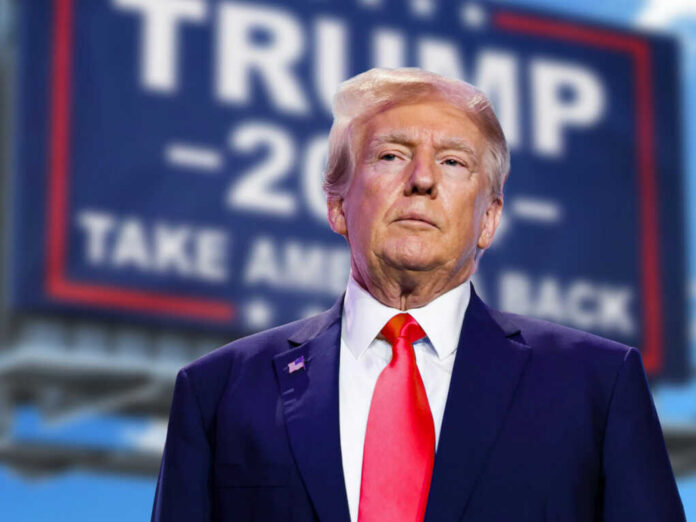
Trump’s AI pitch is landing because it mixes worker anger, anti-elite instincts, and raw political instinct in one message.
Quick Take
- Trump’s team is tying artificial intelligence policy to the American worker, not just to big tech profits.
- His allies are pushing an anti-“woke” message that speaks to voters who distrust elite control over technology.
- Trump has also floated the idea of public ownership stakes in some artificial intelligence firms.
- Critics say the plan still leans on voluntary rules and cooperation with the same companies it challenges.
Trump’s Political Strength Comes From Simple, Hard-Hitting Framing
Donald Trump’s supporters say he remains a good politician because he turns complicated issues into clear fights. A peer-reviewed study found that his campaign success came from an “emotionally charged, anti-establishment crisis narrative” and from open skepticism toward political elites.[3] That style matters in artificial intelligence politics, where many voters already fear lost jobs, concentrated power, and a tech class that talks down to them.
That political instinct gives Trump an edge that many other Republicans never found. He does not sound like a committee report. He sounds like a man picking a side. For conservative voters who are tired of globalist talk, endless expert spin, and weak leadership, that direct style can feel more honest than polished language from Washington or Silicon Valley. The research package ties that same style to Trump’s broader ability to mobilize distrust and anger.[3]
AI Messaging Is Built Around Workers, Not Just Machines
The clearest sign of political skill is that Trump-aligned AI messaging centers the American worker. White House artificial intelligence adviser Sriram Krishnan said, “everything this administration does is going to put the American worker at the heart of how America uses AI.”[6] He also said companies seeking taxpayer money or government contracts should not “inject an ideology” into their models and should make them “objective” and “truth-seeking.”[6] That language is aimed straight at voters who want less activist nonsense and more practical results.
The administration has also floated a more aggressive idea: giving the public a stake in some artificial intelligence firms. Bloomberg reported that Trump said “pieces could be given to the American public” so they become partners in AI companies, and that he had spoken with major industry leaders about that model.[7] For supporters, that is not empty rhetoric. It signals a willingness to treat strategic technology as a national asset, not just a playground for insiders.[7]
The Weak Spot: Policy Still Depends on the Same Big Players
That said, the same research shows a real tension inside the message. R Street says many anti-AI and anti-automation ideas may appeal to the populist right, but it also warns that Trump has to hold together both the tech right and the populist right.[2] The Atlantic Council says the new executive order avoids a heavy regulatory framework and leans on voluntary benchmarking instead.[8] That makes the policy look less like a hard break from big tech and more like a managed partnership with it.[8]
Sam Altman Pushes Plan For Backdoor Government Backstop By Handing Out Small Equity Stake To Americans | Tyler Durden, Zerohedge
Back in November, amid mounting speculation that OpenAI's massive cash burn was massively unsustainable in light of the $1.4 trillion of funding… pic.twitter.com/vzNwRz2EHw
— Owen Gregorian (@OwenGregorian) June 9, 2026
This is where critics try to undercut the Trump message. Bloomberg’s reporting shows the administration talking with “all the big ones,” while also floating public stakes in the same firms.[7] That gives opponents an easy line of attack: Trump sounds tough on tech, but he still needs the tech giants to make the plan work. Even so, the research does not show that voters reject the framing. It only shows that the policy still faces the usual Washington problem of mixing principle with power.[2][7][8]
Why This Matters to Conservative Voters
For readers who are sick of woke culture, runaway spending, and elite overreach, Trump’s AI message fits a familiar pattern. He speaks to fear first, then turns that fear into a political advantage. The academic record in the research package suggests that this is not random. It is a repeatable style that uses crisis language, distrust of elites, and direct appeals to ordinary Americans.[3] In a race for public trust, that may be exactly why Trump keeps winning the argument.
Sources:
[3] Web – Can Trump Hold the Tech Right and Populist Right Together?
[6] Web – [PDF] Identifying Fine-grained Forms of Populism in Political …
[7] YouTube – This Trump AI adviser wants ‘American AI,’ not ‘Woke AI’
[8] YouTube – How Trump Was Persuaded to Regulate A.I.