

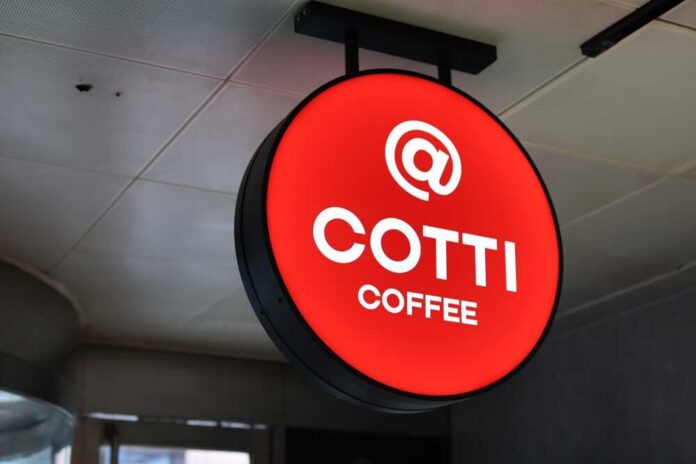
A Chinese-backed discount coffee chain is racing to blanket Southern California, raising fresh questions about foreign influence, data privacy, and franchise risk on America’s main street.
Story Highlights
- Cotti Coffee has opened multiple Southern California stores and is targeting Santa Monica for expansion [2].
- The chain uses a franchise-first model designed for rapid scaling, led by former Luckin Coffee executives [3].
- Coverage shows Cotti positioning on low prices amid a broader Starbucks slowdown narrative, but U.S. results are unproven [1][3].
Chinese Chain Plants Flag in Southern California
Local reporting documents that Cotti Coffee, a fast-growing Chinese coffee chain, already operates in San Gabriel, Rowland Heights, Tustin, and Irvine, and is seeking expansion in Santa Monica [2]. Industry coverage adds that Cotti has opened in New York City and has several California locations, signaling a bicoastal push [1]. The emerging footprint places Cotti directly inside communities where high rents, strict regulations, and wage pressures challenge operators, making its rapid rollout notable and potentially disruptive for neighborhood competitors.
Cotti’s United States momentum arrives as media narratives highlight consumer fatigue with high prices and a soft patch for Starbucks traffic, creating an opening for value-led entrants [1]. However, the publicly cited price-war playbook stems from China, where intense discounting reportedly forced Starbucks to adjust pricing there, not in California [3]. Without California-specific cost data, it remains unclear whether similar deep discounts can be sustained under the state’s higher labor, permitting, and utility burdens, or whether promotions will compress margins for franchisees.
Franchise Playbook Built for Speed, Not Transparency
Available profiles state that Cotti was founded in 2022 by former Luckin Coffee leaders Lu Zhengyao and Qian Zhiya and has expanded through a franchise-based model designed for fast scaling [3]. That structure helps new brands blitz dense urban corridors, but it can concentrate risk on local owners if margins thin, supply costs rise, or app-driven discounts fail to convert repeat traffic. The record provides no California franchise disclosure figures, buildout costs, or store-level profitability, leaving investors and communities to infer viability from limited third-party reporting [1][2][3][4].
The brand’s low-price positioning echoes the broader China coffee rivalry, where Cotti and Luckin popularized budget drinks and aggressive promotions [3]. Yet the evidence tying those tactics to sustainable performance in California is not present in the reviewed materials. There are no audited United States financials, no management interviews outlining a California strategy, and no independent traffic or switching analyses showing Cotti winning share from Starbucks or local independents. That information gap heightens the risk that publicity outpaces performance, especially under California’s cost structure.
Competitive Landscape: Scale Meets Challenger Buzz
Reports emphasize that Starbucks’ entrenched store base and brand power remain formidable in the United States, even as discount competitors generate headlines [3]. The chain’s scale, loyalty ecosystem, and ability to reprice or refresh offerings create a high bar for new entrants seeking durable share. Media attention around challengers can make market shifts appear faster than they are, particularly when store counts grab headlines but underlying unit economics remain opaque. For consumers, a cheaper latte matters; for operators, rent, wages, and repeat visits decide survival.
For conservative readers focused on community resilience and fair competition, the core issue is not whether a newcomer offers inexpensive drinks; it is whether the model relies on data-heavy apps, imported subsidies, or franchise churn that leaves local owners holding the bag. The current record does not include Cotti’s California performance metrics or a primary-source United States expansion roadmap, which prevents clear assessment of the risks and rewards to neighborhood economies, commercial landlords, and competing small businesses [1][2][3][4].
What to Watch: Proof Over Promotion
Californians should look for verifiable signals: published United States franchise disclosures, lease and buildout costs, and year-one store profitability. Independent foot-traffic studies near San Gabriel, Rowland Heights, Tustin, Irvine, and any Santa Monica site could show whether Cotti attracts new demand or merely shifts spend from incumbents [2]. Transparent pricing versus cost-of-goods, wage levels, and utilities would reveal whether discount promises are sustainable or temporary marketing loss leaders that pressure franchisees once promotions fade.
China's Cotti Coffee plots California takeover as Starbucks shrinks https://t.co/UZLjy2UcY0
— US Constitution (@SaltierPopcorn) May 22, 2026
Local officials and consumer advocates should also scrutinize app data practices and cross-border data flows if ordering relies on aggressive digital tracking. Communities deserve clarity on who controls customer data, where it is stored, and how it is monetized. Until Cotti provides California-specific results and governance details, prudence suggests separating hype from hard numbers. Coffee competition can be healthy, but Main Street stability depends on transparent economics, lawful data stewardship, and a level field for American workers and small businesses.
Sources:
[1] Web – Chinese coffee companies Luckin and Cotti plot US expansion
[2] Web – Chinese Coffee Chain Eyes Santa Monica Expansion
[4] Web – Luckin Coffee reportedly plans U.S. expansion – Fortune