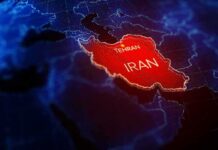

President Trump’s blunt warning that the U.S. is watching Iran’s buried enriched uranium—and will strike anyone who approaches it—signals a hard-line deterrence strategy that could define the next phase of an already volatile standoff.
Story Snapshot
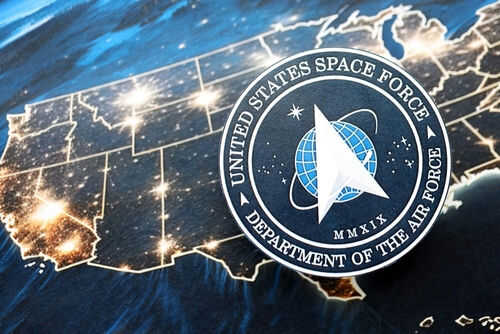
- Trump said Space Force surveillance is tracking Iran’s buried “nuclear dust,” and he threatened lethal force against anyone nearing the site.
- The administration says talks are “close,” but the core dispute remains control and removal of enriched uranium after prior strikes buried material underground.
- A recent U.S.-backed removal of highly enriched uranium from Venezuela is being cited as proof the U.S. can execute difficult nuclear-material recovery operations.
- Independent confirmation is limited on Trump’s claim that Iran has “agreed” to surrender the stockpile, underscoring the trust gap driving U.S. policy.
Trump’s Space Force Surveillance Threat Raises the Stakes
President Donald Trump’s May 10 remarks centered on one point: Iran’s remaining enriched uranium is a top U.S. priority, and Washington claims it can monitor the buried material continuously. Trump described the stockpile as “nuclear dust” left underground after U.S. strikes and warned that anyone approaching the site would be met with overwhelming force. The message is deterrence through certainty—surveillance, red lines, and consequences.
Trump also framed the problem as operational as much as diplomatic. Securing or removing nuclear material is not just an agreement on paper; it can require physical access in hostile territory, specialized teams, and real-time intelligence. That is where Space Force monitoring and a readiness to act become central to the administration’s posture. Supporters see a clear prioritization of national security; critics worry that aggressive rhetoric increases miscalculation risk.
From “Operation Midnight Hammer” to a Ceasefire-and-Talks Pressure Campaign
The current dispute traces back to U.S. strikes in 2025 described as “Operation Midnight Hammer,” in which B-2 bombers targeted Iranian nuclear sites and left enriched material buried underground. In early 2026, the standoff evolved into a blockade-and-negotiation track during and after a period of conflict, with Trump insisting Iran surrender any remaining stockpile as the price of lasting de-escalation.
Trump’s public framing also reflects a broader U.S. skepticism toward agreements that rely heavily on regime promises. He has repeatedly questioned Iran’s reliability and suggested that enforcement—not just signatures—must be built into any arrangement. That logic resonates with many Americans across party lines who believe Washington elites too often announce “breakthroughs” that fail in practice, then ask taxpayers to finance the next crisis. Here, enforcement is being defined as surveillance plus credible force.
The Venezuela Uranium Removal Is Being Used as a Proof-of-Capability
Days before Trump’s May 10 interview, the U.S. announced it removed 13.5 kilograms of highly enriched uranium from Venezuela’s RV-1 reactor, an operation involving U.S. agencies and international coordination. Administration allies point to that mission as a concrete example of nuclear-material recovery working in the real world. The implicit argument is that if the U.S. can secure dangerous material in a complex foreign environment, Iran is not an unsolvable problem.
That comparison has limits. Venezuela involved cooperation and transport logistics; Iran involves a hardened adversary, ongoing hostilities, and disputed access. Still, the political effect is clear: the White House is building a narrative of competence and resolve, while warning that the “hard part” is not identifying the material but physically securing it. In a climate where many voters distrust institutions, operational success stories can carry more weight than abstract policy promises.
What’s Known, What’s Not Confirmed, and Why It Matters Domestically
The biggest factual gap is verification. Trump has said Iran “agreed” to forgo nuclear weapons for an extended period and to hand over the buried enriched uranium, but public independent confirmation appears limited. That matters because U.S. options diverge sharply depending on whether an agreement is real, enforceable, and timely. Without clarity, the administration is signaling it will default to maximum control—monitor, deter, and prepare.
Trump New Statement on Iran's Nuclear Material Is Going to Freak Them Outhttps://t.co/p1znn5R2gm
— RedState (@RedState) May 10, 2026
For conservatives frustrated by years of costly foreign entanglements and elite policy failures, the key question is whether this approach prevents a nuclear-armed Iran without dragging the U.S. into another open-ended mission. For liberals concerned about escalation, the question is whether deterrent threats undermine diplomacy. Either way, the episode highlights a deeper shared worry: Americans are asked to trust institutions that often overpromise and underdeliver, while the consequences—security risks and economic shocks—land on ordinary families.
Sources:
Trump New Statement on Iran’s Nuclear Material Is Going to Freak Them Out
Iran’s nuclear program, enrichment levels, and the JCPOA backdrop
Trump says US must make a “journey to Iran” to seize nuclear material
Trump says US must make a “journey to Iran” to seize nuclear material