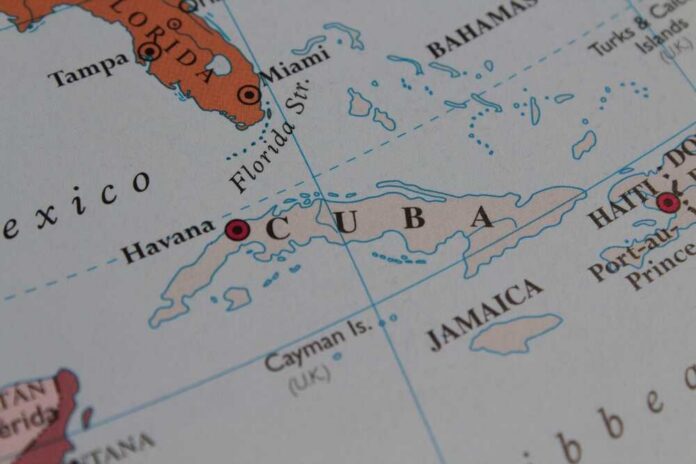
America’s fuel blockade is squeezing Cuba’s communist rulers—but it’s also leaving millions of ordinary people trying to survive 20-hour blackouts.
Quick Take
- President Trump’s January 2026 executive order created a targeted fuel blockade that escalates pressure beyond the long-running trade embargo.
- Cuba’s power grid is buckling under routine outages reported as lasting up to 20 hours, with cascading effects on water, hospitals, and food storage.
- Russia sent a tanker that reportedly carried about 730,000 barrels on March 28, offering only short-term relief as Moscow signals another shipment.
- The United Nations has condemned the blockade on sovereignty grounds, while also noting limited credible evidence behind some U.S. claims about terrorist networks.
Trump’s Fuel Blockade Raises the Stakes Beyond the Old Embargo
President Donald Trump signed an executive order in January 2026 establishing a fuel-focused blockade of Cuba after declaring a national emergency and warning of tariffs on countries that ship oil to the island. Unlike the broader, decades-long embargo, the new strategy concentrates on the one input Cuba’s centralized system can’t easily replace: imported fuel. Supporters argue it tightens consequences for a hostile communist regime; critics say ordinary Cubans pay first when energy is weaponized.
Reporting tied the sudden severity of Cuba’s fuel crunch to the end of Venezuelan shipments, which had powered the island for roughly three decades. Those supplies stopped after U.S. actions in South America and the capture of Venezuela’s President Nicolás Maduro, removing Cuba’s main lifeline almost overnight. Cuba already struggled with aging infrastructure and chronic blackouts, but the loss of dependable oil turned a long-running weakness into a national breakdown that can’t be patched with minor conservation.
Daily Life Under Blackouts: Water, Garbage, and Hospitals Hit First
Blackouts described as routine and stretching up to 20 hours have pushed basic services into failure modes that wealthier countries rarely experience. Electric pump outages cut running water in parts of urban Cuba, while fuel shortages limit garbage collection and leave trash piling up. Hospitals face equipment interruptions that medical staff say are contributing to rising preventable deaths. Food spoilage accelerates when refrigerators fail, and empty streets reflect rationing and uncertainty more than normal commerce.
Cuba’s fragile household economics make the energy shock harder to absorb. The official average monthly wage is reported around $15, while gasoline prices have spiked near $40 per gallon when fuel can be found at all. That gap matters because a shortage is not just an inconvenience; it shuts down transportation, small trade, and home life at once. When a government controls most economic activity, citizens have fewer private workarounds, and systemwide failure lands on families first.
Protests Grow as Cuba’s Government Faces Internal Pressure
Public anger has surfaced in protests described as people banging pots and chanting messages including “We’ve had enough,” “Freedom,” and demands to restore electricity. In Morón, protesters reportedly set a local Communist Party headquarters on fire, described as one of the largest public shows of dissent in years. These developments matter because energy scarcity doesn’t merely reduce comfort; it undermines legitimacy. When a state promises stability and basics, prolonged darkness becomes a political verdict.
Russia Tests the Blockade While the U.N. Condemns It
Russia has emerged as the most visible outside player willing to challenge the blockade’s practical impact. A Russian oil tanker was allowed through on March 28 carrying roughly 730,000 barrels, and Moscow later announced plans to send a second tanker. Reports caution the first shipment might only cover “at best a few weeks” of needs, underscoring how hard it is to substitute for a long-standing supply chain. Cuba has portrayed these deliveries as “breaking” the blockade.
The United Nations has formally criticized the blockade, arguing it violates principles such as sovereign equality, self-determination, and non-intervention. At the same time, U.N. commentary also noted limited credible evidence for certain U.S. claims about “transnational terrorist groups,” a detail that complicates the public rationale for maximum pressure. For Americans skeptical of unaccountable international bodies, the episode still highlights a familiar tension: foreign-policy tools that expand executive power can produce humanitarian blowback and geopolitical escalation.
In Charts: Communist Cuba's Lights Dim Amid US Oil Blockade https://t.co/H3DX99MJAA
— zerohedge (@zerohedge) May 1, 2026
President Trump has publicly downplayed whether Russia’s shipments change the outcome, saying Cuba is “finished” and that a “boat of oil” won’t matter. Whether that proves accurate depends on enforcement, outside supply, and Cuba’s internal cohesion—unknowns that current reporting cannot settle. What is clear is the underlying lesson conservatives often stress at home: energy is not a luxury. When policy intentionally constrains fuel, entire societies feel the consequence, and governments—democratic or communist—reveal what they value when lights go out.
Sources:
https://duclarion.com/2026/04/cuba-oil-blockade-sparks-global-criticism-amid-humanitarian-crisis/
https://www.theepochtimes.com/article/cubas-lights-dim-as-oil-runs-out-6011958
https://theweek.com/world-news/cuba-goes-dark