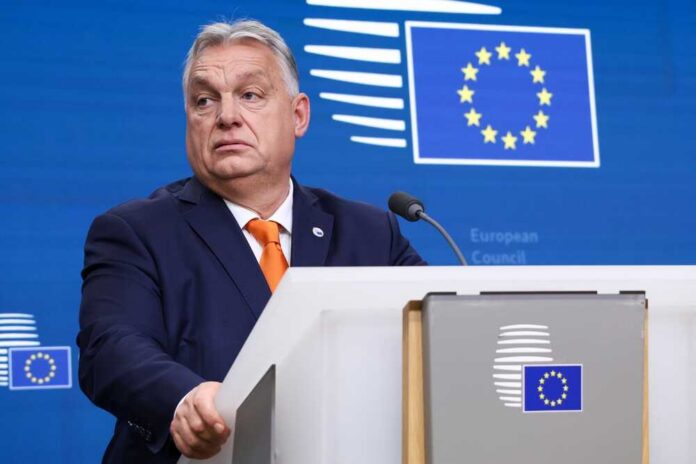
U.S. Senators push sanctions on Hungary’s leaders for blocking Ukraine aid, forcing President Trump’s hand amid our Iran war and promises to avoid foreign entanglements.
Story Snapshot
- Bipartisan Block Putin Act targets Hungarian officials obstructing €90 billion EU loan to Ukraine and buying Russian energy.
- Hungary’s Viktor Orbán, a Trump ally, blocks aid after Russia cut Druzhba pipeline oil, defying Western consensus.
- Bill leaves sanctions to Trump administration discretion, testing loyalty between Orbán friendship and America First principles.
- Timing hits during Orbán’s re-election, escalating transatlantic tensions while America fights Iran.
- MAGA base questions endless foreign aid pushes as energy costs soar and troops deploy overseas.
Block Putin Act Targets Hungary’s Russia Ties
Senators Jeanne Shaheen (D-NH) and Thom Tillis (R-NC) introduced the Block Putin Act on March 27, 2026. The draft bill imposes visa bans and financial sanctions on senior Hungarian officials. These officials procure Russian oil and gas while blocking a €90 billion EU loan to Ukraine. Hungary’s actions follow the late January disruption of the Druzhba pipeline by Russian strikes. This leaves Budapest leveraging energy needs against Western unity. The bipartisan move challenges Hungary’s isolation in the EU on Russia policy.
Orbán’s Veto Power Stalls Ukraine Support
Prime Minister Viktor Orbán blocks EU sanctions on Russia and the Ukraine loan until Russian oil resumes via Druzhba. Hungary increased Russian energy purchases as most EU nations cut ties post-2022 invasion. Foreign Minister Péter Szijjártó drew fire in March for sharing EU meeting secrets with Russians. Orbán’s stance aligns with his re-election campaign, opposing Ukraine aid. This history of vetoes exploits EU unanimous consent rules, frustrating allies seeking swift support for Ukraine’s defense.
Trump Faces Pressure on Ally Sanctions
The bill names no specific targets, granting President Trump implementation authority with exemption options. Trump criticized European Russian energy dependence yet calls Orbán a close European ally. This pits alliance loyalty against holding partners accountable. Tillis stated the act offers Hungary a clear path: end Russian reliance and Ukraine obstruction. Shaheen added no one, especially Orbán, gets a free pass. Passage remains uncertain in divided Congress.
As America deploys troops to Iran, contrasting endless Ukraine aid debates, conservatives question fiscal priorities. High energy costs from global disruptions hit families hard, echoing Trump’s no-new-wars pledge now strained by Mideast conflict. Orbán’s resistance highlights limited government overreach risks abroad, mirroring domestic frustrations with globalist entanglements.
US Senators Seek To Sanction Hungary Over Obstructing Ukraine Aid https://t.co/SepbtrfsId
— zerohedge (@zerohedge) March 30, 2026
Implications for U.S. Foreign Policy
Sanctions could widen U.S.-Hungary rifts, pressuring Trump’s administration amid Iran war demands for $200 billion more. Ukraine faces reconstruction delays from loan blockade. Hungary risks higher energy costs if forced to diversify. Long-term, this sets precedent for sanctioning allies over policy divergences. For MAGA supporters weary of regime-change wars and overspending, the push underscores tensions between isolationism and alliance standards. Domestic polls show GOP fatigue with prolonged conflicts.
Sources:
US Senators Move to Sanction Hungary Over Blocking Ukraine Support
US senators target Hungary with sanctions bill over Russian energy ties and Ukraine obstruction
US Senators Push for Sanctions on Hungarian Officials Over Blocked €90 Billion Ukraine Aid
US senators sanctions: Orbán loan Ukraine
US senators propose sanctions against Hungary for blocking aid to Ukraine
Kyiv Post article on sanctions