

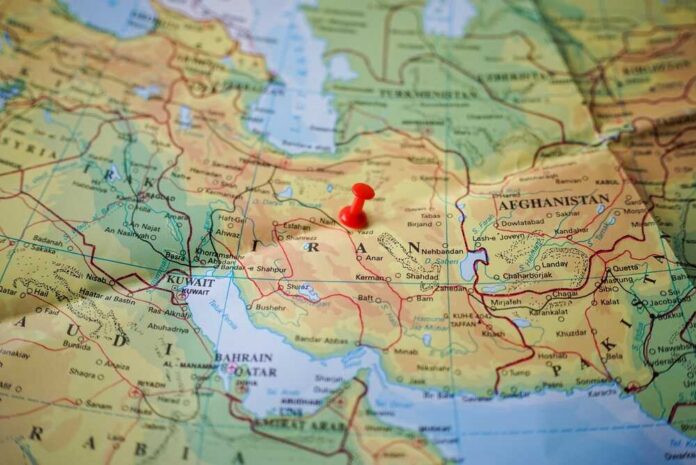
Iran’s unprecedented, region-wide missile-and-drone barrage has pushed Gulf governments from “hide behind defenses” to openly weighing counterstrikes—an escalation that could redraw the Middle East map fast.
Story Snapshot
- Iran launched a broad March 1 retaliation that targeted multiple Gulf states alongside Israel and U.S. positions, a scale experts describe as historically shocking for the GCC.
- Gulf air defenses intercepted large volumes of weapons, but some drones penetrated and caused material damage, increasing pressure for a tougher response.
- Analysts say the UAE and Saudi Arabia are now key countries to watch if Gulf states move from defensive operations to offensive counter-attacks.
- Oman’s last-ditch mediation efforts appeared to collapse as the strikes unfolded, highlighting how quickly diplomacy can be sidelined in wartime.
Iran’s “All-At-Once” Attack Changed the Gulf’s Calculus
Iran’s early March 1 retaliation was not a symbolic volley—it was a region-spanning operation aimed at multiple Gulf states as well as Israel and U.S. facilities. Defense reporting and expert commentary describe the scope as a nightmare scenario for the Gulf Cooperation Council, because it forced several governments to respond simultaneously rather than treating Iran as a distant, manageable threat. That shared exposure is now driving a more unified, harder-line posture across the Gulf.
Breaking Defense reported detailed interception totals that show both the scale and the strain. The UAE said it intercepted 165 ballistic missiles, two cruise missiles, and 541 drones, while still reporting 35 drones penetrated defenses and caused material damage. Kuwait reported intercepting 97 ballistic missiles and 283 drones. Bahrain reported downing 45 missiles and nine drones, with the U.S. 5th Fleet headquarters area partially hit.
Air Defenses Worked—But Defense Alone Has a Shelf Life
Gulf states have invested heavily in missile defense, and the intercept figures show those systems can blunt large attacks. The problem is sustainability: every interception consumes finite interceptors and forces expensive readiness measures. Analysts quoted in defense coverage argue that “sitting passively by and using up their air defenses” does not restore deterrence. In practical terms, that means Gulf leaders must now weigh whether limited counter-attacks reduce future risk or invite wider retaliation.
Governments across the region reportedly activated broader civil-defense and continuity measures beyond the military layer. Those steps included dispersing aircraft, hardening critical infrastructure, activating alternate command-and-control arrangements, and issuing shelter-in-place guidance alongside school closures and movement controls. That kind of “all-of-government” posture signals officials are preparing not for a single night of danger, but for an extended period where follow-on strikes remain possible.
Why the UAE and Saudi Arabia Are the Countries to Watch
Reporting points repeatedly to the UAE’s capabilities and Saudi Arabia’s strategic weight as the two variables that could turn a U.S.-Iran clash into a broader regional war. The UAE’s interception numbers also underscore just how directly it was targeted—and how publicly it has documented its defense. Saudi Arabia confirmed incoming fire and condemned the attacks, though it released fewer operational details. If either country joins counterstrikes, the conflict’s center of gravity shifts quickly.
From a U.S. perspective under President Trump, the strategic logic is straightforward: partners that feel directly threatened tend to cooperate more closely, especially when civilian infrastructure is hit. Expert commentary in the reporting suggests Iran’s targeting may backfire by pushing Gulf capitals closer to Washington’s security camp. For Americans weary of years of soft signaling abroad, that alignment matters because it can share the burden of deterrence—while also increasing the risk of escalation.
Diplomacy Fell Away as the Shooting Started
Politico reported that Oman’s foreign minister—who had been involved in mediation—said he was “dismayed” by the joint operation, which occurred only hours after he met Vice President JD Vance in a last-ditch diplomatic effort. That detail is important: it shows diplomatic channels were active right up until events overtook them. Once missiles and drones began flying across multiple borders, negotiations became secondary to air defense, public safety, and military command decisions.
Key facts still remain incomplete, including comprehensive civilian casualty figures and the full confirmed total of weapons launched, even though sources agree the numbers reached into the hundreds. Reporting also notes uncertainty around some high-profile claims from the broader crisis timeline, underscoring the fog of war. What is clear is the direction of travel: multiple Gulf states that long relied on U.S. protection now appear more willing to consider direct military participation to reestablish deterrence.
Sources:
https://www.politico.com/news/2026/02/28/us-gulf-iran-allies-gcc-arab-00805858
https://breakingdefense.com/2026/03/iran-attacks-uae-saudi-missiles-drones-gcc-air-defense/
https://www.cfr.org/articles/gauging-the-impact-of-massive-u-s-israeli-strikes-on-iran
https://understandingwar.org/research/middle-east/iran-update-morning-special-report-march-1-2026/