
Israeli travelers face skyrocketing airfares as a fragile ceasefire triggers a travel rush, but foreign airlines refuse to return, leaving local carriers with a virtual monopoly.
Story Snapshot
- Ben Gurion Airport resumed 24/7 operations April 9 after months of severe restrictions following Iran ceasefire
- Israeli airlines like El Al dominate routes as U.S. and European carriers remain suspended indefinitely
- Airfares surge due to limited competition, doubled fuel costs, and required detour routes avoiding conflict zones
- Price gouging investigations launched as travelers face “book at any cost” scenario on critical routes
- Airport capacity remains capped at 120-150 passengers per flight due to ongoing security concerns
Ceasefire Opens Skies, Closes Wallets
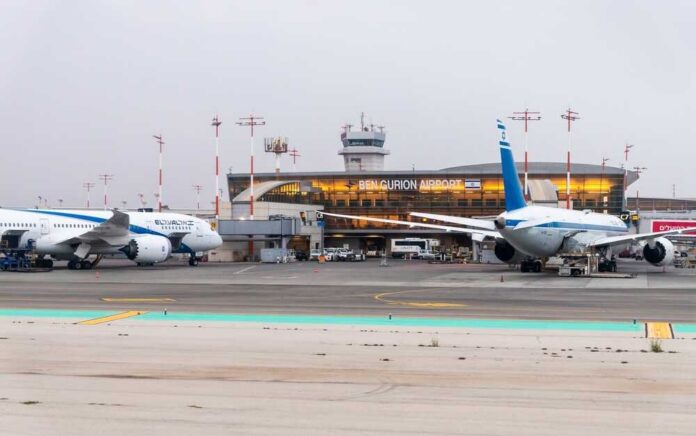
Ben Gurion Airport transitioned to round-the-clock operations on April 9, 2026, marking the first significant expansion since severe restrictions began in February amid escalating Iran tensions. The two-week ceasefire brokered by President Trump triggered an immediate surge in travel demand exceeding 100 percent for destinations like Greece and Cyprus. Prior to the reopening, the airport operated under extreme limitations, allowing only one outbound flight per hour with a maximum of 100 passengers, 30 percent reserved for humanitarian cases. Israeli carriers Arkia and Israir immediately announced expansion plans, with Arkia targeting a full schedule by May 3 and Israir adding routes to Athens and Larnaca.
Foreign Carriers Remain Grounded
Major international airlines continue avoiding Israeli airspace despite the ceasefire, leaving Israeli carriers with effective monopoly control on key routes. United, Delta, and American Airlines maintain indefinite suspensions, echoing their response to the November 2024 Lebanon ceasefire when only select European carriers resumed limited service. Foreign airlines cite unresolved security concerns, elevated insurance premiums, and crew reluctance as barriers to resumption. The ongoing U.S. Air Force presence at Ben Gurion further complicates full operational recovery, according to Israeli officials. This absence mirrors a troubling pattern where global carriers prioritize risk aversion over service restoration, leaving Israeli travelers with limited options and inflated costs.
Monopoly Conditions Drive Price Explosion
El Al’s stranglehold on transatlantic routes has sparked price gouging investigations as travelers face astronomical fares with no alternative carriers. Aviation analyst Freund-Feinstein notes that prices will remain elevated in the short term even if foreign competition eventually returns, given the compounding factors of security-mandated detour routes and fuel costs that have doubled due to Houthi attacks on refining infrastructure. Nir Mazor, vice president of Aviation Links, confirms demand has surged over 100 percent while supply remains severely constrained by security caps limiting flights to 120-150 passengers. High-tech workers traveling the critical New York route face particularly severe price impacts, prompting some industry groups to explore launching “TechAir” as a competitive alternative to El Al’s entrenched dominance.
Fragile Peace Offers No Quick Relief
Transport Minister Miri Regev and airport authorities are gradually expanding capacity, planning increases to three flights per hour in coming weeks, but industry experts warn stabilization could take months. Mark Feldman of Diesenhaus Tours describes the airline industry as remaining in a “holding pattern” with no immediate resolution in sight. IATA Director Willie Walsh cautions that global fuel supply disruptions will persist for months regardless of ceasefire stability, while detour routes avoiding conflict zones continue driving operational costs higher than Gulf competitors. The ceasefire’s initial two-week timeframe underscores its fragility, with any resumption of hostilities likely to reverse progress and reinstate severe restrictions. Israeli carriers lobby for legal exemptions from wartime compensation requirements, signaling their own uncertainty about sustained operations.
Airfares In Israel Skyrocket As Travelers Take Advantage Of Ceasefire, But Foreign Airlines Stay Away https://t.co/72em06pOJw
— zerohedge (@zerohedge) April 11, 2026
This situation exemplifies how geopolitical instability and corporate risk calculations converge to harm ordinary citizens seeking basic mobility. Travelers find themselves trapped between conflict-driven market failures and profit-maximizing carriers operating without competitive pressure. Whether the government will intervene to prevent exploitation or allow market forces to continue squeezing desperate travelers remains uncertain, but the current trajectory favors corporate interests over public accessibility to affordable air travel.
Sources:
Foreign airlines returning to Israel after Lebanon ceasefire – JNS
Israeli airline industry struggles amid soaring costs – Ynetnews
Ben Gurion Airport operations expand after ceasefire – Ynetnews
Israeli airlines prepare schedule expansions – Jerusalem Post
Tel Aviv airport reopens but airfares skyrocket – Times of Israel
Israir preparing flight expansions amid ceasefire – Times of Israel