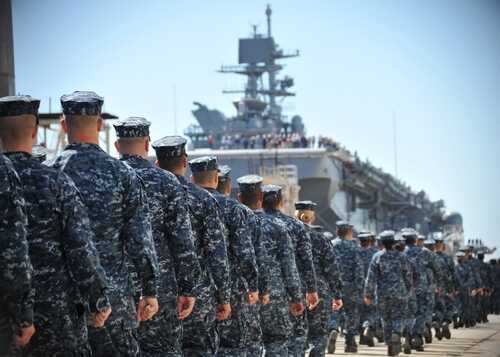
President Trump’s deployment of a massive naval armada toward Iran signals America’s return to a “peace-through-strength” leadership strategy. This major military movement, including the USS Abraham Lincoln carrier strike group, is a precautionary measure sent in response to the Iranian regime’s aggressive threats, brutal crackdown on protesters, and escalating nuclear weapons ambitions. The move is intended to deter conflict while securing American interests and global energy stability in the Strait of Hormuz.
Story Snapshot
- Trump orders USS Abraham Lincoln carrier strike group and additional military assets to the Middle East as Iran threatens retaliation
- Deployment responds to the Iranian regime’s brutal crackdown, killing thousands of protesters, and threats to restart the nuclear weapons program
- Iran’s Revolutionary Guard warns finger is “on the trigger” while Trump maintains deterrent posture to avoid conflict
- Global energy markets face risk as 20 million barrels of oil daily transitthe Strait of Hormuz under Iranian threat
Trump Deploys Carrier Strike Group as Deterrent
President Trump announced January 16, 2026, that the United States is sending a substantial military force toward Iran, describing it as a precautionary measure. Speaking aboard Air Force One upon returning from the World Economic Forum in Davos, Trump told reporters the nation has “a massive fleet heading in that direction, and maybe we won’t have to use it.” The USS Abraham Lincoln carrier strike group, including fighter jets, guided-missile destroyers, and an attack submarine, moved westward from the Indo-Pacific and is expected to arrive in the Middle East within days. Additional air-defense systems are being positioned to protect American forces and regional bases.
‼️🇺🇸 US MILITARY Buildup in the Middle East
The U.S. is quietly but deliberately flexing: F-15s deployed, tankers on station, USS Abraham Lincoln arriving. This isn’t a routine rotation—it’s a calculated shift in posture.
Tankers = long-range ops
Fighters = air dominance… pic.twitter.com/1nNFx5bYMM— WAR (@warsurveillance) January 20, 2026
Iranian Regime Threatens American Interests
Iran’s Islamic Revolutionary Guard Corps responded aggressively to Trump’s announcement, with General Mohammad Pakpour declaring the IRGC has its “finger on the trigger, more prepared than ever” to execute military operations. General Ali Abdollahi Aliabadi escalated tensions further, warning that “all US interests, bases, and centers of influence” would become “legitimate targets” if America launches attacks. These threats follow Trump’s promise on January 13 to protesters that “help was on its way” after the Iranian regime’s brutal crackdown killed thousands of demonstrators seeking economic relief and political reform. The timing underscores the regime’s desperation to maintain control through violence and intimidation.
Nuclear Program Concerns Drive Military Response
Trump explicitly linked the deployment to Iran’s potential nuclear weapons development, warning Tehran against restarting enrichment activities. The president stated: “If they try to do it again, they have to go to another area. We’ll hit them there too, just as easily.” This references Trump’s previous “Midnight Hammer” operation that struck Iranian nuclear infrastructure, establishing precedent for direct military action against the regime’s weapons programs. The deployment provides Trump expanded options ranging from limited strikes to sustained operations, a strategic flexibility absent during Biden’s appeasement years. This approach contrasts sharply with previous administration policies that allowed Iran to advance its nuclear ambitions while funding terrorism across the region.
Regional Stability and Energy Security at Stake
The military buildup addresses critical national security concerns extending beyond Iran’s borders. Approximately 20 million barrels of petroleum daily—roughly one-fifth of global consumption—transit the Strait of Hormuz, which Iran has previously threatened to close. Energy market volatility from potential disruptions would impact American families already recovering from Biden-era inflation caused by reckless energy policies. Regional allies including Israel gain reassurance of American commitment to their security, though Jerusalem previously urged Trump to delay strikes due to concerns about defensive capabilities. The deployment demonstrates that American strength protects both our interests and those of our allies, a principle abandoned during four years of weakness that invited aggression worldwide.
Strategic Deterrence Through Strength
Trump’s repeated emphasis that military action “maybe won’t have to” occur reflects a deterrence-through-strength strategy proven effective throughout his first term. The presence of overwhelming military power is intended to discourage Iranian aggression without necessarily resulting in combat, though all options remain available if Tehran miscalculates. This measured approach gives the Iranian regime an opportunity to change course regarding both its nuclear ambitions and brutal treatment of its own citizens. Strategic analysts note the deployment provides defensive capabilities to counter potential Iranian retaliation across multiple fronts, including attacks on American assets and coordinated pressure against Israel. The influx of military assets ensures America can respond effectively to any contingency while maintaining diplomatic flexibility.
Watch the report: US Army’s 30,000 Troops, Six Warships, & Strike Eagle Fighters Still No Match For Khamenei’s Forces?
Sources:
Military Buildup In The Middle East Continues, Including What Trump Describes As A “Big Flotilla”
TRT World: International News Coverage with Geopolitical Analysis