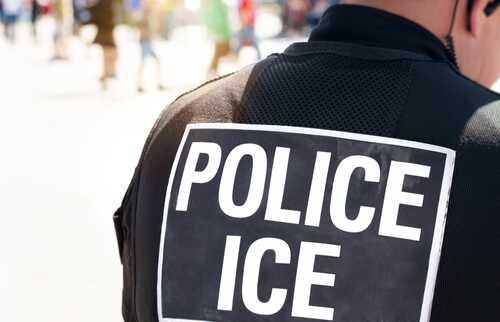
A concentrated federal immigration enforcement operation, which saw roughly 100 ICE agents descend upon the Twin Cities, has escalated tensions between federal authority and local leaders in Minneapolis and St. Paul. Targeting a group of noncitizens described as the “worst of the worst” with serious criminal records, the operation was immediately met with resistance from city mayors and police chiefs who publicly refused to allow local officers to assist. The surge, which prominently targeted Somali nationals, has also sparked fear and backlash from community advocates, raising long-term questions about public trust and the future of sanctuary-style policies.
Story Snapshot
- ICE deployed roughly 100 federal agents to the Twin Cities to target noncitizens with serious criminal records, including Somali nationals.
- Local mayors and police chiefs publicly refused to let city officers assist in civil immigration enforcement, despite community safety concerns.
- Community advocates framed the action as discriminatory and politically motivated, intensifying fear in Somali and broader immigrant neighborhoods.
- Ongoing tension between federal authority and city sanctuary-style policies raises long-term questions about crime, trust, and the rule of law.
Federal Surge Targets ‘Worst of the Worst’ Criminal Illegal Aliens
Federal immigration authorities launched a concentrated enforcement surge in the Minneapolis–St. Paul area aimed at arresting noncitizens with serious criminal records, a group publicly described as the “worst of the worst.” Reports indicate that up to about 100 federal agents were assigned to the Twin Cities, an unusually large deployment for a metro operation of this kind. Among those targeted were Somali nationals, reflecting long-standing federal priorities to remove offenders with significant convictions from the country.
Early coverage of the operation emphasized that roughly a dozen individuals were taken into custody, aligning with federal messaging that these were high-priority public-safety targets rather than low-level immigration cases. Officials highlighted that those arrested had serious criminal histories, though detailed records and criteria have not yet been fully disclosed. The focus on individuals already known to law enforcement undercuts claims that this was a random sweep, instead presenting it as a targeted attempt to protect communities from repeat offenders.
Just the start!?
ICE operation in Minneapolis nabs a dozen 'worst of the worst' criminal illegal aliens, including Somalis #Illegalimmigration #MinneapolisPoliceDepartment #Immigrationhttps://t.co/OBNwAws8fj— MWB (@Mb51082451) December 5, 2025
City Leaders Distance Police from Immigration Enforcement
As news of the operation broke, Minneapolis and St. Paul leaders moved quickly to convene briefings and press events, underscoring that local police would not participate in immigration enforcement actions. Mayors Jacob Frey and Melvin Carter, alongside Minneapolis Police Chief Brian O’Hara and other command staff, reiterated departmental policies that separate civil immigration work from ordinary criminal policing. They stressed that while cooperation with federal partners on non-immigration criminal matters would continue, officers would not assist in civil immigration raids or status-based arrests.
Inside the police departments, command staff and consent-decree implementation units reviewed internal guidance to make sure officers understood boundaries around immigration-related contacts. That internal mobilization suggests city leadership saw the federal operation as a moment of heightened risk for confusion or policy violations on the street. Public messaging from city hall and police headquarters framed the local stance as necessary to maintain trust with immigrant communities, even as federal agents operated independently in nearby neighborhoods.
Somali Community Fears and Political Framing of the Operation
Minneapolis–St. Paul is home to one of the largest Somali diaspora communities in the United States, the result of decades of refugee resettlement beginning in the 1990s. Against this backdrop, community advocates and civil-rights groups reacted sharply to reports that Somali nationals were prominent among those targeted. Many local voices argued that the operation fit a longer pattern of over-policing and stigmatization of Somali and East African residents, fueled by earlier counterterrorism and security initiatives that they say unfairly cast entire communities as suspect.
Public briefings and commentary repeatedly framed the operation less as routine enforcement and more as a politically charged move aimed at a specific community. Advocates warned that describing those arrested as the “worst of the worst” could obscure important due-process questions, including how “serious criminality” is defined and whether some individuals might be swept up for older, nonviolent, or disputed offenses. This rhetoric, they argued, risks reinforcing narratives that equate Somali identity or immigrant status with criminality, regardless of the actions of a relative handful of individuals.
Sanctuary-Style Policies, Public Safety, and Constitutional Questions
Legal and policy professionals observing the Twin Cities emphasized the distinction between targeted enforcement against known offenders and broad, indiscriminate sweeps. They noted that federal immigration law clearly assigns Washington the authority to remove noncitizens with serious convictions, while leaving cities discretion over whether their police assist in civil immigration work. This division has created an ongoing clash between federal enforcement priorities and local sanctuary-style policies, with Minneapolis, St. Paul now serving as another high-profile flashpoint in that conflict.
In the short term, the operation has heightened fear and uncertainty among Somali and other immigrant residents, some of whom now worry that everyday errands or traffic stops could lead to immigration encounters, regardless of legal status. Over the longer term, repeated high-visibility operations in concentrated communities may erode trust in federal institutions and intensify political battles over enforcement, sanctuary policies, and the balance between security and civil rights.
Watch the report: US federal agents target Somali migrants in Minnesota
Sources:
ICE operations targeting Somali immigrants underway in Twin Cities | Live updates