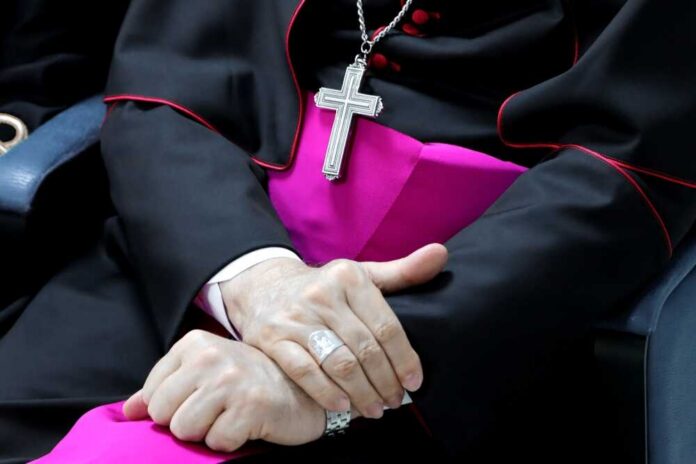
A Brazilian bishop’s decision to host pro-LGBT “Catholic” groups inside his own episcopal residence is intensifying a global fight over whether “pastoral accompaniment” is turning into quiet doctrinal surrender.
Quick Take
- Bishop Arnaldo Carvalheiro Neto hosted Catholic LGBT groups at his residence in Jundiaí on March 1, 2026, including a Mass and a discussion session.
- Brazil’s bishops conference previously appointed Carvalheiro as the first national “reference bishop” to accompany the National Network of Catholic LGBT Groups.
- The LGBT network has sought broader legitimacy and is linked to calls for changes that conflict with longstanding Catholic teaching, including same-sex “marriage” and women’s ordination.
- Supporters frame the initiative as “encounter” and accompaniment; critics argue the optics and structure risk confusing the faithful about what the Church teaches.
A private residence meeting becomes a public flashpoint
Bishop Arnaldo Carvalheiro Neto welcomed Catholic LGBT groups from Brazil’s São Paulo state to his episcopal residence in Jundiaí on March 1, 2026. Reports describe a Eucharistic celebration in the residence chapel, followed by dialogue and personal testimonies about difficulties these groups say they face inside the Church. Images of the gathering were disseminated through diocesan channels, turning what might have been a local event into a national—and international—controversy.
The unusually intimate setting matters because it signals more than a neutral meeting room on diocesan property. Hosting at the bishop’s home communicates status, access, and approval—especially when paired with a liturgy and official photos. Even sympathetic coverage notes the event occurred in the context of broader efforts to “accompany” LGBT-identifying Catholics. Critical outlets, however, highlight that the groups involved advocate positions that collide with Catholic doctrine, raising the question of what exactly is being accompanied.
How Brazil’s bishops elevated the LGBT network’s standing
Brazil’s current dispute did not appear overnight. Catholic LGBT groups in the country trace back to 2007, with a national network forming in 2014 and later growing to more than 25 groups across Brazil, plus online clusters. In 2021, the network joined Brazil’s National Laypeople’s Council, giving it another institutional foothold. That trajectory set the stage for a formal episcopal relationship that would have been unthinkable in many dioceses a generation ago.
In October 2025, the National Conference of Bishops of Brazil appointed Carvalheiro Neto as the first “reference bishop” for a three-year term to pastorally accompany the national LGBT network, an initiative tied to the lay council. Coverage comparing the move to patterns seen in Germany and Belgium underscores how rare this kind of formal liaison role remains. Supporters presented the appointment as recognition; critics viewed it as an unprecedented channel for activist pressure within Church structures.
Competing definitions of “accompaniment” and “truth”
Carvalheiro Neto has described these groups as a “theological space” grounded in spirituality, charity, and formation, language that places them closer to an accepted pastoral category rather than a tolerated fringe. In a separate discussion of his ministry, he framed accompaniment as a path marked by affection, joy, and welcome, while also referencing truth and renunciation through Jesus. Those dual notes—welcome and renunciation—sound compatible in theory, but they collide in practice when public advocacy contradicts doctrine.
The network’s own public-facing posture is part of the tension. Reports link network leaders and affiliated groups to advocacy for same-sex “marriage,” transgender normalization, and women’s ordination—items that go beyond questions of personal struggle and into attempts to reshape teaching and sacramental practice. That is why critics argue the problem is not meeting with sinners—something Christianity has always done—but creating an ecclesial structure that can blur moral lines for ordinary Catholics trying to stay faithful.
Why critics see an institutional risk, not just a local dispute
Some outlets also point to prior controversies in the Jundiaí diocese under Carvalheiro Neto, including disputes about liturgical decisions and concerns about undignified events involving seminarians. Those claims vary in detail across coverage, and the reporting does not offer a single official investigative finding that resolves them. Still, the broader issue is institutional: when a bishop already under scrutiny chooses a high-visibility event with activists, the resulting confusion spreads well beyond one diocese.
A Brazilian sociologist of religion quoted in coverage argued the bishops’ conference approach fits a conflict-avoidant cultural pattern: promote mutual understanding, avoid condemnations, and expect concessions over time. That may explain the strategy, but it also clarifies conservative concerns. If the goal is to lower temperature by avoiding clarity, the likely outcome is more ambiguity, not less. For Catholics who believe doctrine protects families and moral truth, ambiguity functions like a slow-motion rewrite.
What to watch next as the three-year term continues
The most important practical fact is that Carvalheiro Neto’s appointment runs for three years, meaning the structure enabling events like the March 1 residence meeting remains in place. Reports indicate the network continues expanding, including online groups, and supporters portray the trend as overdue recognition. At the same time, critical coverage suggests backlash among conservative faithful and clergy who fear “accompaniment” is becoming a one-way ratchet toward normalization of positions the Church cannot affirm.
No major post-event escalation was documented beyond media coverage and the dissemination of images. That silence cuts two ways: it could mean leaders prefer to manage the controversy quietly, or it could indicate the story is a symptom of a longer institutional shift rather than a single flashpoint. Either way, this debate is about authority and clarity—whether Church leaders can offer compassion without implying approval, and whether institutional decisions protect or erode the doctrinal guardrails that believers rely on.
Sources:
Brazil: The controversial bishop of Jundiaí hosts a meeting of Catholic LGBT groups in his home
Brazil now has a bishop heading its LGBT ministry
Free Republic discussion thread: focus/f-religion/4370663/posts
Brazilian bishop ministering to LGBTQ people: Walking a path of affection, joy, and welcome
Bishop’s liaison to Catholic LGBT groups explains pastoral accompaniment
Brazilian bishop hosts LGBT meeting in his home
Brazil’s bishops conference appoints liaison to Catholic LGBTQ groups
Brazil bishop invites homosexual groups