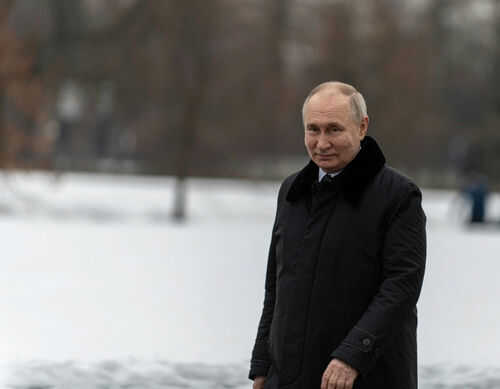
While Americans focus on the bombs, Russia appears to be cashing checks, tightening alliances, and dodging the costs of direct war.
Story Snapshot
- The “Russia is the big winner” claim is an interpretive argument, not a single confirmed official finding, but recent reporting shows Moscow positioned to benefit indirectly.
- After Iran’s 2025 air-defense losses, Tehran sought Russian help; a reported €495 million Verba MANPADS deal points to long-term arms revenue for Moscow.
- Reports also describe Russian equipment transfers and alleged intelligence or logistical support, while Russia publicly denies expanding cooperation and says it is “not our war.”
- The Iran war’s spillover could distract Washington and reshape diplomatic leverage in the Middle East, even without Russian troops entering combat.
How the “Russia Wins” Narrative Took Shape
Reporting and analysis circulating in early 2026 converged on a basic idea: Russia can benefit from the 2026 Iran war without paying the steep price of direct intervention. The timeline matters. After a June 2025, 12-day war with Israel reportedly battered Iranian air defenses and other capabilities, Iran turned to rearmament. By February 28, 2026, Israel and the U.S. launched coordinated strikes that escalated into the current war, fueling the “winner” framing around Moscow’s positioning.
Available sources do not establish a single, definitive “original story” proving Russia is the top beneficiary. Instead, they present a set of observable incentives: arms sales, technology cooperation, and geopolitical distraction for the West. That distinction is important for readers trying to separate confirmed facts from interpretation. The strongest factual foundation is that Russia and Iran have deepened defense ties since the Ukraine invasion, and those ties have produced concrete deals and reported transfers.
Arms Deals and Hardware: What’s Confirmed vs. What’s Claimed
A key data point is the reported Verba man-portable air-defense system package. Iran requested Verba systems after the 2025 fighting, and later reports described a €495 million agreement for 500 launchers and 2,500 missiles, with deliveries slated for 2027–2029. Separate reporting also referenced Russian Il-76 flights and suggested early deliveries could have begun, though timelines and quantities are not fully confirmed in public sources available here.
Other reported transfers include Mi-28NE helicopters, said to be arriving from January 2026 onward. These claims, if accurate, fit a broader pattern: Moscow supports partners through asymmetric assistance—hardware, training, and supply chains—while avoiding an open-ended commitment. For conservatives wary of endless wars, the contrast is striking: Russia’s posture aims to harvest leverage and revenue while minimizing visible entanglement, leaving others to absorb the blowback and escalation risk.
Intelligence Support Allegations and Russia’s Public Denials
Allegations of Russian intelligence assistance—such as sharing satellite data or information about U.S. assets—have circulated alongside the arms reporting. At the same time, Russian officials publicly denied expanding cooperation and dismissed specific claims as “fake news,” emphasizing that the conflict is “not our war.” U.S. confirmation is described as lacking in the material provided, which means readers should treat the intelligence angle as disputed rather than settled fact.
This uncertainty is not a minor footnote; it changes how to evaluate the “big winner” claim. Arms contracts and long-term industrial cooperation are easier to document than intelligence-sharing in real time. When the evidence is mixed, the prudent takeaway is that Moscow’s incentives are clear, but the exact level of Russian operational support during the war remains contested in public reporting. That ambiguity is exactly where propaganda and information warfare thrive.
Why Moscow Benefits When Washington’s Focus Shifts
Several sources emphasize that heightened Middle East conflict can pull U.S. attention, resources, and political bandwidth away from other theaters, including Ukraine. That dynamic is one reason analysts describe Russia as benefiting indirectly. Separately, Iran’s prior supply of drones and other materiel to Russia—along with claims that Russia has localized Iranian drone production—illustrates a transactional relationship: Tehran helps Moscow, Moscow helps Tehran, and both test how far the West can be stretched across multiple crises.
From a limited-government perspective, the uncomfortable lesson is that adversarial states often profit when America becomes overextended or when policy becomes reactive rather than strategic. The research provided does not quantify U.S. resource diversion, and it does not prove Moscow “caused” the war. It does show, however, that Russia is positioned to gain leverage—through arms revenue, partner dependence, and diplomatic maneuvering—while publicly insisting it is staying out of the fight.
What to Watch Next: Deliveries, Diplomacy, and the “Axis” Effect
The next measurable signals are concrete deliveries and verifiable contracts. If the Verba timeline accelerates, or if additional systems appear in Iran sooner than expected, that would strengthen the case that Moscow is turning the war into export revenue and influence. Another watch point is diplomacy: sources describe China as a mediator and note trilateral activity such as naval drills near the Strait of Hormuz, suggesting a coordinated interest in countering U.S. pressure without a formal mutual-defense obligation.
Russia Is the Big Winner in the Iran Warhttps://t.co/CBGCxAhKAC
— 19FortyFive (@19_forty_five) March 22, 2026
For American voters who lived through years of globalist drift and costly foreign-policy indecision, this conflict highlights a recurring problem: rivals exploit power vacuums and divided attention. The current record supports a cautious conclusion—Russia may not be “winning” in a triumphal sense, but it is positioned to extract benefits through arms sales, asymmetric aid, and geopolitical distraction. The contested parts of the story should be monitored, not assumed.
Sources:
Russia to Supply Iran With Shoulder-Fired Air Defense System
Iran Turned to Russia, China for Missiles After 12-Day War