Three months after flying farther from Earth than any humans in history, the Artemis II crew has quietly reunited with their moonship, raising fresh questions about how this landmark mission is being sold to the public and what it really means for American power in space.
Story Snapshot
- Artemis II flew nearly 10 days around the Moon, setting a new human distance record and proving the Orion “Integrity” spacecraft in deep space.
- The astronauts have now reunited with their capsule, giving NASA a chance to study what worked, what failed, and how to prepare for real Moon landings next.
- Technical troubles, from fuel test repairs to a jammed toilet fan, were downplayed in official messaging, even as the mission is framed as flawless.
- Commercial giants SpaceX and Blue Origin stand to gain from a glowing Artemis narrative, while China’s push for lunar resources pressures the U.S. to stay ahead.
Artemis II: A Record-Breaking Flight Under Trump’s Watch
On April 1, 2026, Artemis II launched on a nearly 10-day journey around the Moon, marking the first crewed flight of the National Aeronautics and Space Administration’s Orion spacecraft Integrity. The four-person crew circled the Moon and splashed down on April 10 in the Pacific Ocean off San Diego, completing humanity’s most distant crewed voyage and covering almost 700,000 miles in space. This mission happened during President Trump’s second term, meaning today’s administration owns both the triumphs and the hard lessons of Artemis.
At their farthest point, the crew reached 252,756 miles from Earth, beating Apollo 13’s 1970 distance record and setting a new mark for human travel into deep space. That feat matters to patriotic readers because it shows American hardware and American astronauts once again leading the world in space, not trailing behind China or Europe. The mission followed a free-return path around the Moon, using gravity from Earth and the Moon to bring the crew safely home while testing how Orion behaves with people onboard.
Reuniting with “Integrity” and What NASA Is Learning
Now, three months after splashdown, the Artemis II astronauts have reunited with their Orion spacecraft Integrity to help engineers study the capsule that carried them into deep space and back. The spacecraft was named to honor values like candor and respect across the mission team, and this post-flight work is where those values are supposed to show up. Inspecting the heat shield that faced about 5,000 degrees during reentry, checking life support hardware, and reviewing cockpit systems will shape how safely future crews fly and land on the lunar surface.
During the mission, the crew demonstrated deep space operations that no simulator could fully predict, including manual control maneuvers using the European Service Module’s engines and day-to-day life support in the harsh environment beyond Earth orbit. They observed the Moon from closer range than any humans in decades, logging about 35 geological features and photographing areas on the far side, including the massive Orientale Basin that humans saw with their own eyes for the first time. These observations will help scientists better understand lunar geology and guide where future crews explore and possibly build long-term bases.
Historic Firsts — And Glitches NASA Would Rather Glide Past
Artemis II delivered some headline-ready firsts, including a direct call between the deep space crew and astronauts aboard the International Space Station, the first real “ship-to-ship” link of its kind. That moment symbolized a connected American presence from low Earth orbit out to the Moon, a powerful image in a world where China is racing to build its own lunar infrastructure. Yet not every first was glamorous, and some problems were quietly brushed aside in official press materials even though they mattered to mission safety.
Before launch, fueling tests had to be halted while engineers repaired issues with liquid hydrogen systems and reviewed how well the rocket and spacecraft would handle another full tanking run. Once in flight, the crew had to work around a jammed toilet fan inside Orion’s waste management system, a human problem but still a key system failure on the first crewed test of America’s new deep space ship. Former National Aeronautics and Space Administration scientists have voiced concerns online about possible spacecraft safety issues, warning that early glitches must be faced openly, not smoothed over for public relations. For a conservative audience wary of government spin, this pattern looks familiar.
Media Spin, Corporate Interests, and America’s Lunar Edge
Mainstream coverage has mostly treated Artemis II as a flawless success story, while independent voices stress that the mission had pre-launch delays, in-flight anomalies, and unresolved engineering questions. This kind of simplified narrative has been common since Apollo, as polling research shows public support for space spending is stable but many Americans question whether big missions justify their cost. When stories get sanded down for public consumption, taxpayers lose the full picture they need to judge whether government and corporate partners are being honest and effective.
NASA's Artemis II astronauts have reunited with their Orion spacecraft three months after completing humanity's most distant crewed spaceflight.
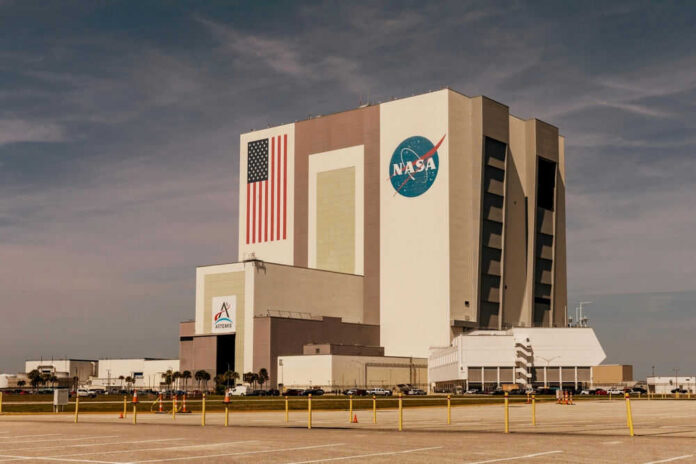
The four-person crew—Reid Wiseman, Victor Glover, Christina Koch, and Jeremy Hansen—returned to the Kennedy Space Center to see the… pic.twitter.com/XVel9JzfDj
— Elementia X (@ElementiaX) July 9, 2026
Commercial companies SpaceX and Blue Origin are deeply tied to the next phase of Artemis, building landers for the planned Artemis III surface missions. They benefit when Artemis II is framed as a perfect stepping stone, even though both firms still have major work to do to make their vehicles safe and ready for crewed landings. At the same time, China’s national space agency is pushing hard on its own lunar program and making bold claims about harvesting helium-3 and other resources, feeding media narratives that America is playing catch-up. For constitution-minded readers, the key point is this: real transparency and technical rigor, not polished messaging, are what keep our nation strong, our spending justified, and our people safely in the lead as we return to the Moon.
Sources:
military.com, nasa.gov, oig.nasa.gov, esa.int, facebook.com, cnn.com, youtube.com, reddit.com, launiusr.wordpress.com