

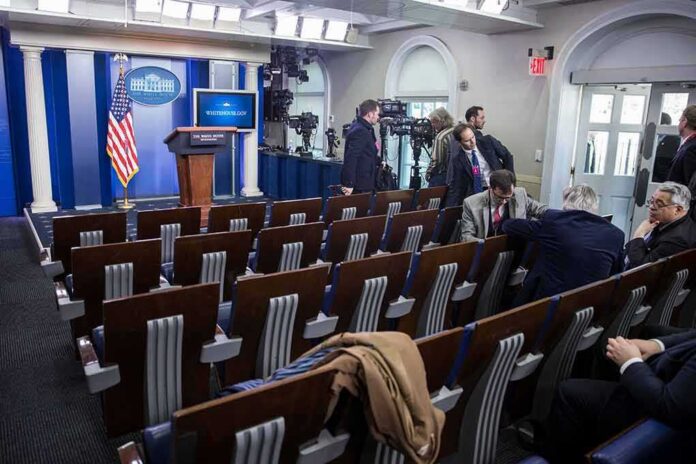
Sean Hannity’s on-air defense of Katie Zacharia’s debut briefing sharpened a simple fight: who sets the rules for press access — the elected administration or a media class that prefers its own script.
Story Highlights
- The White House called Zacharia’s first briefing an official, successful rollout focused on Trump’s agenda.
- Hannity aired her exchange with Peter Doocy and called it “perfectly normal”.
- Reporters said the 14–15 minute session had only three questions, fueling criticism.
- Zacharia announced a personnel change involving Ambassador Kimberly Guilfoyle.
What Happened At The Podium
The White House identified October 13, 2026 as Press Secretary Katie Zacharia’s inaugural briefing. Officials posted video and a release stating she serves President Trump and the American people. The opening remarks praised the administration’s record on the economy, energy, and security. The emphasis matched the communications goal of highlighting results. The White House video entry and release frame the event as an official briefing aligned with promoting achievements.
During the briefing, Zacharia took a limited set of questions before ending the session. Public Broadcasting Service and the Associated Press reported the event lasted about 14 to 15 minutes, with questions taken from only three outlets. Reporters shouted follow-ups as she ended. These accounts describe an abbreviated exchange rather than a long back-and-forth typical of extended briefings in past years.
Hannity’s Defense And The Administration’s Rationale
Fox News host Sean Hannity aired Zacharia’s answer to Fox News reporter Peter Doocy and called the exchange “perfectly normal.” Hannity focused on her stated role: to amplify President Trump’s agenda for the American people. That argument rests on a clear view of the job: the press secretary speaks for the administration and drives its message, even if critics prefer longer sparring sessions. Hannity’s segment framed the debut as standard for a spokesperson.
The White House communications team backed that view. Communications director Steven Cheung said Zacharia “commanded the room” and reminded Americans of Trump’s “great work.” Support from the administration reinforces the message-first model: brief, direct, and centered on policy wins. That endorsement, however, came from an aligned official, not an outside referee. It supports normalcy claims but does not settle debates over access length or format.
Substance Amid A Short Format
The briefing did include news. Zacharia said, “We have asked Ambassador Guilfoyle to resign,” referring to the United States ambassador to Greece. She praised the ambassador’s service and wished her well. That personnel move showed the event was more than ceremony. It delivered a concrete update on staffing, which is a core function of any briefing, even a short one. Reporters and viewers heard a clear, accountable statement on a change in government posts.
Reporters also pressed on foreign policy. The Associated Press reported that Zacharia did not answer whether the United States had stopped sharing intelligence with Ukraine. She directed the press to ask President Trump. That deferral left a real question open and gave critics a point about substance. It also showed a choice to reserve sensitive matters for the president or authorized national security officials.
Why The Format Fight Matters To Readers
The split is about purpose. The White House pushed accomplishments and kept the event tight. Many reporters wanted more time and wider access. Public Broadcasting Service and the Associated Press measured the session as short, with few questions. Hannity and the communications office said the job is to speak for elected leaders and keep the focus on results, not press-theater. Those are two different standards for what “normal” should look like.
White House Press Secretary Katie Zacharia faces scrutiny over bar exam credentials https://t.co/PI3owWLJ4F
— UniqueGist (@uniquegisthouse) October 15, 2026
For readers worried about bias, the outlines are familiar. When an administration talks jobs, border security, and cheaper energy, critics often shift the story to tone and length. The White House can answer that by posting full transcripts, listing every outlet called, and providing data that back policy claims. That transparency would undercut spin and let results speak first. Until then, the record shows a short but official debut with at least one real announcement and a clear message mission.
Sources:
mediaite.com, whitehouse.gov, pbs.org, apnews.com, kmbc.com