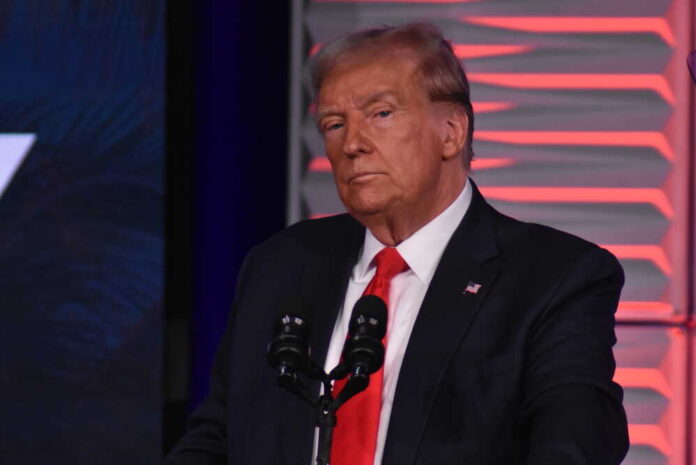
A single federal judge just dealt a stunning blow to President Trump’s power, ordering him to reinstate two Democratic regulators—raising urgent questions about who really controls America’s financial watchdogs and the safety of your savings.
At a Glance
- A federal judge ordered Trump to restore two fired Democratic National Credit Union Administration board members.
- The ruling ignites a high-stakes battle over presidential authority to remove federal regulators.
- Oversight of 5,000 credit unions and $2 trillion in savings hangs in the balance.
- Trump’s administration is appealing, creating fresh uncertainty for credit unions and consumers.
Judges Override the White House—Millions Affected
On July 22, 2025, the stakes of executive power became painfully real for millions of Americans when U.S. District Judge Amir H. Ali ordered President Trump to immediately reinstate Todd Harper and Tanya Otsuka to the National Credit Union Administration (NCUA). These two Democratic board members—removed by Trump in April—had argued their ouster violated the Federal Credit Union Act, which protects agency leaders from being fired without cause. Trump’s legal team fired back, insisting the President must be able to remove bureaucrats “at will”—a principle meant to keep unelected officials accountable to voters.
But Judge Ali’s order didn’t just restore two jobs. It sent shockwaves through Washington and the entire financial sector. The NCUA safeguards over 130 million Americans’ savings, and a sudden board shakeup could have undermined trust and stability across 5,000 credit unions nationwide.
Watch: Trump Sued by Ex-NCUA Harper & Otsuka, What it Means for Credit Unions · YouTube
Industry leaders, scrambling to keep credit union oversight functional, welcomed the reinstatement but warned the court’s intervention adds fresh uncertainty. Meanwhile, the Trump administration immediately launched an appeal, setting up a bitter showdown over the President’s power—and putting the fate of agency independence in the hands of higher courts.
Independence or Unaccountability? The Constitutional Showdown
This battle is about far more than two officials. It’s about whether independent agencies, originally designed to shield regulators from politics, have become unaccountable fortresses defying the will of the electorate. Before 1978, NCUA board members could be removed at the President’s pleasure. Congress then imposed six-year terms, supposedly to keep regulators impartial. But critics say these “independent” agencies now operate like kingdoms—answerable to no one, not even the Commander-in-Chief.
Democrats like Rep. Maxine Waters have called Judge Ali’s ruling a victory for consumer protection, but conservative voices warn it’s a dangerous precedent. If courts can tie the hands of elected leaders, unelected regulators could run amok—putting your retirement, your mortgage, and your financial security at risk. Legal experts point to years of Supreme Court whiplash on presidential removal power, with recent rulings both upholding and slashing White House authority, depending on the agency in question.
The immediate effect is a fully functional NCUA board and temporary regulatory calm. But the big question remains: will the President—elected by millions—be allowed to fire those who defy him, or are bureaucrats now untouchable, insulated by courts from accountability?
The Stakes: Power, Precedent, and Your Savings
The consequences of this showdown stretch far beyond credit unions. If presidents lose the power to remove federal watchdogs, the same principle could lock in the heads of the FTC, the Consumer Product Safety Commission, or any number of agencies that impact daily life. The Trump administration and its supporters are warning that this is government by lawsuit—where the people’s voice is drowned out by unelected insiders and activist judges.
For now, credit union members can exhale: oversight is restored, and agency business resumes. But the war over Washington’s deep state is just beginning. As legal battles rage and the Supreme Court is expected to weigh in, the future of constitutional checks and balances—and who truly controls America’s financial fate—hangs in the balance. Millions are watching, and this case may become the next flashpoint in the fight for democratic accountability versus entrenched bureaucratic power.