
Americans are paying a war tax at the pump again—while Washington still can’t explain what “winning” in Iran is supposed to look like.
Quick Take
- Brent crude surged into the $106–$110 range as the Iran conflict drags on with no clear off-ramp.
- President Trump’s Iran remarks repeatedly moved markets, with one national address followed by an 8% jump in Brent to about $109.
- Energy shock is colliding with equity uncertainty, feeding stagflation fears that hit retirement accounts and household budgets at once.
- Iran’s leverage over the Strait of Hormuz—including reported plans to charge $2 million per ship—keeps global supply-risk pricing elevated.
War Rhetoric Keeps Fuel Prices Elevated—and Voters Feel It Fast
Brent crude’s sharp climb has tracked directly with escalating rhetoric around the Iran conflict and the absence of a firm timeline for an end. During March 2026, Brent rose more than 60%, a move that signals traders are pricing in real supply disruption risk, not just headlines. After President Trump’s national address on the war, Brent jumped about 8% to roughly $109 per barrel, reflecting how tightly markets now react to White House messaging.
President Trump has argued Iran was “decimated” militarily and economically, but investors still focused on what the address didn’t provide: a clear, credible path to resolution. That gap matters because oil markets react less to claims of battlefield success than to shipping reliability, refinery throughput, and whether major producers can keep barrels flowing. With energy costs feeding into everything from groceries to construction, the political risk at home rises as quickly as crude futures.
The Strait of Hormuz Turns a Regional Fight Into a Global Inflation Problem
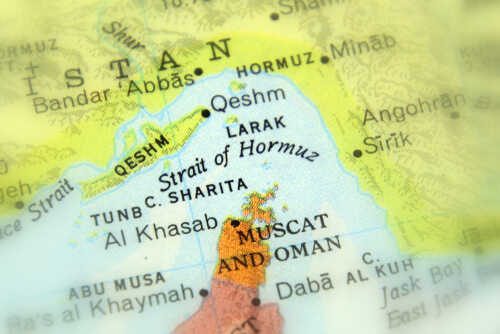
The Strait of Hormuz remains the choke point that turns a regional war into a worldwide cost-of-living crisis. Roughly one-third of global seaborne oil moves through that corridor, so even the threat of disruption can lift prices. Analysts cited the harsh reality for oil-importing nations: if passage becomes riskier or more expensive, many buyers “have little choice but to pay.” That dynamic acts like an involuntary tariff on energy consumers.
Reports also indicate Iran was prepared to charge $2 million per ship to transit the strait, a toll mechanism that would add costs and reinforce Tehran’s leverage even under pressure. Separate from shipping, damage to refineries in the region can tighten supplies of refined products. Energy analyst Andrew Lipow warned that even if fighting ended quickly, it could take several weeks or months for crude production to be restored, with additional delays when refineries suffer substantial damage.
Oil Up, Stocks Down: The Stagflation Squeeze Hits Both Main Street and 401(k)s
Higher oil prices don’t just hurt drivers; they can undermine the broader economy by raising transport, manufacturing, and farm input costs. That’s why the headline pattern—oil up, stocks down—keeps showing up when war talk rises. Investors tend to sell risk when they see energy-led inflation threatening growth, a setup that resembles stagflation: prices rising while the economy slows. It does not include specific index drops, but it does highlight broad equity pressure tied to uncertainty.
Diesel price spikes have been especially alarming because diesel is the economy’s workhorse fuel for trucking and logistics. Early April reports described oil surging past $110 per barrel with diesel topping $200, pointing to disruption across the energy complex rather than a narrow move in one contract. For conservatives who remember the promises to end forever wars and restore affordability, this combination—expensive energy and shaky markets—lands as a direct hit on household stability and retirement planning.
What the Administration Says Next May Matter More Than What It Already Said
Markets have repeatedly shown they can handle bad news better than they can handle uncertainty. In this case, traders appeared to interpret the administration’s signals as open-ended: rather than a clear end state, the focus shifted to sustaining operations and calling on other countries to help reopen key waterways. Meanwhile, President Trump’s comment at an Easter lunch about wanting to “take Iranian oil” added another layer of policy ambiguity—one that investors and voters read as a sign the conflict may not be nearing a clean conclusion.
For a constitutionalist-minded electorate, the immediate issue is not abstract geopolitics; it’s whether the federal government is drifting into another long, undefined military commitment with predictable domestic consequences: higher prices, higher uncertainty, and more pressure for emergency-style government actions. It is strongest on energy-market reaction and shipping risk, while details on war aims, congressional authorization, and measurable stock-market outcomes are limited. What is clear is that rhetoric alone is now moving prices—meaning clarity, not escalation, is the fastest lever to calm costs.
Sources:
Oil prices jump after Trump Iran war address as investors see no quick fix, Easter lunch, sanctions
Oil surges past 110 as war risks intensify (04-02-2026)