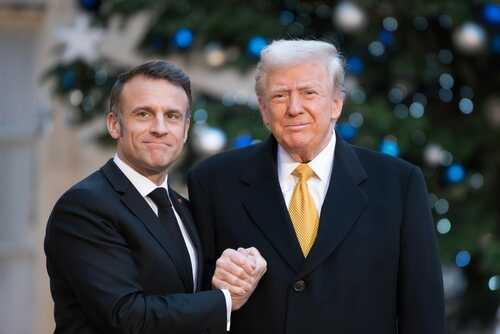
Recent diplomatic exchanges between the French and U.S. Presidents have brought established protocol under scrutiny, coinciding with elevated international tensions. The discussion centers on an emergency G7 proposal by President Macron to address U.S.-EU bilateral relations, set against the backdrop of the U.S.’s disputed interest in acquiring Greenland and the potential implementation of U.S. tariffs on European allies. This complex situation tests the resilience of transatlantic alliances and existing international norms.
Key Findings
- President Macron proposed an emergency G7 meeting in Paris to address U.S.-EU bilateral relations.
- The U.S. President subsequently made the private diplomatic communication public, creating a procedural anomaly.
- The proposed acquisition of Greenland by the U.S. remains a disputed matter in international diplomacy.
- The U.S. has indicated a potential implementation of tariffs on European allies, which carries a risk of economic impact.
President Macron’s Proposal for Dialogue
French President Emmanuel Macron extended an offer to U.S. President Donald Trump for an emergency G7 meeting to be held in Paris. This initiative was presented in the context of the U.S. administration’s stated interest in the acquisition of Greenland, a territory currently under Danish administration, which has been cited as a source of friction in U.S.-European relations. Macron’s outreach appears to be an attempt to manage the escalating tensions; however, the U.S. President’s public release of the private diplomatic message has introduced an element of procedural non-compliance with established diplomatic norms.
The communication from President Macron, which references President Trump’s strategy concerning Greenland, has been authenticated by officials proximate to the French administration. The G7 meeting, tentatively scheduled for Thursday, would reportedly include participation from representatives of Ukraine, Denmark, Syria, and Russia, indicating a move toward inclusive multilateral dialogue amidst current geopolitical conditions. The U.S. President’s choice to publicly release the private communication has drawn attention, highlighting the distinct approaches observed in the current administration’s diplomatic engagements.
BREAKING
President Trump has posted what appears to be a private message from President Macron of France where Macron says:
“I do not understand what you are doing on Greenland.” pic.twitter.com/fqv6r0CUPE
— Yashar Ali 🐘 (@yashar) January 20, 2026
Greenland: A Geopolitical Discussion Point
The renewed interest from the U.S. administration in the acquisition of Greenland, a Danish territory of strategic importance, has reinitiated a geopolitical discussion. This objective was first noted during President Trump’s initial term and resurfaced following a U.S. military operation in Venezuela. The U.S. administration frames the territory as critical for national security, a position underscored by the consideration of tariffs on European allies should Denmark decline to enter into negotiations for the territory’s sale. This position has been received with concern by NATO member states and places the transatlantic alliance under scrutiny.
In response, European Union leadership is reportedly considering the imposition of reciprocal tariffs, estimated at a potential value of €93 billion, should the U.S. proceed with the proposed tariff measures. This economic posturing complicates the diplomatic environment, potentially increasing the risk of an escalated trade conflict with potential global market ramifications.
U.S. President Donald Trump shared screenshots of a message from French President Emmanuel Macron,
Analysis of Implications
The current situation presents both diplomatic and economic challenges. President Macron’s suggestion for a Paris meeting offers a procedural mechanism for dialogue. Nevertheless, the public nature of the U.S. President’s disclosure has already affected standard diplomatic protocols. The potential G7 meeting may serve as a platform for resolution, or alternatively, it could further accentuate existing disagreements, contingent upon the U.S. response.
The cohesion of NATO faces a test due to both the Greenland discussion and the U.S.’s tariff policy considerations. This ongoing situation tests the structural resilience of transatlantic alliances and challenges established norms of international diplomacy. As the proposed meetings approach, global observation remains focused on the potential for diplomatic resolution to prevail.
Watch the report: Trump Shares Macron Messages, Discusses Greenland, Syria, Iran, and Board of Peace | APT
Sources:
- France24: Trump Shares Messages from Macron Offering G7 Meeting in Paris After Davos
- WMBD Radio: Trump Shares Messages from France’s Macron Offering G7 Meeting After Davos
- TIME: Greenland, France, and Trump’s Diplomacy with Denmark
- Euractiv: Macron to Invite Russia to Last-Minute G7 Meeting in Paris