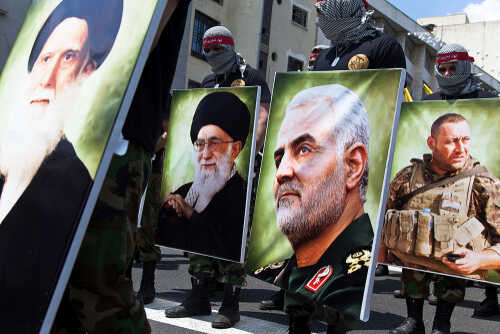
America’s immigration system is facing a stark credibility test after federal officials moved to deport the niece of Qasem Soleimani—despite her having received asylum and later a green card.
Story Snapshot
- ICE arrested Hamideh Soleimani Afshar and her daughter in Los Angeles on April 3, 2026, after the State Department terminated their lawful permanent resident status.
- Federal officials cited a fraudulent 2019 asylum claim, pointing to multiple trips back to Iran after Afshar obtained residency and public pro-regime messaging.
- Secretary of State Marco Rubio publicly confirmed the revocations on April 4, with DHS describing green cards as a revocable privilege for non-citizens deemed threats.
- The case lands amid heightened U.S.-Iran tensions, fueling a separate conservative debate over how far America should go in an Iran conflict and what “America First” means in practice.
ICE arrests in Los Angeles following State Department revocation
ICE took Hamideh Soleimani Afshar—identified as the niece of slain IRGC Major General Qasem Soleimani—and her daughter into custody in Los Angeles on Friday night, April 3, 2026. The action followed a State Department decision to terminate their lawful permanent resident status. Federal statements described deportation proceedings as underway, and reporting indicated no release had been announced at the time those updates were published.
Secretary of State Marco Rubio confirmed the revocations publicly on April 4, aligning the administration’s message around national security and the idea that U.S. residency is not an untouchable entitlement. The State Department’s explanation centered on alleged fraud in the original asylum case and on pro-Iran regime advocacy while living in the United States. ICE and DHS executed the arrests after the status change, underscoring that the legal trigger came from the executive branch decision.
Fraud claims hinge on travel back to Iran and pro-regime messaging
Officials cited Afshar’s 2019 asylum claim as fraudulent, with reporting pointing to post-residency travel that appeared to contradict a fear-based asylum narrative. According to multiple accounts, Afshar made at least four trips to Iran after obtaining lawful status, a fact that reportedly surfaced through disclosures connected to later immigration paperwork. The government also highlighted her social-media activity and public statements allegedly praising regime actions and condemning the United States.
Key dates matter because they shape the government’s case that this was not an isolated paperwork issue but an ongoing pattern. Afshar reportedly entered the U.S. in 2015, received asylum in 2019, and later obtained a green card in 2021. Her daughter, who entered the U.S. in 2015 as well, received asylum in 2019 and later a green card reported as granted in 2023. Afshar’s naturalization application in 2025 reportedly disclosed Iran travel, contributing to the review that culminated in revocation.
National security messaging collides with “America First” war fatigue
The administration’s framing stresses border enforcement and national security, themes that resonate with conservatives who have watched years of lax asylum vetting and soft consequences for fraud. At the same time, the story breaks during escalating U.S.-Iran hostility, when many Trump voters are also demanding clarity on what comes next. Conservatives who backed tighter immigration controls often also reject open-ended foreign entanglements, especially if they risk new deployments and higher energy prices.
That tension is already visible inside the broader MAGA coalition: some want maximum pressure on the Iranian regime while keeping U.S. troops out of another Middle East war; others argue strong alignment with Israel requires deeper U.S. involvement if conflict expands. It focuses on immigration enforcement, not new war authorizations. Still, the political reality is that immigration crackdowns and foreign-policy escalation can land on voters’ doorstep in the same week.
What the case signals for green-card enforcement and constitutional boundaries
DHS messaging emphasized that lawful permanent residency is a “privilege” that can be revoked for non-citizens considered threats, and the government presented this case as tied to fraud and security risk rather than ordinary policy disagreements. Conservatives broadly support removing fraudulent claimants and adversarial-regime cheerleaders from U.S. soil. The constitutional line to watch, however, is process: removals should be anchored in clear legal standards, evidence, and due process, not shifting political winds.
Reporting also described related precedents, including late-2025 visa actions involving Iranian diplomatic or mission staff and other revocations tied to Iranian elite networks. If the government is using travel records and public communications to re-check asylum narratives, that can deter abuse—especially after years of public frustration over a system that seemed to reward dishonesty while citizens paid the price through strained services and weakened trust.
Sources:
U.S. arrests niece and grandniece of slain Iran general Qassem Soleimani
Soleimani niece arrested in LA after Rubio revokes green card