
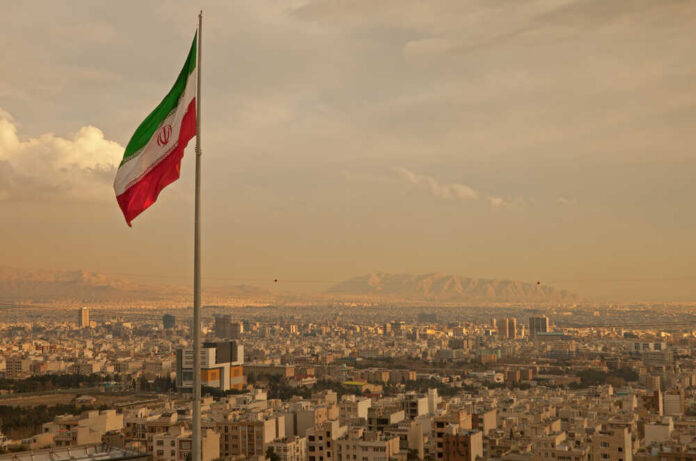
Iran’s catastrophic economic meltdown threatens regime survival as oil revenues vanish, food inflation surges past 112%, and over one million workers face unemployment—yet military leaders predict Tehran will choose brutal repression over peace negotiations.
Story Snapshot
- Iran’s economy faces systemic collapse with food inflation at 112%, currency losing 68% of value, and over one million jobs lost since conflict intensified
- Mid-May 2026 oil storage capacity deadline forces regime to choose between shutting down wells, finding new export routes, or military escalation
- Former U.S. Army Vice Chief predicts Iranian regime will “ride out” economic catastrophe through repression rather than negotiate peace
- Regime suppressed January 2026 mass protests with lethal force killing tens of thousands, signaling prioritization of power over citizen welfare
Economic Collapse Reaches Critical Breaking Point
Iran confronts a multi-dimensional economic catastrophe unprecedented in modern Middle Eastern history. Over one million Iranians lost employment since April 2026, with job opportunities plummeting 80% year-over-year and digital marketing positions disappearing at 90% rates. Food inflation reached 112% while minimum wage collapsed to roughly three dollars daily, forcing nearly half the population below poverty lines. The rial currency became what analysts describe as “a liability citizens desperately offload,” losing 60% of value following June 2025 hostilities with Israel, then dropping another 8% since current U.S.-Israel military operations intensified. Approximately 2,000 small and medium enterprises face closure within weeks as e-commerce sales plunged 50% and digital blackouts cost the economy $30-37 million daily.
Oil Storage Crisis Forces Regime Decision
Analysts project Iran will completely exhaust oil storage capacity by mid-May 2026, creating an immediate inflection point requiring decisive action. The regime must choose between shutting down oil wells entirely, securing alternative export routes, or escalating military conflict to break international blockades. Tehran’s paradoxical blockade of the Strait of Hormuz—intended as retaliation against Western powers—backfired spectacularly by cutting off Iran’s own exports while driving global oil prices to $111-124 per barrel, enriching competitors. This self-imposed economic strangulation compounds existing sanctions that already restricted market access and foreign investment. The crisis exposes fundamental structural weaknesses economist Masoud Nili identifies as “decades of corruption, lack of productivity, and over-reliance on oil exports” that predated current hostilities.
Iran on the Verge of Historic Economic Collapse. Will It Lead to Peace? https://t.co/38D8Lf5iXP
— Dan Sullivan (@sully62jazz) May 3, 2026
Regime Chooses Repression Over Negotiation
Parliament Speaker Mohammad-Bagher Ghalibaf’s April 29 audio message demanding “total unity” behind Supreme Leader Mojtaba Khamenei signals regime determination to resist negotiation despite economic devastation. Former U.S. Army Vice Chief of Staff General Jack Keane stated the Iranian regime “fully intends to ‘ride out’ the economic collapse” regardless of citizen suffering, predicting President Trump will either make major concessions or declare victory and withdraw. This assessment aligns with regime behavior during January 2026 mass protests, when authorities responded with lethal force killing tens of thousands rather than addressing grievances. The government’s payroll crisis threatens its ability to compensate military and security personnel, creating potential tipping points where repression becomes unsustainable.
Structural Damage Prevents Quick Recovery
Tehran reports approximately $270 billion in war-related infrastructure damage, equivalent to 57% of gross domestic product, with recovery requiring many years even under optimal conditions. Industrial plants, steel facilities, and petrochemical operations suffered destruction eliminating billions in annual revenue capacity. Iranian officials warned the country “will face disaster” without sanctions relief, acknowledging major facilities need months or years for reconstruction. Supply chains, logistics networks, and international payment systems remain paralyzed while agricultural output collapses and farmers experience widespread payment delays. Supreme Leader Ali Khamenei’s orders for citizens to reduce consumption of food, water, energy, and fuel represent tacit admission of resource scarcity the regime cannot remedy through policy adjustments alone.
Peace Prospects Remain Uncertain
Economic desperation historically produces unpredictable outcomes—either forcing capitulation through negotiation or triggering escalation through regime desperation. The Iranian government demonstrates ideological commitment to resistance over pragmatic economic calculation, evidenced by maintaining Strait of Hormuz blockades that worsen its own position. Without external funding, authorities face difficulty making payroll, eventually threatening governance capacity and creating conditions for potential regime transformation. However, the regime’s demonstrated willingness to suppress dissent with overwhelming violence suggests it will prioritize survival through repression. The mid-May 2026 oil storage deadline represents a genuine breaking point that will reveal whether systemic desperation forces meaningful change or simply intensifies conflict, making coming weeks critical for determining Iran’s trajectory toward either negotiation or further deterioration.
This economic collapse exposes how government elites prioritize power retention over citizen welfare, a pattern frustrating Americans across the political spectrum who recognize their own leaders often exhibit similar disregard for working families struggling with inflation and declining opportunities. The Iranian regime’s willingness to sacrifice its people rather than compromise demonstrates how entrenched power structures resist accountability regardless of human cost—a dynamic not unfamiliar to citizens watching their own government officials enrich themselves while ordinary Americans face economic hardship.
Sources:
Iran Faces Deepening Economic Crisis Amid War, Blockades and Policy Failures – NCR-Iran
Iran’s Economy in Crisis: Inflation, Prices, Payroll, Unemployment, Currency Collapse – Fortune
Iran’s Economic Situation and Strategic Implications – The Jerusalem Post
Iran’s Economic Realities Amid War – Middle East Institute