
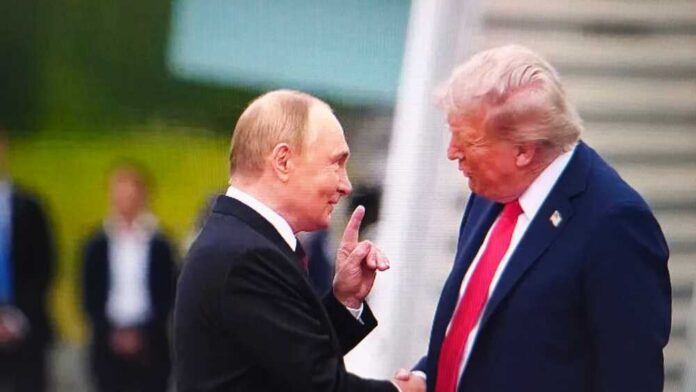
Trump’s team is quietly borrowing a page from Russia’s own playbook — using the threat of escalation to force Putin to the peace table — but the real picture is far more complicated than that simple phrase suggests.
Story Overview
- Policy analysts advised the incoming Trump team to adopt an “escalate to de-escalate” approach in Ukraine — raising pressure on Russia to force real negotiations.
- Treasury Secretary Scott Bessent used the exact phrase “sometimes you have to escalate to de-escalate” to defend U.S. military actions, though he said it in the context of Iran, not Ukraine.
- Trump paused all military aid and intelligence sharing with Ukraine in March 2025, which critics say hurt Ukraine’s battlefield readiness rather than pressuring Russia.
- The administration is pushing a twenty-point draft peace deal, suggesting diplomacy — not pure escalation — is the primary goal right now.
A Strategy With a Complicated History
The phrase “escalate to de-escalate” did not start with Trump. U.S. defense officials coined it in the 2010s to describe Russia’s own nuclear doctrine — the idea that Moscow might fire a limited nuclear weapon to end a conventional war it was losing. Now analysts are turning that same concept around, suggesting the U.S. should raise the pressure on Russia to force it into serious peace talks over Ukraine.
A Center for Strategic and International Studies (CSIS) report from January 2026 laid out the case clearly. It recommended that Trump’s team show higher risk tolerance — including delivering more long-range missiles to Ukraine and lifting restrictions on how those weapons can be used. The goal was to raise the cost for the Kremlin and push Putin toward a real deal, not just stalling tactics at the negotiating table. [1]
What the Administration Has Actually Done
The record so far is mixed. In March 2025, Trump paused all military aid and intelligence sharing with Ukraine after a tense Oval Office meeting with Ukrainian President Volodymyr Zelensky. A Pentagon watchdog later confirmed the eight-day halt had a real, harmful effect on Ukraine’s ability to fight. That is the opposite of escalation — it was a pressure move aimed at pushing Zelensky toward talks, not squeezing Putin harder. [12]
A separate weapons pause happened in July 2025 when Pentagon officials quietly halted shipments, citing low stockpiles. Trump said he was not told about it and reversed the decision quickly. The episode showed confusion inside the administration — not a clean, deliberate strategy. The White House confirmed weapons resumed “at President Trump’s direction,” but the back-and-forth raised questions about who was really driving Ukraine policy. [13]
Bessent’s Words and the Iran Connection
The clearest public use of the “escalate to de-escalate” phrase by a Trump official came from Treasury Secretary Scott Bessent — but he was talking about Iran, not Ukraine. Bessent defended U.S. military actions by saying, “Sometimes you have to escalate to de-escalate.” [7] The Atlantic Council also identified “escalate to de-escalate” as a distinct option for Trump on Iran, involving energy infrastructure strikes and regime pressure. [4] Applying that same label to Ukraine policy is a stretch based on current public evidence.
Meanwhile, the Council on Foreign Relations notes Trump has pledged to settle the war through a twenty-point draft peace deal, with a June 2026 deadline. [6] The House passed its own bipartisan sanctions and aid bill as a rebuke of Trump’s approach, signaling that many lawmakers think the administration has not been tough enough on Russia. That legislative pushback complicates the idea that Trump is running a bold escalation strategy behind the scenes. The truth is the administration appears to be juggling pressure tactics, diplomacy, and internal disagreements all at once — and the final shape of the strategy is still not clear.
Sources:
[1] Web – Is Trump 2.0’s ‘Escalation’ Strategy Against Russia Starting To Take …
[4] Web – Escalation Management in Ukraine: Assessing the U.S. Response to …
[6] YouTube – Trump’s Iran escalation could overshadow Ukraine support
[7] Web – War in Ukraine | Global Conflict Tracker – Council on Foreign …
[12] YouTube – Trump pauses military aid to Ukraine after bust-up with Zelenskyy
[13] Web – What to know about Trump’s halt on military aid to Ukraine | PBS News