

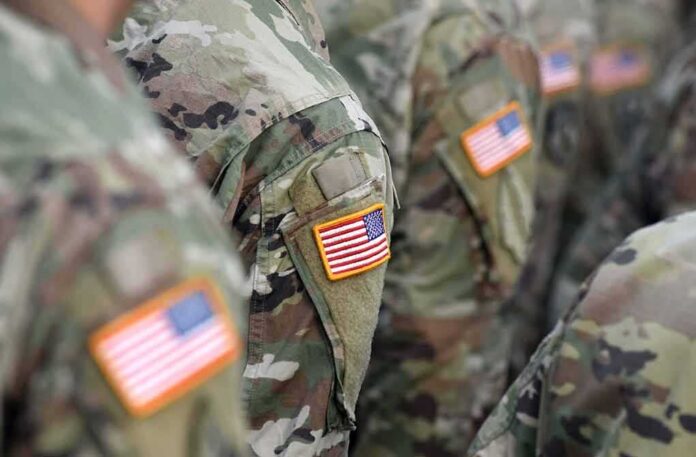
Immigration officers detained a soldier’s wife after a base visit, exposing a clash between military-family protections and strict enforcement that could tear more service families apart.
Story Snapshot
- Military parole in place exists to keep service families together, but it is discretionary, not automatic.
- Department of Homeland Security says military ties do not grant immunity from enforcement or legal status.
- Recent reports say dozens of military spouses and parents have been detained since 2025.
- Army legal guidance calls parole in place temporary relief, not a green card or legal status.
What Happened In The Texas Case
Reporters described a Texas soldier whose wife went to an immigration office after a base visit and was detained. The family had already applied for “parole in place,” a program that can let certain military relatives remain in the country while they pursue status. The wife was booked and told to appear in immigration court, despite the pending request. The case shows how a routine step for a military ID or records check can trigger arrest when immigration history is unresolved.
The Department of Homeland Security has said in similar cases that a relative’s service does not give immunity from the law and that work permits or other paperwork do not equal legal status. That message reflects a clear line from the agency. Agents can act even when a spouse is seeking help under an existing program. This mix of a relief track and active enforcement creates sharp stress for families who serve, move often, and depend on base access for daily life.
What Parole In Place Really Does
United States Citizenship and Immigration Services explains that parole in place is a narrow, case-by-case tool. It can grant temporary permission to stay for urgent humanitarian reasons or a significant public benefit. It focuses on spouses, parents, and children of service members, Selected Reserve members, and some veterans who entered the country without admission. It does not apply to people who overstayed a lawful entry. It is designed to reduce family hardship and help readiness, but it is not a blanket pass.
Agency materials and Army legal guides stress limits. Parole in place does not create lawful immigration status, does not erase past unlawful presence, and does not by itself lead to a green card. It comes in one-year increments and can help a spouse seek adjustment of status later, but that separate process has its own rules and denials. The Army’s legal office calls it temporary and discretionary relief, not a permanent fix. These guardrails explain why families can still face arrest even with an application on file.
Enforcement Policy And The Military-Family Gap
The Department of Homeland Security and its immigration arm state that service by a family member does not automatically grant parole, lawful status, or protection from arrest. That stance has appeared in public comments tied to recent spouse detentions. Data reviews and news accounts say at least 52 spouses and parents of active-duty troops have been detained since early 2025, and several were deported or self-deported. These events show a steady pattern, not a one-off mistake, under current enforcement choices.
For conservatives, two truths can stand together. The United States must enforce the border and end catch-and-release. The United States must also keep faith with the men and women who wear the uniform. Congress set the framework that gives agencies discretion. United States Citizenship and Immigration Services built parole in place to serve a real military need. When enforcement moves faster than the benefit process, the mission and the family both take the hit. Commanders lose focus. Kids lose a parent at home.
What Families And Leaders Can Do Now
Military families can lower risk by getting expert legal help early. United States Citizenship and Immigration Services lays out who qualifies, what evidence helps, and which entries are eligible. Filing a clean, well-documented parole-in-place request and tracking receipts matters. Families should confirm base access rules and avoid triggers that could expose an undocumented spouse to arrest before a decision arrives. These steps do not guarantee approval, but they reduce avoidable dangers while serving the nation.
A military spouse was detained by ICE after she showed up to a Navy base in Texas to pick up her family’s military ID cards.
Her name is Giovanna Perez. She’s lived in this country since she was six years old, has four kids, and no criminal record. Her husband, Pedro, enlisted…
— VoteVets (@votevets) October 19, 2026
Leaders in Congress can tighten the seam between enforcement and the parole-in-place program. They can direct faster processing for military families, clear guidance for field officers, and a hold on action during a pending, prima facie strong application. That would back our troops without creating blanket amnesty. President Trump has pressed for order at the border. He can also press agencies to coordinate better so the law is enforced and the force is ready. That balance is both constitutional and common sense.
Sources:
theatlantic.com, uscis.gov, abcnews.com, home.army.mil