Gavin Newsom’s latest “apartheid state” label for Israel signals how fast the Democratic Party’s foreign-policy rhetoric is shifting—right as America faces rising tensions in the Middle East.
Quick Take
- California Gov. Gavin Newsom described Israel as “sort of an apartheid state” during a March 4, 2026, interview on Pod Save America.
- Newsom tied his criticism to West Bank annexation talk and to concerns about escalating conflict with Iran amid recent U.S.-backed Israeli actions.
- Newsom openly questioned whether the U.S. should continue military aid to Israel, while saying the possibility “breaks” his heart.
- CAIR-CA applauded the remarks and urged Newsom to go further by recognizing “genocide,” highlighting the pressure campaign inside Democratic politics.
- Analysis coverage framed Newsom’s shift as strategic positioning ahead of a likely 2028 run, with polling showing Democrats increasingly sympathetic to Palestinians.
Newsom’s “Apartheid” Comment and the Aid Question
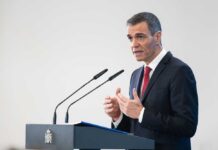
Gavin Newsom made the comments on March 4, 2026, while promoting his book and speaking with Jon Favreau on the Pod Save America podcast. Newsom argued that hardline Israeli politics, including talk of West Bank annexation under Prime Minister Benjamin Netanyahu, has changed the moral and strategic calculation for Americans. He said some observers are “appropriately” discussing Israel as “sort of an apartheid state” and then raised doubts about future U.S. military support.
Newsom’s remarks landed with extra force because he did not limit the critique to Israeli domestic policy. He also questioned U.S. backing of Israeli military operations involving Iran, including discussion in coverage of a recent U.S.-supported action that killed Iran’s supreme leader. That linkage matters for U.S. voters because it shifts the conversation from alliance management to potential war footing—exactly the kind of foreign entanglement many constitutional, America-first conservatives want scrutinized.
Why This Stands Out Against Newsom’s Earlier Israel Posture
Newsom’s framing is a noticeable departure from his earlier public posture after the October 7, 2023, Hamas attacks, when he visited Israel and emphasized ties. In early 2026, he also denied in an interview with Ben Shapiro that Israel had committed genocide in Gaza, which contrasts with the demands now coming from progressive advocacy groups. The “apartheid” phrasing is sharper than his prior ceasefire rhetoric and is being treated as a meaningful escalation.
This shows a political evolution, not a single offhand remark. Newsom moved from post-attack solidarity, to a 2024 ceasefire call tied in part to concerns about Islamophobia, to language that mirrors activist and human-rights framing about West Bank policies. Because he is widely viewed as a national Democratic figure, the comment functions as a signal to donors, activists, and primary voters about where party messaging is headed rather than as a standalone California issue.
Democratic Coalition Pressure: CAIR-CA Applauds, Urges More
CAIR-CA responded immediately, welcoming Newsom’s language and urging him to adopt even stronger terminology regarding Gaza. That reaction is important because it highlights the internal coalition dynamics driving Democratic messaging in 2026: elected officials receive applause when they adopt activist framing, then face further demands to move the goalposts again. It does not show any formal policy shift by Newsom, but it does show an organized effort to convert rhetoric into commitments.
Newsom also referenced politics surrounding pro-Israel lobbying and donations, noting he had not received contributions from AIPAC. It describes AIPAC’s role in Democratic primaries and the way candidates maneuver around it. What can be stated cleanly is that Newsom is publicly separating himself from traditional pro-Israel Democratic lanes at the same time he is being celebrated by groups pushing a harder anti-Israel narrative.
Polling, 2028 Positioning, and What’s Still Unclear
Commentary coverage tied Newsom’s shift to changing public opinion inside the Democratic Party, including a late-February 2026 Gallup finding that U.S. sympathies favored Palestinians over Israelis for the first time measured, with Democrats heavily pro-Palestinian. Another analyst quoted described Newsom’s “flip” as politically necessary for a 2028 bid. Those points help explain why Newsom’s remarks were made on a high-profile national platform during a book tour rather than buried in a written statement.
Several key details remain uncertain. The sources describe Newsom questioning continued military aid and expressing emotional conflict about that possibility, but they do not document a concrete policy proposal, a legislative plan, or any binding commitment. It also references a dramatic Iran-related event in the background of the remarks.
For conservative readers, the practical takeaway is less about California and more about national direction. Newsom’s language shows how Democratic leaders can pivot quickly—using morally loaded labels—while simultaneously entertaining reduced support for a major U.S. ally amid regional escalation. Whether voters agree or disagree with Israel’s leadership choices, the constitutional question for Americans is always the same: who decides, under what authority, and with what accountability, when U.S. power and resources are put at risk abroad.
Sources:
Newsom likens Israel to ‘apartheid state,’ questions future military support
CAIR-CA Welcomes Gov. Newsom’s Remarks Recognizing Israel as an Apartheid State
Gavin Newsom Calls Israel an Apartheid State—and That’s Where the Democrats Are Now