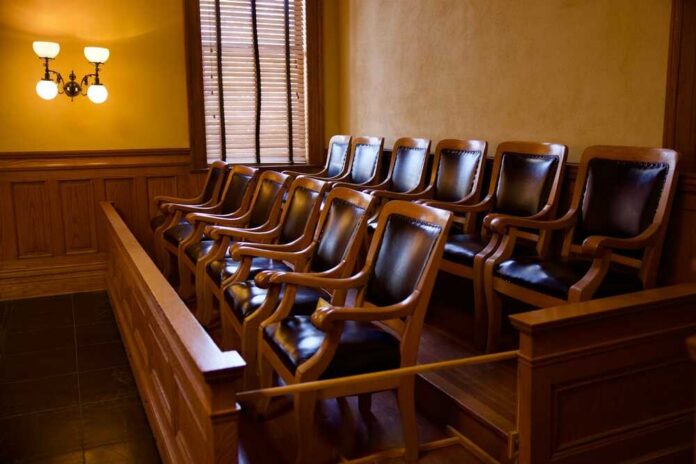
A former Obama administration U.S. Attorney’s sarcastic social media comment about FBI Director Kash Patel’s upcoming defamation lawsuit has ignited fierce debate over whether Washington, D.C. juries can deliver impartial justice to prominent Republicans.
Story Snapshot
- Joyce Alene, ex-Obama U.S. Attorney, mocked Patel’s defamation suit against The Atlantic with “Good luck with that D.C. jury,” sparking accusations she admitted systemic bias
- Patel announced legal action after The Atlantic published unverified allegations of “erratic behavior” and “excessive drinking” that other reporters couldn’t substantiate
- Conservatives view Alene’s remark as rare acknowledgment of D.C. courts’ anti-Republican tilt, fueling calls for venue changes and judicial reforms
- The lawsuit highlights broader frustrations with a justice system many believe treats political opponents unequally based on party affiliation
The Atlantic Report Triggers Legal Battle
FBI Director Kash Patel announced his intent to sue The Atlantic on April 20, 2026, following the publication’s report alleging erratic conduct and excessive drinking. Patel flatly denied the claims, stating “Print it, all false, I’ll see you in court — bring your checkbook.” His advisor Erica Knight revealed the magazine recycled unverified rumors that “every real DC reporter chased, couldn’t verify, and passed on,” raising questions about journalistic standards. Patel’s legal team has ordered document preservation from The Atlantic as the lawsuit filing proceeds under actual malice standards, which require proof of knowing falsehood or reckless disregard for truth.
Saying the Quiet Part Out Loud: Ex-Obama US Attorney Mocks Kash Patel’s Odds in 'Biased' D.C. Court https://t.co/U6k5rm67PG
— ConservativeLibrarian (@ConserLibrarian) April 21, 2026
Former Prosecutor’s Comment Sparks Outrage
Joyce Alene’s response to Patel’s lawsuit announcement—”Good luck with that D.C. jury…”—immediately drew conservative backlash. Critics interpreted the comment as an inadvertent admission that Washington, D.C.’s heavily Democratic jury pool creates insurmountable obstacles for Republicans seeking justice. The city’s voter registration skews overwhelmingly Democratic, with conservatives arguing this demographic reality makes fair trials impossible for Trump administration officials. Alene’s prosecutorial background lent weight to interpretations that she was acknowledging, rather than disputing, this systemic imbalance. Conservative commentators seized on the remark as validation of long-standing concerns about D.C. courts functioning as partisan institutions rather than neutral arbiters.
D.C. Courts Under Scrutiny
The controversy reignites persistent conservative criticism of Washington, D.C.’s federal court system, where Trump-related prosecutions and January 6 cases have reinforced perceptions of institutional bias. Republicans point to jury demographics as evidence that defendants aligned with conservative causes face predetermined outcomes, regardless of evidence presented. Some commentators have compared the situation to historical injustices, arguing that political affiliation now determines courtroom fairness in ways that undermine constitutional principles. Calls to “close down the Washington, D.C. federal circuit” reflect frustration that extends beyond individual cases to fundamental questions about whether the nation’s capital can host impartial proceedings involving politically divisive figures.
Implications for Media Accountability
Patel’s lawsuit represents a broader pushback against what conservatives perceive as media outlets publishing unsubstantiated attacks on Trump allies without consequence. His invocation of the actual malice standard—requiring proof that The Atlantic knew its claims were false or acted with reckless disregard—suggests confidence in demonstrating fabrication. The case could influence how legacy media organizations approach reporting on administration officials, particularly if Patel secures a favorable verdict despite the challenging D.C. venue. However, the jurisdictional concerns raised by Alene’s comment may overshadow substantive legal questions, transforming the case into a referendum on whether America’s justice system can function above partisan divisions that increasingly define every institution.
This underscores a troubling reality both conservatives and liberals increasingly acknowledge: when former prosecutors openly mock litigants based on anticipated jury composition rather than case merits, it signals a justice system many believe prioritizes political outcomes over equal treatment under law. Whether Patel’s lawsuit succeeds or fails, the debate it has ignited reflects deeper anxieties about institutional integrity that transcend traditional partisan boundaries, raising questions about whether ordinary Americans can trust courts to deliver impartial justice when powerful political interests are at stake.
Sources:
FBI Director Kash Patel vows to take The Atlantic to court over ‘defamatory’ report – Fox News