
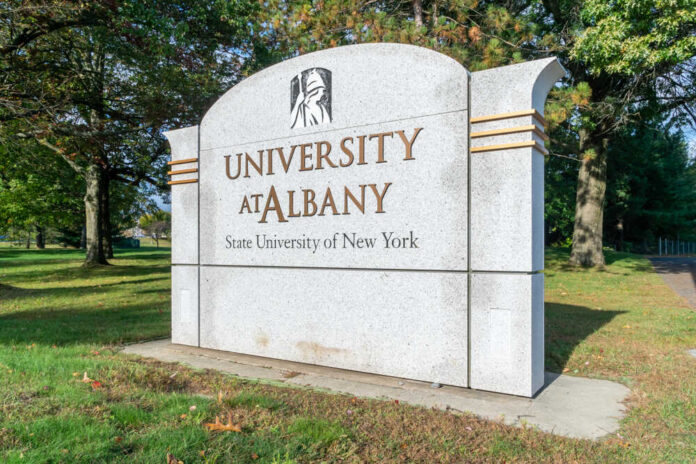
While families fight high costs, a public university is still funneling money into “equity” projects with thin proof of results.
Story Snapshot
- University at Albany granted six “Inclusive Excellence” awards for 2026.
- Each project can receive up to $4,000, for a possible $24,000 total.
- Critics question legal compliance and academic value of these grants.
- No public impact data or federal guidance confirms program outcomes.
University Announces Six Ideology-Themed Projects
University at Albany named six winners of its 2026 Inclusive Excellence Awards. The school highlighted projects such as “Curls in Context” and “Rethinking Poverty,” which it describes as educational and experiential learning efforts on campus. The awards are part of an annual program run by the Division of Inclusive Excellence. The university’s release says the initiative funds work that promotes equity and belonging across the campus community, with titles and leads listed for transparency [4].
The university also promoted the winners on its social channels and repeated the focus on “equity” and “belonging.” The posts stress that faculty, staff, and graduate students lead these projects and that efforts include experiential learning and educational programming. Supporters say this shows a structured process and a link to classroom learning. The messaging does not include measured outcomes or external legal sign-offs on the grant categories, which leaves open key questions for taxpayers [3].
Funding Cap Is Clear; Total Budget Still Not Stated
The Division’s grants page sets a clear ceiling: up to $4,000 per proposal. That amount shapes what projects can do and suggests targeted funding. With six projects named this year, observers infer a possible $24,000 exposure for 2026. The official news post does not list a precise program total or the funding source. Readers are left to do the math and to guess whether dollars come from tuition, state funds, or another pot, which weakens fiscal clarity [7].
The Division of Inclusive Excellence states its mission is to ensure diversity drives excellence across the university’s work. That framing explains why “equity” and “belonging” are central in this grant program. Yet mission language is internal, not a federal green light. The school has not published an external legal memo or compliance certification alongside the awards. That gap invites scrutiny in a policy climate that now demands proof of neutral, lawful, and academically grounded use of public funds [6].
Compliance Questions Grow In A Shifting Federal Landscape
Since 2025, federal agencies have tightened guidance on programs framed around diversity, equity, and inclusion. Policy summaries describe new conditions for federal grantees and note that awards not aligned with these priorities risk changes or termination. While not naming Albany, this trend raises real risks if campus programs slip into forbidden preferences or proxy criteria. Schools now face added pressure to document neutral standards and measurable academic value in every public dollar spent [9].
Critics say Albany’s themed projects read like activism and do not serve scholarship. They point to titles such as “Curls in Context” and argue the focus strays from core instruction or research. They also flag that no federal statute is cited to permit “equity” or “belonging” grant lines as such. The legal claim is an absence claim, but it resonates because the university has not shared compliance analyses or outcome audits that would answer the charge on the merits [2].
What Taxpayers Deserve To See Next
Parents and taxpayers deserve receipts, not slogans. The university should release a budget breakdown for the 2026 awards, including sources and any restricted funds. Leaders should publish project-level goals, timelines, and before-and-after metrics. A simple scorecard showing participation, learning outcomes, and academic benefits would help. A legal review from counsel, tied to current federal directives, would also calm doubts and prove that campus units are not using public money to push political aims [4].
SUNY Albany is offering thousands in grants for "equity," "belonging," and social justice projects.https://t.co/M3pQ6Hf3XJ
— Legal Insurrection (@LegInsurrection) June 28, 2026
Conservatives can press for sunlight without stifling free speech or real teaching. Ask for the Program Impact Report for 2025 and 2026. Request the Office of General Counsel’s compliance memo. Demand a clear statement that no project uses race, sex, or any proxy as a factor in access, benefits, or awards. If the work is truly educational, the data will show it. If not, Albany should end the grants and return focus to academic rigor and real-world skills [3].
Sources:
[2] Web – UAlbany Inclusive Excellence Transformation Award – Granted AI
[3] Web – SUNY Albany Offers Thousands in Grants for ‘Equity,’ ‘Belonging …
[4] Web – UAlbany Honors Six Projects with 2026 Inclusive Excellence Awards
[6] Web – UAlbany has announced the winners of the 2026 Inclusive …
[7] Web – Division of Inclusive Excellence | University at Albany
[9] Web – Sponsored Programs and Research Compliance – RF for SUNY