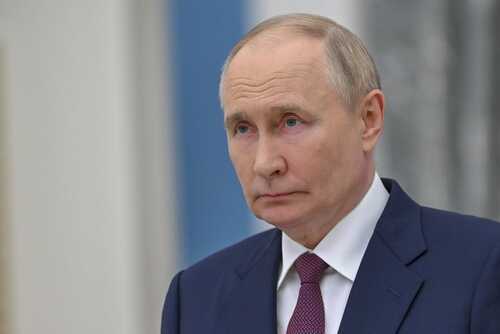
Russian President Vladimir Putin has issued a direct threat of military escalation, stating that Russia will fulfill its objectives through force if Ukraine and its Western allies refuse to resume dialogue. This warning signals Russia’s readiness to seize more territory and expand a security buffer zone along the border. The escalation comes amid stalled peace efforts and a new political dynamic from the Trump administration, which is signaling a potential push for 2025 negotiations to end what is described as an “endless conflict.” The article details the current military dynamics, the roles of key stakeholders, and the high-stakes impacts of the prolonged war.
Story Snapshot
- Putin warns Russia will achieve war goals by force if dialogue ends, expanding buffer zones along Ukraine’s border.
- Russia controls 20% of Ukraine, advances in Donetsk, as the Trump team hints at 2025 negotiations to end the endless conflict.
- Western aid exceeding $100 billion fuels stalemate; conservatives see folly in funding proxy wars draining U.S. resources.
- Buffer zones counter Ukrainian strikes into Russia, protecting civilians from cross-border terror.
Putin’s Direct Warning
Russian President Vladimir Putin stated that if Ukraine and its Western allies abandon dialogue, Russia will fulfill its military objectives through force. He plans to expand a security buffer zone along the Ukrainian border to counter cross-border attacks. This message came amid stalled peace efforts, with Putin emphasizing Russia’s determination absent negotiations. The statement aligns with ongoing advances in eastern Ukraine, where Russia holds the initiative through superior manpower and artillery production.
Russian President Vladimir Putin warned Wednesday that Moscow will seek to extend its gains in Ukraine if Kyiv and its Western allies reject the Kremlin's demands in peace talks. https://t.co/1L0jCCTGKd pic.twitter.com/rxheSaA5z0
— Yahoo News (@YahooNews) December 17, 2025
Conflict Origins and Escalation Path
The Russia-Ukraine war began with Russia’s 2014 annexation of Crimea and support for Donbas separatists, escalating to full invasion on February 24, 2022. Putin justified actions as denazification and protection of Russian speakers against NATO expansion threats. Key events include failed 2022 Istanbul talks, Russia’s 2024 captures in Donbas, and Ukraine’s Kursk incursion. Ukrainian drone strikes on Russian regions like Belgorod prompted buffer zone rhetoric, echoing prior threats by Putin and Defense Minister Shoigu. Russia now controls about 20% of Ukraine.
Stakeholders and Power Dynamics
Putin drives Russia’s strategy to secure annexed territories and neutralize NATO threats for domestic legitimacy. Ukraine’s Zelenskyy demands full Russian withdrawal for talks, prioritizing territorial integrity and Western integration. The U.S. under Biden provided over $100 billion in aid; now with Trump in office, signals point to potential 2025 peace pushes avoiding endless spending. NATO and EU supply weapons but face war fatigue. Russia produces three times Ukraine’s artillery shells, holding military edge despite sanctions bypassed via China and India.
Power favors Russia in manpower; West relies on economic pressure. No direct Putin-Zelenskyy talks occur, mediated through Turkey or U.S. Congress controls aid votes amid domestic priorities like border security.
Recent Advances and Trump Era Context
As of late 2025, Russia encircles Pokrovsk in Donetsk, with Ukraine losing over 1,000 square kilometers monthly. Putin’s December 2024 remarks reiterated buffer expansion post-Kursk, echoing Foreign Minister Lavrov’s dismissal of U.S. terms as unrealistic. Early 2025 saw intensified strikes on Ukrainian energy infrastructure. No active talks proceed, but Trump’s team hints at negotiations, offering hope to end a conflict costing American taxpayers billions in futile proxy aid.
Impacts and Professional Views
Short-term risks include 100,000 annual casualties and refugee surges; long-term outcomes may redraw borders into a frozen conflict like Korea. Ukrainian civilians suffer 8 million displaced and 20,000 deaths; Russian conscripts face 500,000 losses. Economically, global food and energy prices spike, Ukraine’s GDP drops 35%, while U.S. defense stocks rise 20%. Professionals like ISW see buffer zones as conquest pretexts; Michael Kofman notes no compromise on Crimea or Donbas. Pro-Russia views call it a bluff; neutrals predict a Russian long-term advantage in a stalemate.
Watch the report: Putin warns Russia will extend gains in Ukraine if peace talks fail
Sources:
Putin warns that Russia will seek to extend its gains in Ukraine if peace talks fail
Putin warns of military escalation in Ukraine to gain more land if no peace deal is reached