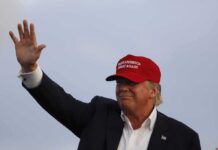


The Supreme Court’s 6–3 ruling against President Trump’s emergency tariffs puts Congress back in charge of trade law, tightening the leash on executive power.
Story Highlights
- The Court said the emergency law did not allow tariffs, applying the “major questions” rule.
- Chief Justice John Roberts led a cross-ideological majority with Justices Gorsuch and Barrett joining liberals.
- Reason argues this and other rulings show the Court does not simply serve party goals.
- Liberal groups still say the Roberts Court mostly favors Republican interests.
What The Court Actually Decided In The Tariff Case
The Supreme Court decided Learning Resources, Inc. v. Trump on February 20, 2026. The justices ruled 6–3 that the International Emergency Economic Powers Act did not let the President impose broad tariffs. Chief Justice John Roberts wrote the controlling opinion. The opinion used the major-questions principle, which requires clear language from Congress for big economic actions. The Court stressed that trade duties are a matter Congress must speak to directly if it wants the President to wield them.
A Congressional Research Service brief explained the core effect. It said the Court read the emergency law narrowly. The Court would not stretch an emergency statute to cover tariff power that Congress placed elsewhere. That aligns with separation of powers. Congress writes the rules on taxes and tariffs. The President enforces them. The Court said “not so fast” to any shortcut around that basic design through emergency claims.
Why The Coalition Matters For Conservatives
The lineup crossed the usual lines. Roberts, Justices Neil Gorsuch and Amy Coney Barrett joined Justices Sonia Sotomayor, Elena Kagan, and Ketanji Brown Jackson. That is not a simple partisan bloc. It shows that several conservative justices will check a Republican president when a statute runs out of text. For limited-government readers, that is the point. Courts should not invent power. They should force Congress to speak clearly before the executive acts at scale.
Reason’s analysis highlighted another point. Some rulings under Chief Justice Roberts have cut against short-term Republican political interests. That includes the tariff case. It also cites recent episodes where a legal win or loss did not map neatly to party goals after voters reacted. The takeaway is not that the Court is “liberal.” It is that doctrine, text, and coalitions can produce mixed outcomes that do not serve a party script.
How This Ruling Fits Conservative First Principles
Limited government stands or falls on clear law. When presidents, from any party, point to emergencies to grab new powers, families and small firms pay the price. Unclear rules raise costs and make planning hard. The Court’s message was simple. If a president wants tariff power, he must find it in the trade laws Congress wrote. If the law is silent, he cannot stretch an emergency statute to fill the gap. That guards markets and the Constitution’s checks.
The decision also narrows room for surprise economic shocks from Washington. Tariffs hit supply chains and prices that families face at the store. Clear lines help energy, farming, and manufacturing plan ahead. Conservatives can back this rule even when it clips a Republican administration. The rule will also bind the next Democrat who tries to use a climate or labor “emergency” to rewrite the economy without a vote in Congress.
The Fight Over The Roberts Court’s Reputation
Liberal advocates still claim the Roberts Court mostly favors Republican interests. They cite tallies of past terms and name cases on speech, voting, and unions. Their briefs argue the Court helped business groups and the Republican Party for years. Those claims frame many media stories and shape public opinion. But the tariff ruling, with its mixed coalition, is a real counterexample that complicates a simple partisan label.
Scholars allied with that view also argue the Court often reaches conservative results across thousands of cases. That big-picture claim is serious, but it does not erase recent cross-ideological outcomes. The record is mixed. Some decisions align with the right on speech or regulation. Others, like Learning Resources, pull power back from a Republican executive to Congress. Readers should judge case by case, with text and structure first, not team jerseys.
What To Watch Next In Congress And The Economy
Lawmakers now own the next move. If Congress wants a president, any president, to use tariff leverage fast in a crisis, it can write that plainly. If not, agencies and the White House must use the tools Congress already gave. For families and small businesses, the upside is stability. Fewer sudden rules mean fewer price spikes and fewer shocks to jobs, fuel, and freight. That is how the Constitution keeps power close to the people’s branch.
Sources:
reason.com, supremecourt.gov, congress.gov, law.cornell.edu, acslaw.org