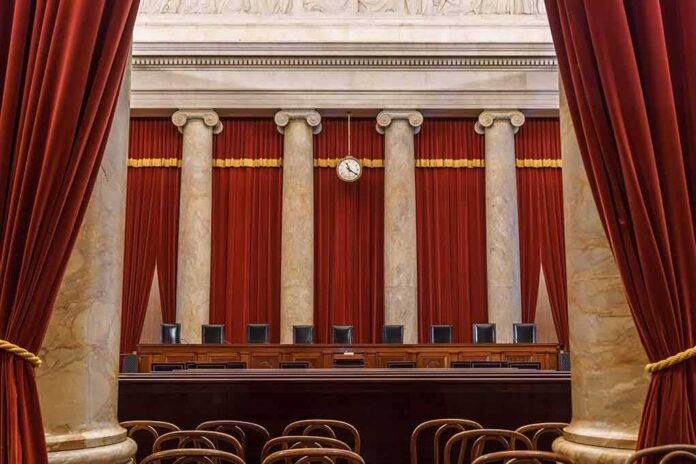
Justice Samuel Alito says he is staying on the Supreme Court for another term, reviving a high-stakes debate over whether conservatives should press for strategic retirements while the Senate math still favors them.
Story Snapshot
- Alito, 76, said, “Obviously I’m here for another term,” rejecting retirement rumors.
- NPR retracted an earlier, false report that he would retire, confirming no announcement was made.
- Commentators compare the moment to Ruth Bader Ginsburg’s choice to stay, which reshaped the Court after her death.
- President Trump discussed the Ginsburg precedent as part of the public debate about timing and Senate control.
Alito Confirms He Will Remain Through The Next Term
Justice Samuel Alito told The Wall Street Journal he plans to remain on the Court for another term. He is 76 years old and emphasized that his service “goes with life tenure.” His comment ended weeks of chatter about a possible retirement aimed at locking in a successor this year. Major outlets reported his statement, which undercut rumors he would step down soon to shape the choice of his replacement.
In June, a burst of confusion made headlines after a false report claimed he had retired. National Public Radio later withdrew the story and stated that Alito had not announced any retirement. The episode showed how fast anonymous whispers can overrun facts in today’s media cycle. The correction re-centered the record on Alito’s own words, not speculation or unnamed sources.
The Ginsburg Precedent And Why Timing Matters To Both Sides
Commentators point to Justice Ruth Bader Ginsburg’s decision to stay as the most vivid lesson on timing. She rejected many calls to retire and then died in 2020. That event gave President Trump and a Republican Senate the chance to confirm Justice Amy Coney Barrett, which helped form the Court’s current 6-3 conservative majority. That chain of events drives today’s arguments about planning and risk on both sides of the aisle.
President Trump himself recently referenced the Ginsburg episode while addressing the question of whether Alito should retire. He described how her decision affected the Court and the politics around it. His remarks signaled that timing is not an academic point. It is a real power question tied to who controls the Senate and whether a like-minded justice can be seated without delay during a narrow window.
Life Tenure, Conservative Goals, And The Stakes If Power Shifts
Life tenure means justices answer to the Constitution, not a campaign clock. Alito stressed that he judges each case by the law, not by what any politician wants. That principle aligns with originalism and separation of powers. Yet the Senate still votes on nominees. If control flips, a vacancy could swing the Court’s direction for decades. That is why some on the right warn against letting favorable conditions slip away without a confirmed successor.
Conservatives remember how court fights shape daily life. A stable majority can defend faith in the public square, protect the Second Amendment, and block federal overreach. A hostile majority can strain parental rights, enable unelected regulators, and ignore clear constitutional limits. That is why the question of retiring now or later is so charged. It is not about personalities. It is about whether liberty keeps winning or starts slipping case by case.
What We Know, What We Do Not, And The Road Ahead
We know Alito is staying for the upcoming term because he said so. We know a prior report saying otherwise was wrong. We also know the Ginsburg timeline shaped the current majority and fuels today’s debate. What we do not know is how the next election will shape Senate control or how future health or personal factors could change any justice’s plans. Until facts change, Alito’s decision stands on his stated duty and life tenure.
Bottom Line For Readers Who Care About The Constitution
Alito’s choice reflects commitment to service, not cable news pressure. Still, the lesson from recent history is clear: personnel is policy, and timing can decide outcomes that touch every home and church. President Trump put the stakes on the table. Voters now decide who holds the gavels that confirm judges. Stay engaged, demand rigorous vetting, and support leaders who will seat constitutionalists. That is how we protect the Bill of Rights for our families and the next generation.
Sources:
reason.com, politico.com, washingtonpost.com, politicalwire.com