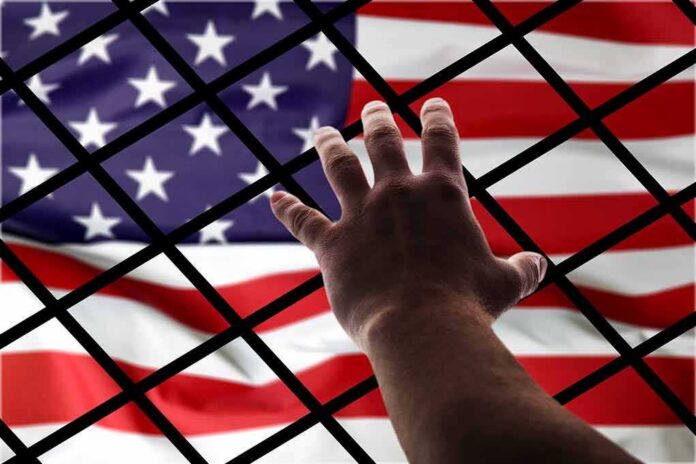
New details show ICE has quietly used court orders, restraints, and force-feeding against hunger-striking detainees inside immigration custody.
Quick Take
- Reports say at least 10 detainees faced involuntary medical procedures after hunger strikes.
- Court records described force-feeding, forced hydration, and involuntary blood draws.
- ICE said it monitors hunger strikers and can use involuntary treatment when health is at risk.
- Medical and human-rights groups called force-feeding unethical, inhumane, and sometimes torture.
Court Orders Put the Practice in the Open
The latest reporting says ICE has sought emergency court orders to force-feed hunger strikers in detention, often after only a short time without food. The Guardian said the process is fast and secretive, with guards restraining detainees while medical staff insert a tube through the nose and into the stomach. Its review of court records found force-feeding, forced hydration, and involuntary blood draws in multiple cases.
That account matters because it shows this was not a one-off accident. The American Civil Liberties Union said internal records show ICE began seeking and carrying out involuntary treatment years earlier than the public knew, including a previously unknown force-feeding case from 2016 and government motions as early as 2012. Physicians for Human Rights said the records also show force-feeding, forced hydration, forced urinary catheterization, and restraints used against hunger strikers.
ICE Says It Acts to Protect Health and Safety
ICE has defended the practice as a medical response to a health emergency. A published interview quoted an ICE spokesperson saying the agency closely monitors detainees on hunger strike and permits involuntary medical treatment when a detainee’s health is at risk. PBS also reported that ICE officials said they monitor food and water intake to protect health and safety, and that judges have authorized non-consensual feeding and hydration in court orders.
That legal point gives supporters of the practice a clear argument. President Trump’s administration can point to court approval and say the goal is to prevent death, not to punish protest. But the public record still shows how aggressive the method is. Detainees have been restrained while tubes are forced down the nose and throat, which the reporting describes as painful, traumatizing, and potentially harmful.
Medical Groups Say the Method Crosses a Line
Human-rights and medical groups are not calling this a minor policy dispute. Physicians for Human Rights says force-feeding is unethical, inhumane, and can amount to torture. Human Rights Watch says tube feeding can be cruel, inhuman, and degrading, and it warns of serious risks such as infection, collapsed lungs, heart failure, and psychological trauma. Those groups also say competent adults have a right to refuse treatment.
The toughest part for ICE is the image and the method itself. The reporting describes nasal tubes, restraints, forced hydration, and even involuntary blood draws and catheterization. A Democracy Now summary of the Guardian’s court-record review said at least three detainees were actually force-fed, and one Kurdish asylum seeker was force-fed for nearly eight months. That kind of duration makes the practice look less like emergency care and more like state coercion.
Why This Story Is Growing Now
The new details strengthen a broader pattern that has troubled critics for years. The ACLU said the latest records show ICE’s approach to hunger strikes is not narrow or rare. It said the agency has used a wide set of invasive procedures, often behind closed doors, and that this system extends well beyond one facility or one moment. The Guardian likewise reported that some detainees ended their strikes only when force-feeding became imminent.
For conservatives who care about limited government, this is the central tension. The state says it is protecting life. Critics say the same state is using medical power to override personal refusal in a hidden detention system. The public record now shows both the legal cover and the human cost. What remains contested is whether ICE’s health justification truly fits each case, or whether the government has normalized a coercive practice that should never have become routine.
Sources:
feedpress.me, theguardian.com, phr.org, pbs.org, democracynow.org, aclu.org, theconversation.com, thehill.com