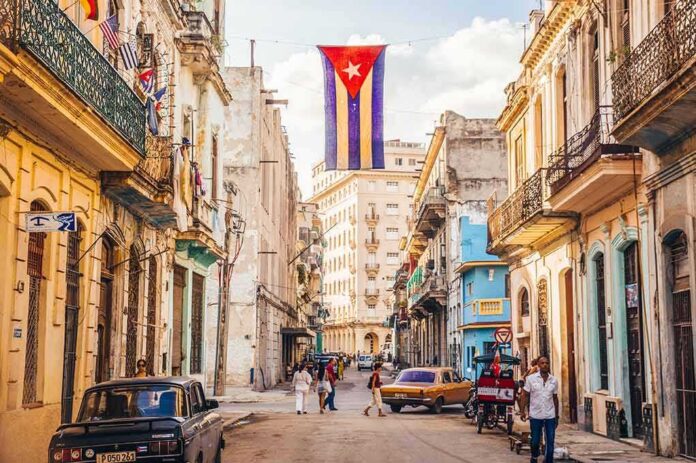
Cuba’s communist ruler just accused the United States of “genocide” and trying to seize the island, all because President Trump tightened long‑standing sanctions that push Havana to finally change course.
Story Snapshot
- Cuban President Miguel Díaz‑Canel claims Trump’s tougher sanctions and oil embargo are “genocide” meant to take over Cuba.
- Washington’s measures target the communist regime and its revenue networks, while Cuba blames them for blackouts and shortages.
- The United States embargo has been in place for more than 60 years, aimed at pressuring the regime, not erasing Cuba’s sovereignty.
- Díaz‑Canel is using harsh language and fear of invasion to rally support at home and dodge blame for his failed socialist system.
Cuban leader escalates rhetoric, accuses U.S. of ‘genocide’ and takeover
On Cuba’s annual Revolution Day, President Miguel Díaz‑Canel used a mass rally in the western province of Pinar del Río to launch his sharpest attack yet on the United States. He claimed that President Trump’s oil embargo and sanctions amount to a “cold‑bloodedly calculated genocide” against the Cuban people and said the real goal is to “suffocate an entire people in order to appropriate the country.” He portrayed the island as under siege and suggested Washington is preparing to seize its territory.
Díaz‑Canel tied his accusations directly to the new economic squeeze coming from Washington. He said the United States oil embargo, in force since late January, has produced daily power cuts that can last more than twenty hours, shutting factories and leaving homes in darkness. He blamed sanctions for water and medicine shortages and for businesses cutting workdays. In his words, the sanctions are “collective punishment” and a weapon of war, deliberately designed to trigger a “social explosion” that would topple his government.
Trump’s sanctions strategy: economic pressure, not territorial conquest
The Trump administration has indeed tightened the screws on Cuba, but through economic tools, not military land grabs. The United States already maintained a comprehensive embargo on the communist regime for decades, and President Trump moved to extend that pressure by targeting fuel shipments, financial transactions, and key state revenue streams like overseas medical missions. Washington frames these steps as sanctions against corruption, human rights abuses, and security threats, using tools such as an oil blockade and penalties on firms that feed the regime’s cash flow.
Recent policy has focused on cutting off Cuba’s access to oil by threatening tariffs and sanctions against third countries that supply crude to the island. Reported measures include an executive order that raises costs for any foreign company selling fuel to Havana and new sanctions on Cuban officials and intelligence services accused of rights violations. One expert quoted by the British Broadcasting Corporation described the strategy as gradually heightening pressure so the regime feels forced to negotiate. The United States also pursued criminal charges against former leader Raúl Castro over the 1996 shoot‑down of civilian planes.
Sixty years of embargo: how we got here and why it still matters
The current clash sits on top of more than sixty years of United States sanctions on Cuba. The embargo began in the early 1960s after the communist revolution seized United States‑owned property and aligned with the Soviet Union. Over time, Congress and different presidents layered on more rules, turning the embargo into one of the most complex and long‑lasting sanctions programs in American foreign policy. The State Department still describes it as a comprehensive economic embargo that restricts trade, finance, and many forms of cooperation with the Cuban state.
Researchers who have examined declassified documents note that early embargo architects openly aimed to create “hardship” and “disenchantment” with the communist government to push regime change. Human rights groups and international bodies now describe the embargo as the most sweeping sanctions the United States has ever used, and the United Nations General Assembly has repeatedly called for it to end. Supporters argue the pressure is necessary to challenge a repressive, anti‑American regime ninety miles from Florida, while critics say ordinary Cubans carry most of the burden and that the policy has yet to force real reform.
Sanctions, sovereignty, and what Díaz‑Canel is really trying to protect
Díaz‑Canel’s fiery language about “genocide” and a United States plan to seize Cuba fits a long pattern in Havana’s political playbook. Cuban leaders have often portrayed sanctions as a form of war or a step toward invasion, using fear of foreign aggression to rally support and shift blame away from the failures of central planning and one‑party rule. By painting President Trump’s actions as a threat to Cuba’s “constitutional order” and sovereignty, the regime seeks to turn anger over blackouts and food lines into anger at Washington.
For American conservatives, the picture looks different. President Trump is responding to a hostile communist government that has a long record of repression, support for United States adversaries, and involvement in incidents like the 1996 plane downing. His administration is using sanctions and embargo enforcement, not tanks and troops, to push back. Economic coercion is tough policy, and it clearly worsens Cuba’s crisis, but it is not the same as a plan to erase Cuba as an independent nation. The real struggle is over whether that regime will ever respect basic freedoms.
Sources:
insiderpaper.com, aljazeera.com, thehindu.com, cnbc.com, tass.com, reuters.com, bbc.com, thehill.com, usatoday.com, ipe-berlin.org, nsarchive.gwu.edu, congress.gov, amnesty.org, revolutionarycommunist.org, cfr.org