A rushed Iran “peace” memorandum signed at Versailles now raises hard questions about nuclear trust, sanctions relief, and who really benefits.
Story Snapshot
- Trump signed a 14-point Iran memorandum of understanding at the Palace of Versailles during the G7 summit, formally putting an interim deal into effect.
- The agreement promises a $300 billion reconstruction plan for Iran, reopening the Strait of Hormuz, and lifting U.S. sanctions, while Iran again pledges not to build nuclear weapons.
- Key enforcement tools, new inspections, and Iran’s missile program are left for later talks, echoing past weak deals that let Tehran gain cash and time.
- Democrats and many media voices say the deal favors Iran, while conservatives worry about vague timelines, loose oversight, and sanctions relief that could fuel hostile proxy groups.
Versailles Signing Ends Fighting, But Starts a New Debate
President Trump has now formally signed the Iran Memorandum of Understanding at the Palace of Versailles in France, with French President Emmanuel Macron applauding beside him as cameras rolled.[1] White House officials say this signing, which followed earlier digital signatures, means the 14-point agreement to halt the war and extend the ceasefire is “now in effect.”[5] The deal is framed as an interim step to stop major combat and open a 60-day window for tougher follow-on talks over nuclear and security issues.[6]
The memorandum orders an immediate end to military operations “on all fronts,” including Lebanon, and calls for reopening the Strait of Hormuz to full maritime traffic so global oil can flow again.[1][2] The United States agrees to lift its naval blockade of Iranian ports and to move toward lifting economic sanctions that have squeezed Tehran’s regime.[2] For war-weary Americans and allies, stopping missiles and getting shipping lanes open is a real relief—but it comes with a heavy price in leverage given to Iran.[26]
$300 Billion for Iran and Sanctions Relief With Few Clear Guardrails
At the heart of the memorandum is a huge promise: a $300 billion fund for Iran’s “reconstruction and economic development,” described as built by regional partners, with the United States directing and facilitating but not directly paying into it.[2][11] The agreement is labeled “performance-based,” meaning Iran is supposed to receive benefits only if it follows its obligations.[2] Yet the text leaves the exact financing structure to be designed within 60 days, which means the real controls, donors, and conditions are still on the drawing board.[13]
The memorandum also commits the United States to lift all economic sanctions, including those tied to United Nations resolutions and unilateral American measures, but the timing for that relief is vague and tied to a future final deal.[2][15] Critics warn that sanctions relief without airtight oversight risks repeating the pattern of past Iran arrangements, where the regime got access to cash while keeping its regional network of proxy forces intact.[26] Fox News commentary and other skeptics stress there is no detailed mechanism in the text to make sure money goes to rebuilding cities rather than bankrolling groups like Hezbollah.[11]
Nuclear Promise Repeated, But Missiles and Inspections Kicked Down the Road
The memorandum says Iran “will never have a nuclear weapon” and that Tehran agrees not to acquire or purchase such weapons, reaffirming a vow it has made for decades.[1][2] It also notes that both sides will address Iran’s existing stock of enriched uranium and set up a “mechanism” to oversee implementation in a later, final agreement.[2][15] However, the nuclear pledge appears only as one point among fourteen, and the memorandum itself does not create a new inspection regime or spell out strict verification steps, leaving those to future talks.[16]
Multiple reports agree that Iran’s ballistic missile program is not addressed in the text of the memorandum, even though missiles are the main way Iran can threaten U.S. forces, Israel, and Gulf states.[5][26] Security experts compare this gap to the 2015 Joint Comprehensive Plan of Action, which focused on enrichment but largely ignored missiles and proxy groups.[23][26] Once again, a temporary ceasefire and limited nuclear language offer short-term calm while leaving the tools of future aggression untouched, which alarms many conservatives who remember how quickly Iran ramped up enrichment after past deals failed.[23]
Ceremony, Politics, and What Conservatives Should Watch Next
The Versailles setting, complete with Macron’s dinner and a carefully staged signing clip, gave the agreement a sense of finality even though many core issues are deferred for at least 60 days.[1][3][6] Media coverage notes that officials had already signed the document digitally and that the palace signing was as much about visuals as legal change.[6] This kind of ceremony-first rollout risks selling voters a “peace” that is really an interim ceasefire, with major nuclear, missile, and enforcement details still unsettled behind closed doors.[26]
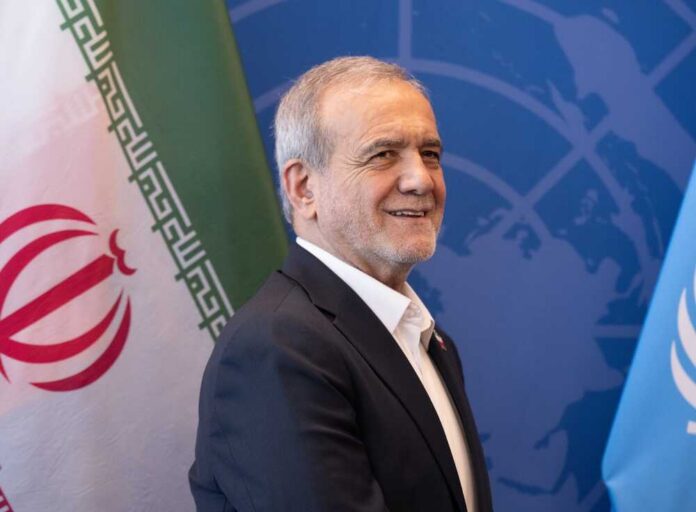
The US and Iran signed a memorandum of understanding extending the ceasefire by 60 days and providing for the gradual reopening of the Strait of Hormuz, with Trump signing the agreement at the Palace of Versailles near Paris and President @drpezeshkian approving it electronically pic.twitter.com/fj1LOFCRW2
— İran Bülteni (@iranbulten) June 18, 2026
Democratic senators and many mainstream outlets are attacking the deal from another angle, claiming it gives Iran too much while the United States gets only vague promises and a fragile quiet.[8] For conservatives, the key tests now are simple: whether strict verification is added, whether sanctions relief is paced and reversible, whether Congress gets real oversight, and whether Iran’s regime uses this breathing room to de-escalate—or to regroup and rearm. Until those answers are clear and on paper, caution and close scrutiny are not just wise; they are essential.[11]
Sources:
[1] YouTube – WARNING: FLASHING IMAGES – Trump signs Iran MOU at the Palace of …
[2] Web – US President Donald Trump and Iran have signed a deal to end …
[3] YouTube – Trump signs MoU aimed at ending Iran war at Versailles …
[5] Web – What’s in the US-Iran agreement that’s now in effect – BBC
[6] Web – Key moments from Donald Trump’s extraordinary Iran deal press …
[8] Web – Iran war live: Pakistan says MoU in effect after Trump, Pezeshkian …
[11] Web – Read the 14-Point Draft Memorandum Between the US and Iran
[13] Web – Read the US account of unreleased 14-point Iran ceasefire …
[15] YouTube – Leaked US–Iran deal: What’s in the 14-point plan? | DW News
[16] Web – White House officials unveil details of 14-point plan with Iran
[23] YouTube – The history of US-Iran relations – from friendly to violent | The …
[26] Web – Documenting Iran-U.S. Relations, 1978-2015