
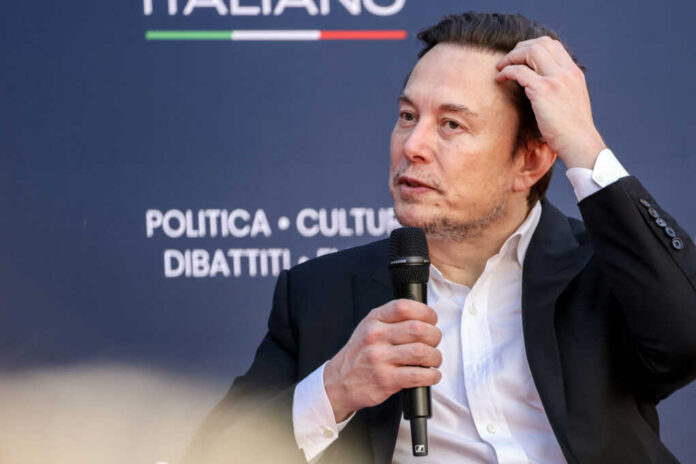
Elon Musk’s public blast at Christopher Nolan over the new Odyssey movie is pulling the curtain back on how far Hollywood will bend classic Western stories to satisfy diversity quotas and woke taste‑makers.
Story Snapshot
- Christopher Nolan cast Lupita Nyong’o as Helen of Troy in his upcoming film The Odyssey, igniting a furious debate over “race-swapping” and fidelity to Western classics.
- Elon Musk accuses Nolan of “desecrating” Homer and pandering to Academy Awards diversity rules instead of honoring the source material.
- New Oscar eligibility standards and Hollywood’s obsession with diversity, equity, and inclusion are driving casting decisions that rewrite cultural heritage.
- The real fight is over who controls the meaning of Western civilization’s stories: audiences, or a tiny ideological elite in studios and awards bodies.
Musk’s Charge: Hollywood Is Rewriting Homer for Politics, Not Art
Fox News reports that Christopher Nolan confirmed Kenyan-Mexican-American actress Lupita Nyong’o will play Helen of Troy in his epic The Odyssey, now set for release later this summer.[1] Businessman Elon Musk reacted on his social media platform by accusing Nolan of “desecrating” Homer and chasing awards rather than respecting the story’s cultural roots. Other outlets quote Musk bluntly saying that “Chris Nolan has lost his integrity,” framing the decision as driven by politics instead of genuine artistic conviction.
Coverage of the backlash notes that Musk is not alone; commentators across right-leaning media argue Helen has historically been portrayed as a fair-skinned Mediterranean figure, and that flipping her identity is part of a broader pattern of “race swapping” central European characters.[1] They point to additional reported choices like rapper Travis Scott as a bard to signal how aggressively Nolan is modernizing the myth. For Musk’s supporters, this is not about one actress but about Hollywood rewriting a shared canon to satisfy ideological fashion.
Oscar Diversity Rules and the Incentive to “Play the Game”
The Academy of Motion Picture Arts and Sciences now requires films to meet at least two of four diversity and inclusion standards to qualify for the Best Picture category. One of those standards focuses on casting, where a production can comply by having at least one lead from an “underrepresented group,” by making thirty percent of the cast such groups, or by centering the plot on them. Media reports emphasize that these rules do not literally require any specific race in a given role, but they clearly reshape incentives for prestige projects chasing awards.
Critics in the conservative press and online argue that when Hollywood institutions bake these standards into the awards system, they inevitably put ideological pressure on directors and studios.[1] Even though Variety and others note that Nolan’s earlier film Oppenheimer featured an overwhelmingly white cast and still swept the Oscars, Musk’s camp believes that future prestige films will face far more scrutiny under the new rules. From that vantage point, casting Nyong’o as Helen looks less like bold creativity and more like checking a box to secure critical favor and red-carpet accolades.
Nolan’s Defense: “Speculating” About the Ancient Past
In an interview with Time Magazine, Nolan defended his approach by comparing historical epics to science fiction, arguing that both require “the best speculation” to build a world audiences can inhabit. He acknowledged that not all scholars of antiquity would agree with his decisions but expressed hope that viewers would still enjoy the film even if they disagreed with some choices. Nolan also explained that casting rapper Travis Scott as a bard was meant as a nod to the Odyssey’s origins in oral poetry, loosely analogizing that tradition to modern rap culture.
Supporters of Nolan’s approach frame these decisions as part of a long tradition of reinterpreting myth for new generations. They argue that the original Homeric texts are less explicit about physical appearance than later popular imagination suggests, and that mythic characters are symbolic rather than literal historical figures. From that perspective, casting Nyong’o does not “erase” Greeks so much as assert that timeless stories can be embodied by anyone. That argument, however, does little to reassure audiences who see the pattern repeatedly targeting European heritage characters while leaving other cultures’ icons untouched.
Selective “Representation” and the Double Standard Conservatives See
Conservative viewers watching this controversy are not reacting in a vacuum; they have spent years watching studios aggressively rework classic Western stories—whether in superhero franchises, fantasy adaptations, or historical dramas—while being far more cautious about recasting non-Western legends.[1] Commentators in the research describe anger that when European or Greek figures are altered, critics are told accuracy does not matter, but when other cultures are involved, everyone suddenly insists on extreme authenticity.[2] That double standard reinforces a sense that Western civilization is uniquely fair game for ideological rewriting.
Elon Musk Sparks Debate Over Lupita Nyong’o Casting in Christopher Nolan Movie https://t.co/3vxtcbve3R
— Gist KE (@the1headspace) May 21, 2026
Under President Trump’s second term, many on the right see a parallel between this Hollywood pattern and the bureaucratic games in Washington that conservatives are still trying to unwind. In both cases, unelected elites quietly change standards—whether in awards rules or federal regulations—then insist ordinary people are bigots or ignorant if they object. The Odyssey fight becomes a symbol: if a small circle can redefine even Homer’s Helen for political points, what part of our cultural inheritance is safe from the next “equity” experiment?
Sources:
[1] Web – Nolan confirms controversial casting for The Odyssey amid backlash
[2] Web – Elon Musk slams Christopher Nolan over casting debate