
A massive new DHS surge into Minneapolis is testing whether Trump’s second-term crackdown can finally enforce the law over the loud objections of blue-state politicians. The 30-day operation is rotating roughly 2,000 federal agents through the Twin Cities to ramp up immigration arrests and dig into sprawling, billion-dollar fraud networks that flourished in Minnesota’s social-program system. However, the deployment has ignited a heated political clash, with state Democrats denouncing the move and protests erupting after an ICE officer’s traffic-stop shooting killed a Minneapolis woman.
Story Snapshot
- DHS is rotating roughly 2,000 federal agents into Minneapolis–St. Paul for one of its largest ever urban immigration and fraud crackdowns.
- The surge follows years of pandemic-era fraud in Minnesota programs that cost taxpayers billions and triggered federal funding freezes.
- Kristi Noem has embraced the deployment as a necessary hard‑line move, while Minnesota Democrats denounce it.
- An ICE traffic-stop shooting that killed a Minneapolis woman has sparked protests and sharpened the political clash.
A federally led surge into a deep-blue city
DHS has launched a 30‑day surge in the Minneapolis–St. Paul area that officials describe as one of the largest federal immigration operations ever carried out in a U.S. city. The effort, building on an earlier “Operation Metro Surge,” is rotating roughly 2,000 agents and officers through the Twin Cities. They include Immigration and Customs Enforcement Enforcement and Removal Operations teams, Homeland Security Investigations agents, tactical units, and a thick layer of supervisors directing on‑the‑ground activity.
Federal leaders say the mission is twofold: ramp up immigration arrests and dig into sprawling fraud networks that flourished in Minnesota’s social‑program system. Previous phases of the crackdown had already produced nearly 700 arrests by late 2024, largely targeting people with final deportation orders. Under Trump’s second-term promise of the “largest deportation program in American history,” this kind of concentrated surge is now a central enforcement tool, especially in jurisdictions that resisted cooperation during the Biden years.
Here we go 👀
CBS reporting that 2,000 federal agents are being deployed to Minneapolis to begin a “30-day surge” and “federal crackdown” on immigration and fraud.
I think the Somalis in Minnesota have officially reached the “find out” stage.
Hence why Walz dropped out. pic.twitter.com/grxxBP1XIc
— Clandestine (@WarClandestine) January 5, 2026
Fraud scandals and a long trail of wasted taxpayer dollars
The Minneapolis surge did not come out of nowhere; it follows years of fraud scandals in Minnesota that conservatives saw as a predictable byproduct of unchecked government spending. Since 2021, federal investigators have charged more than 90 people tied to pandemic-era schemes involving nutrition aid, housing stabilization, and child‑care assistance, with over 60 convictions and alleged losses in the billions. The infamous Feeding Our Future case became a national symbol of how quickly “emergency” programs were abused.
In response to the misconduct, federal health officials froze $185 million in child‑care payments to Minnesota, an extraordinary step that underlined how badly program integrity had broken down. State leaders, including Democratic Gov. Tim Walz, point to audits, outside reviews, and new anti‑fraud posts as proof they are cleaning up the mess. For many conservatives, those after‑the‑fact fixes arrived only once federal agents started following the money and holding fraudsters accountable with real prosecutions and arrests.
Immigration enforcement, Somali communities, and local backlash
The operation is also tightly linked to Trump’s broader immigration agenda and his willingness to send federal muscle into cities that long branded themselves “sanctuaries.” Minneapolis is home to one of the largest Somali diasporas in America, and federal briefings make clear that some investigations touch businesses and networks in immigrant neighborhoods. While DHS describes its targets as people with deportation orders or credible ties to fraud, advocacy groups claim the dragnet is sowing fear far beyond criminal suspects.
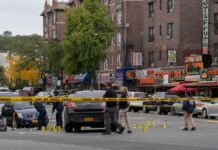
Community reports describe families avoiding work, school, and medical appointments because they fear street operations and traffic stops. That anxiety exploded into open confrontation after an ICE officer shot and killed a 37‑year‑old woman during a traffic stop in a residential area. Bystander video of the encounter spread rapidly online, and protesters quickly filled nearby streets. In a city still scarred by the George Floyd killing, the sight of armed federal officers conducting patrol-style stops has become another flashpoint for activists who oppose nearly any form of robust enforcement.
Blue-state officials clash with federal authority
Democratic leaders in Minnesota have responded to the surge with sharp rhetoric aimed squarely at Washington. Gov. Walz called the shooting “predictable” and “avoidable,” accusing federal officials of escalating tensions while urging protesters to remain peaceful and warning he could deploy the National Guard if unrest grows. Minneapolis Mayor Jacob Frey went further, publicly dismissing ICE’s account of the shooting as “garbage” after watching the video and telling federal officers to leave the city in profanity-laced comments.
Despite the condemnation, state and local officials have limited power to halt a federal immigration operation authorized under national law and funded by Congress. DHS does not need permission from city hall to execute deportation orders or serve search warrants in fraud cases. However, local leaders can influence how city police respond to protests, how much logistical cooperation federal agents receive, and how the broader public understands what is happening. That power over narrative, rather than law, explains much of the heated political theater now unfolding.
The Department of Homeland Security deployed 2,000 federal agents
Noem, Trump, and the message to would-be lawbreakers
Kristi Noem has taken a very different tone, embracing the Minneapolis deployment as proof that Trump’s second-term DHS is serious about both border security and internal enforcement. Noem publicly announced that more than 2,000 officers were involved and touted “hundreds and hundreds” of arrests already made, framing the crackdown as a necessary answer to years of fraud, open borders, and progressive “sanctuary” policies that left law‑abiding citizens to pay the price. Her comments align tightly with Trump’s national messaging.
For conservatives frustrated by past inaction, the operation signals that Washington is finally willing to use the tools it has: expedited removals, large-city surges, and expanded investigative work against those who exploited bloated relief programs. At the same time, the early use of lethal force, the scale of federal presence, and the volatile protest environment guarantee continuing scrutiny of how agents carry out Trump’s mandate. The central question now is whether firm enforcement can be sustained without caving to political pressure from officials who opposed it from the start.
Watch the report: 2,000 officers in Minnesota for ‘largest immigration operation ever,’ Homeland Security says
Sources:
2000 federal agents deploying to Minneapolis in ‘massive’ immigration crackdown
ICE officer kills a Minneapolis driver in a deadly start to Trump’s latest immigration operation
ICE-related shooting occurred in Minnesota, governor says
Federal officers move from Louisiana ICE crackdown to Minneapolis