On November 26, 2025, an ambush just two blocks from the White House resulted in the death of West Virginia National Guard Spc. Sarah Beckstrom and a critical head wound to Staff Sgt. Andrew Wolfe. The attack, allegedly carried out by an Afghan migrant who entered the U.S. under Operation Allies Welcome, has ignited a national debate over immigration, vetting policies, and the domestic deployment of the National Guard. While Wolfe makes a “miraculous” recovery, the incident highlights the human cost of security and political failures, with the accused shooter now facing federal murder and assault charges.
Story Snapshot
- West Virginia National Guardsman Staff Sgt. Andrew Wolfe is making “miraculous” progress after being shot in the head near the White House.
- Fellow guardsman Spc. Sarah Beckstrom died after the ambush, underscoring the human price of political and security failures.
- The accused gunman, an Afghan migrant brought in under Operation Allies Welcome, reportedly shouted “Allahu Akbar” during the attack.
- The shooting occurred amid legal battles over the Trump administration’s domestic National Guard deployment in Washington, D.C.
A deadly ambush near the White House shakes Guard families and patriots
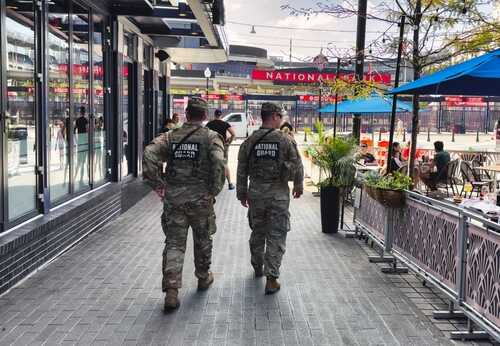
On November 26, 2025, just after 2 p.m., two West Virginia National Guard troops on patrol near the busy Farragut West Metro station were ambushed only two blocks from the White House. According to official summaries, suspect Rahmanullah Lakanwal allegedly fired 10 to 15 rounds, striking Staff Sgt. Andrew Wolfe and Spc. Sarah Beckstrom in the head before one guardsman managed to return fire and stab the attacker, ending the assault. Both citizen-soldiers were rushed into emergency surgery as confusion and grief rippled back home.
Initial reports from West Virginia’s governor suggested both troops had been killed, a headline that hit Guard families and conservative audiences like a punch in the gut. Within hours, officials walked back those statements as doctors fought to stabilize the wounded. Beckstrom, a 20-year-old military police specialist remembered as deeply rooted in small-town West Virginia values, died the next day. Her body was escorted by motorcade in solemn tribute, the kind of ceremony no Gold Star family ever wants to attend but too many now understand personally.
‘Miracle’ of National Guardsman shot in DC: ‘Our boy is going to recover’ https://t.co/q8gQHJxNAJ pic.twitter.com/AlpSmENYLr
— New York Post (@nypost) December 13, 2025
A “miraculous” recovery and a family clinging to faith
While Beckstrom’s family prepared for burial, Wolfe’s loved ones faced a different kind of agony: the uncertainty of whether their 24-year-old airman would survive a head wound many considered unsurvivable. In the days after surgery, doctors described his condition as serious but slowly improving. By December 1, his family reported that he was responding to commands, breathing more independently, and defying grim early expectations—progress they described as “miraculous” and proof that, in their words, “our boy is going to recover,” giving many Americans a rallying point for prayer.
The image of a young National Guardsman fighting his way back in a D.C. hospital resonated especially with conservatives already weary of being told to accept crime, terrorism, and chaos as the “new normal.” Wolfe’s service record traces back to his 2019 enlistment with the 167th Airlift Wing, a classic example of a small-town American choosing duty over comfort. For many readers, his struggle to recover mirrors their own determination to push through years of bad policy decisions that left the country less safe and less stable than it should have been.
The suspect’s background and the failure of past immigration policies
Details emerging about the alleged gunman’s background have only deepened frustration among those who warned for years about reckless border and refugee policies. Lakanwal, a 29-year-old Afghan Pashtun from Khost, reportedly entered the United States in September 2021 under Operation Allies Welcome, the Biden-era program that rushed tens of thousands into the country after the chaotic Afghanistan withdrawal. Reports also note he had CIA-contracted paramilitary training and allegedly shouted “Allahu Akbar” as he opened fire, raising obvious concerns about vetting, indoctrination, and ideological threat.
For many conservatives, this case embodies what they feared from hasty resettlement and lax screening: foreign nationals with combat skills admitted under political pressure, then turning those skills against American servicemembers on U.S. soil. Trump officials now point back to these earlier choices as a textbook example of how globalist compassion, detached from common-sense security, can directly endanger constitutional order at home. While courts and activists wring their hands over enforcement, it is uniformed Americans like Wolfe and Beckstrom who pay the immediate price when failures slip through the system.
Domestic deployment, legal fights, and the politics of security
This shooting did not happen in a vacuum. It occurred against the backdrop of President Trump’s 2025 decision to mobilize National Guard units, including West Virginia troops, to patrol downtown Washington as part of the “D.C. Safe and Beautiful Mission.” Launched in August 2025 after unspecified security concerns, the mission aimed to put disciplined, uniformed presence on the streets near the government core. Critics quickly challenged the deployment in court, arguing that it blurred lines between military and civilian policing and tested the limits of federal power.
One week before the attack, a federal judge ruled the deployment unlawful but stayed the ruling until mid-December, allowing troops to remain on the streets pending appeal. That left Guard members carrying out orders under a legal cloud, even as they provided visible deterrence in a high-risk environment. After the ambush, supporters of the mission argued that the incident proved why a strong, disciplined security posture in the capital is essential, especially after years when lax enforcement and political theatrics often overshadowed the basic duty to keep Americans safe in their own capital city.
Families, faith, and the fight over America’s direction
In the days following the shooting, President Trump invited the Wolfe and Beckstrom families to the White House, signaling that the administration sees their sacrifice as central to a larger national story. Federal prosecutors charged Lakanwal with murder, assault, and firearms offenses, while officials described him as non-cooperative in custody. Republicans linked the case to broader calls for stricter immigration controls and deportation of radical Islamists, arguing that ensuring public safety and honoring victims like Beckstrom requires decisive action rather than symbolic gestures or partisan lectures.
At the same time, legal and policy debates continue over how far domestic deployments of the Guard should go and how they interact with long-standing protections like the Posse Comitatus Act. For conservatives wary of government overreach, the key distinction is purpose: using the Guard to support law and order and protect citizens, versus weaponizing institutions against political opponents or law-abiding gun owners. As Wolfe fights his way back, his story challenges the country to decide whether it will prioritize security rooted in constitutional values or slide further into the dangerous confusion that enabled this attack.
Watch the report: Doctors say National Guard member shot in DC still making progress
Sources:
National Guardsman shot in D.C. making ‘extraordinary progress,’ doctor says.
Wounded National Guardsman is making ‘extraordinary progress,’ can breathe on his own: doctor