

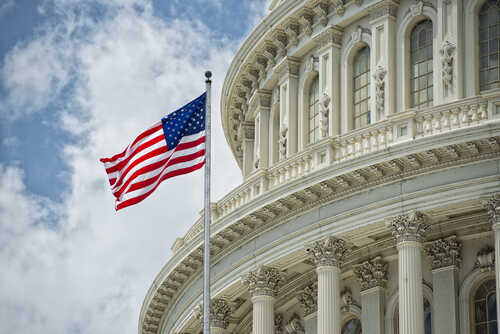
In December 2025, the U.S. House approved the National Defense Authorization Act (NDAA), a comprehensive $901 billion defense policy bill that marks a clear congressional challenge to President Trump’s military strategy. Notably, the legislation blocks the administration’s plan to reduce U.S. troop levels in Europe and South Korea and mandates continued aid to Ukraine, directly opposing the administration’s zero-funding request. This move is a strong signal of Congress reasserting its authority in shaping U.S. foreign and military policy.
Story Highlights
- Congress passes NDAA blocking troop reductions Trump supports.
- $901 billion authorized for national security spending.
- Ukraine aid continues despite administration’s zero funding request.
- Repeal of outdated Iraq war authorizations included.
Congress Challenges Trump’s Military Strategy
In December 2025, the U.S. House approved the National Defense Authorization Act (NDAA), a comprehensive defense policy bill that authorizes approximately $901 billion for national security. The NDAA notably includes provisions that limit the Trump administration’s ability to reduce U.S. troop levels in Europe and South Korea. It also mandates continued aid to Ukraine, directly opposing the administration’s request to halt the funding. This move is seen as Congress reasserting its authority and positioning itself against Trump’s military policy aims.
The legislation, passed with a significant bipartisan majority of 312–112, seeks to maintain minimum troop levels in Europe at 76,000. Additionally, it repeals the 1991 and 2002 Iraq Authorizations for Use of Military Force (AUMFs) while leaving the 2001 AUMF intact. The bill’s provisions are crafted to ensure the United States maintains a strong presence in Europe and continues to support allies like Ukraine against Russian aggression. The bill’s passage signifies a clear congressional pushback against Trump’s strategy of reducing overseas military commitments.
House Passes Massive $901 Billion National Defense Authorization Act
When combined with a supplemental bill passed earlier this year, the NDAA will bring the US military budget to over $1 trillion#NDAA #Pentagon https://t.co/w1hRmSfkRd— Antiwar.com (@Antiwarcom) December 11, 2025
Legislative Intent and Implications
The NDAA is an annual defense authorization law, establishing policy and authorizing spending without directly appropriating funds. Under this year’s act, Congress has placed significant constraints on the president’s ability to make unilateral military decisions. The requirement for formal certification before reducing troop numbers or changing NATO roles exemplifies the legislative branch’s effort to preserve oversight and balance the executive power.
These constraints highlight a growing bipartisan consensus in Congress emphasizing the importance of NATO and European security amid persistent Russian threats. The funding for the Ukraine Security Assistance Initiative, set at $400 million annually for two years, reaffirms U.S. commitment to Ukrainian defense despite the administration’s preference for zero funding. This congressional action marks a critical point in U.S. foreign policy, reinforcing the nation’s strategic alliances.
Impact on U.S. Military and Allies
The NDAA’s passage has significant implications for U.S. military strategy and international relations. By blocking troop reductions and ensuring continued financial support for Ukraine, Congress signals to allies and adversaries that U.S. military presence and commitments are not subject to abrupt changes based solely on executive preferences. This legislative decision is intended to stabilize NATO deterrence strategies and bolster Ukraine’s defense capabilities.
The bill also includes a 3.8% pay raise for service members, increased family separation allowances, and investments in military infrastructure, which are expected to enhance the quality of life for U.S. troops and their families. By retaining the 2001 AUMF, the NDAA allows continued U.S. counterterrorism operations, sustaining efforts to address global security threats.
While the NDAA’s provisions have sparked debate over the balance of power between Congress and the President, they underscore the legislative branch’s role in shaping U.S. military policy and ensuring accountability. This move sets a precedent for Congressional oversight in defense matters, emphasizing the importance of strategic stability and the nation’s commitments to its allies.
Watch the report: U.S. Congress blocks Trump’s plan to pull troops out of Europe | News in Depth
Sources:
- House passes defense policy bill limiting military retreat from Europe, South Korea | The American Legion
- Despite opposition, US House passes record $901bn defence spending bill | Military News | Al Jazeera
- House approves $901 billion military defense bill, which includes pay increase for troops