
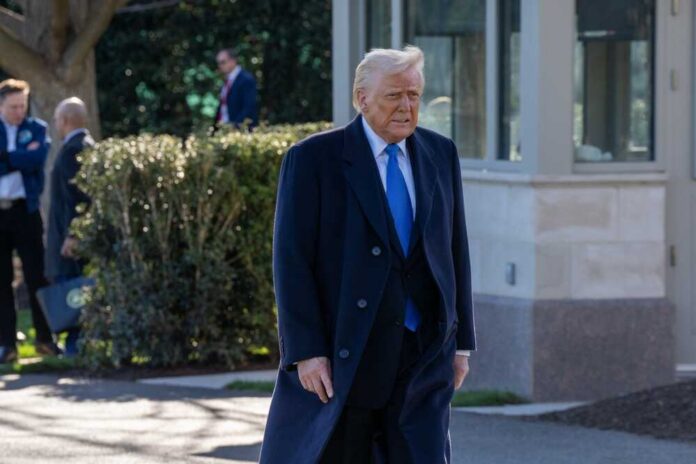
President Trump has escalated the second week of the 2026 Iran war with threats to expand military targets and demand Iran’s unconditional surrender, rejecting all negotiations short of fundamental regime change in Tehran.
Story Snapshot
- Trump warns Iran “will be hit very hard” and threatens to expand the target list if Tehran resists U.S. demands for unconditional surrender and regime change.
- U.S. and Israeli forces continue joint strikes across Iran and Lebanon while Hezbollah clashes with Israeli troops on the Lebanon-Syria border.
- The administration projects the campaign could last four to six weeks, but internal Pentagon estimates suggest at least three months of war costing roughly $1 billion daily.
- Russia is reportedly providing intelligence support to Iran, raising concerns about great-power entanglement and wider regional escalation.
Trump Demands Unconditional Surrender and Regime Change
President Trump publicly declared there will be no negotiations with Iran except unconditional surrender, linking the end of hostilities to fundamental changes in Iran’s government and the destruction of its military and nuclear infrastructure. In early March statements and interviews, Trump indicated he expects to influence who Iran’s next leader will be, making clear that regime change is a core objective of the ongoing military campaign. White House advisers conveyed that operations aim to ensure Iran never obtains nuclear weapons, framing the conflict as necessary to eliminate an existential threat to the United States and its allies in the region.
Military Operations Enter Second Week With Expanded Threats
U.S. and Israeli forces have continued intensive strikes on Iranian territory and Lebanon as the war entered its second week in early March. Israeli military officials claim their operations have degraded approximately sixty percent of Iran’s missile launch capabilities in the opening phases of the conflict. Hezbollah fighters are engaging Israeli forces along the Lebanon-Syria border while Israel proceeds with a ground invasion of Lebanon authorized on March 3rd. Trump’s public warnings that Iran will be “hit very hard” signal a willingness to widen the target set beyond current operations, raising fears of further escalation across the region.
Escalation Path From Maximum Pressure to Open War
The 2026 conflict builds on Trump’s restoration of his first-term maximum pressure strategy upon returning to office, including withdrawal from the nuclear deal and designation of Iran’s Revolutionary Guard as a terrorist organization. Trump deployed carrier strike groups to the Middle East starting in late January and accused Iran in his February State of the Union address of reviving nuclear weapons efforts and developing advanced missiles. On February 28th at two-thirty a.m., Trump released a video announcing strikes and explicitly calling on Iranians and Revolutionary Guard members to overthrow the regime or face “certain death,” marking a transition from economic pressure to direct military action.
Regional and Economic Risks Mount as Conflict Continues
The ongoing war threatens significant humanitarian consequences for civilians in Iran and Lebanon, with intensive air and missile strikes risking large-scale casualties and infrastructure destruction. Economic impacts include potential disruptions to Persian Gulf oil production and transport, which could raise global energy prices and destabilize financial markets worldwide. Reports that Russia is providing intelligence support to Iran heighten concerns about accidental or intentional confrontations among major powers. Internal Pentagon planning documents suggest the conflict could extend at least three months at a cost of approximately one billion dollars per day, far exceeding initial White House projections of a four-to-six-week campaign.
Iran announced an Interim Leadership Council on March first after suffering leadership losses in early strikes, while continuing to fire missiles and deploy proxy forces across the region. Saudi Crown Prince Salman has vowed to use military force against further Iranian incursions, and Gulf states are hardening defenses while quietly supporting U.S. and Israeli objectives. The explicit regime-change goals and expanded threat of escalation represent a departure from limited deterrence strategies, as Trump frames victory in terms of Iran’s complete capitulation and transformation of its political system rather than negotiated settlements or proportional responses to specific provocations.