

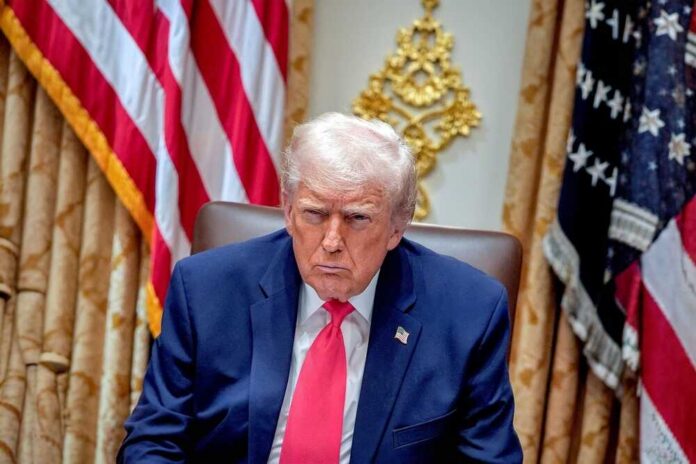
President Trump issued a stark 48-hour ultimatum to Iran demanding immediate reopening of the Strait of Hormuz or face devastating military strikes on Iranian power plants, marking a critical escalation in the battle for control over the world’s most vital energy chokepoint.
Story Snapshot
- Trump threatened to “obliterate” Iranian power plants starting with the largest facilities if Tehran fails to reopen the Strait of Hormuz within 48 hours
- Iran responded with counter-threats to target all US and Israeli energy, IT, and desalination infrastructure across the region
- The strait disruption has caused sharp oil price increases, prompting Treasury to release 140 million barrels to stabilize markets ahead of November midterms
- US-Israeli military operations against Iran have killed over 1,300 people since February 28, targeting nuclear and missile facilities
Trump’s Decisive Ultimatum
President Trump delivered a direct warning to Iran via Truth Social on March 21, 2026, demanding full reopening of the Strait of Hormuz within 48 hours without threats or interference. The president made clear that failure to comply would result in immediate military strikes targeting Iranian power plants, beginning with the largest facilities first. This public ultimatum bypassed traditional diplomatic channels, signaling Trump’s determination to end Iran’s effective blockade of the critical shipping lane through which 20 percent of global oil and gas flows.
The ultimatum comes amid ongoing US-Israeli military operations that began February 28, aimed at dismantling Iran’s ballistic missile and nuclear capabilities. Admiral Brad Cooper confirmed US warplanes have dropped 5,000-pound bombs on underground facilities storing anti-ship cruise missiles and mobile launchers. Trump stated the US was “very close to meeting our objectives” and considering winding down operations, yet the strait disruption has created economic pressure that threatens Republican prospects in upcoming midterm elections.
Iran’s Defiant Response
Iran’s Khatam Al-Anbiya military command immediately rejected Trump’s ultimatum with a formal counter-threat. The command warned that all energy, information technology, and desalination infrastructure belonging to the US and Israel throughout the region would be targeted if Iranian infrastructure faced attack. Foreign Minister Abbas Araghchi reinforced this position, declaring Iran would show “zero restraint” if its power plants were struck. This represents a dangerous escalation that could trigger widespread regional conflict affecting critical infrastructure across allied Gulf states.
Iran’s UN Ambassador Amir Saeid Iravani claimed Iran did not plan to close the strait while asserting the country’s right to ensure its security. This contradicts the documented “effective disruption” of marine traffic that has blocked global shipping lanes since early March. Pentagon intelligence assessments estimate Iran could maintain the strait closure for one to six months, indicating Tehran possesses both capability and resolve to resist American demands regardless of military threats.
Economic and Strategic Implications
Rising oil prices from the strait disruption have created immediate economic consequences for American families and businesses. Treasury Secretary Scott Bessent implemented an emergency oil waiver releasing 140 million barrels to global markets, attempting to relieve price pressures before November elections. Over 20 nations issued a joint statement supporting efforts to reopen the strait, recognizing the global economic threat. The energy sector faces sustained volatility, while shipping and transportation costs continue climbing as routes remain disrupted and insurance rates spike.
The broader conflict has already claimed over 1,300 lives, including Iran’s former Supreme Leader Ali Khamenei, according to reports. Iran-backed groups conduct near-daily attacks on US interests in Iraq and across the region. Both Trump and Iranian leadership have rejected ceasefire proposals, though Trump administration envoys attended negotiations in Cairo. Trump stated bluntly: “I don’t want to do a ceasefire. You don’t do a ceasefire when you’re literally obliterating the other side.” This approach prioritizes military victory over diplomatic settlement, raising concerns about prolonged regional instability and continued threats to American energy security and economic interests.
Sources:
Trump hands Iran 48-hour ultimatum to open Strait of Hormuz – The New Arab
If Iran doesn’t open Strait of Hormuz within 48 hrs, Trump issues ultimatum to Iran – Times of India
Trump’s Iran ultimatum – Jerusalem Post