
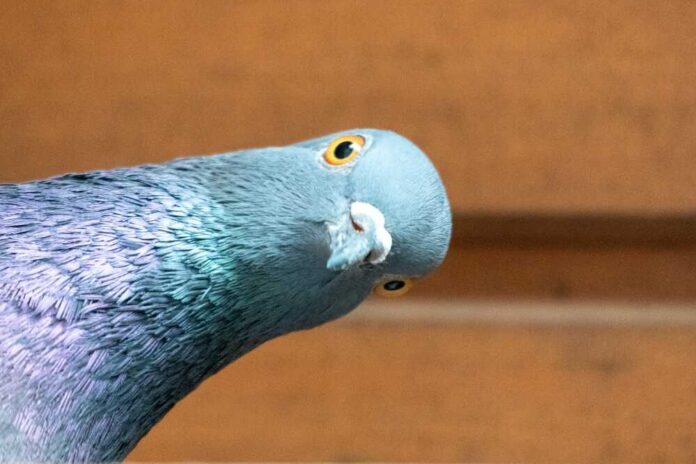
Russia’s latest “innovation” blurs the line between science fiction and battlefield surveillance: pigeons that a Kremlin-linked firm claims it can steer with brain implants.
Story Snapshot
- A Moscow neurotechnology firm, Neiry, says it has implanted neural chips and electrodes into pigeons to remotely influence their flight paths.
- Reports tie the project to Russia’s state-backed tech ecosystem, including links to Vladimir Putin’s daughter through affiliated institutes and funding networks.
- Proponents pitch search-and-rescue and monitoring uses, but the same platform could be adapted for reconnaissance with cameras or other payloads.
- Independent verification appears limited, and experts have raised practicality and ethics concerns while the media cycle amplifies dramatic claims.
What Neiry Claims It Built: “Bio-Drones” Disguised as Ordinary Birds
Neiry, a Moscow-based neurotechnology company, claims it has created pigeon “bio-drones” by implanting neural chips and attaching hardware such as electrodes, GPS tracking, and backpack-style power systems. Reports describe operators sending signals intended to influence a bird’s direction, with publicized demonstrations suggesting real-time steering. Neiry has framed the effort as a platform that can scale beyond pigeons, while emphasizing that the birds require no training.
Media coverage has highlighted a project name, PJN-1, and a timeline beginning with field tests reported in late 2025, followed by expanded discussion of trials and production ambitions into early 2026. Some accounts describe solar-powered backpack components designed to extend flight time and support additional equipment. Even if the technology functions as advertised, the core selling point is simple: a living bird can blend into environments where conventional drones are easier to spot and track.
Why It Matters: Stealth Recon in a World Already Drowning in Drones
Security concerns flow from the same characteristic that makes the story sound absurd: pigeons do not look like weapons. Conventional drones can be detected by radar, audio, and visual cues; a bird, especially in urban areas, is normal background noise. That creates an obvious military temptation—surveillance close to sensitive sites without announcing “drone.” Reports have also raised the prospect of cameras or heavier payloads, though the feasibility and limits of weight, endurance, and control remain unclear.
For Americans watching multiple conflicts and rising global instability in 2026, the takeaway is less about pigeons and more about asymmetric warfare. Countries looking to evade Western advantages often pursue cheap, deniable tools that complicate defense planning. Even a modest capability—short-range observation over a border, port, or staging area—can force expensive countermeasures. That is the familiar story of modern warfare: low-cost platforms driving high-cost responses, and taxpayers ultimately footing the bill.
Follow the Money: Reported Ties to Russia’s Political and Tech Power Structure
Several reports connect Neiry to Russia’s state-backed innovation ecosystem, including partnerships and funding pathways linked to Katerina Tikhonova, identified in coverage as Putin’s daughter and associated with research and development initiatives. It also points to oligarch-linked money and recruitment of neuroscience talent for defense-adjacent purposes. None of this proves a specific military mission for pigeons, but it does place the project in a familiar Kremlin pattern: dual-use technology developed under civilian branding.
At the same time, the strongest claims—precise steering, reliable command over distance, and repeatable performance in real-world conditions—appear to rely heavily on company demonstrations and secondary reporting rather than independent scientific validation. That distinction matters. Sensational stories can overstate technical maturity, and propaganda incentives exist on all sides. A cautious read is warranted: the concept is plausible in parts, but the public has limited access to the testing data needed to judge reliability, scalability, and operational usefulness.
Ethics and Blowback: Animal Experimentation Meets State Ambition
Critics have raised ethical concerns about implanting devices in animals for control and experimentation, especially when military applications are even a possibility. Reports mention tests extending beyond pigeons to other animals, widening the debate from a one-off stunt to a broader research trajectory. If the state incentives are real—money, prestige, and wartime urgency—then ethical guardrails become less likely, not more. That is not a minor point; it’s a window into how authoritarian systems treat living creatures and human rights alike.
One related headline about Russian troops allegedly eating pigeons due to shortages has circulated separately, but it does not substantiate Neiry’s bio-drone claims. It does, however, underline the chaotic environment in which extreme projects thrive: wartime pressure, propaganda needs, and a state apparatus hungry for symbolic “breakthroughs.” For U.S. readers already skeptical of endless foreign entanglements, the practical question is defense readiness at home—without drifting into overreach that chips away at constitutional liberties.
Sources:
https://theweek.com/science/russia-pigeons-brain-control-drones
https://www.thetimes.com/world/europe/article/putin-daughter-neuroscience-pigeons-drones-qzhh7mgxn
https://www.jpost.com/international/article-885718