
New York City’s new “free stuff” politics is colliding with a $5.4 billion budget reality—and everyday drivers may be the next ATM.
Quick Take
- NYC officials are publicly floating paid or dynamically priced street parking as the city faces a reported $5.4B budget shortfall.
- First Deputy Mayor Dean Fuleihan confirmed the idea is under discussion, calling it “not a no,” but also not enough by itself to close the gap.
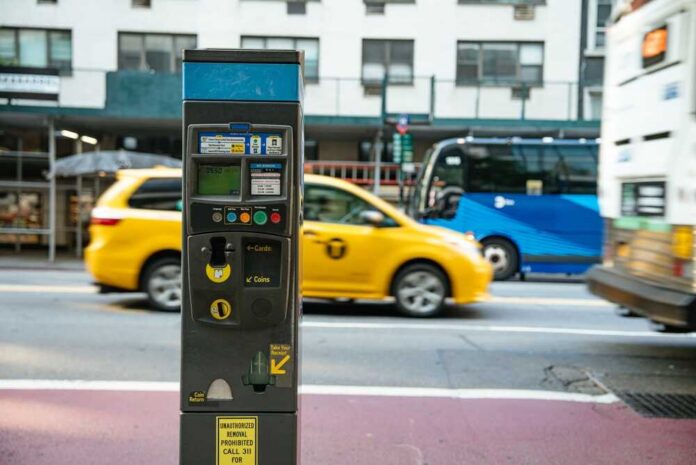
- NYC has roughly 3 million on-street spaces, yet only about 80,000 are metered today—meaning most curb parking remains free.
- Advocacy groups argue pricing could cut congestion and raise major revenue, while critics see another broken affordability promise.
City Hall Floats Paid Parking to Plug a Massive Budget Hole
New York City’s debate over “free” on-street parking moved into the open after First Deputy Mayor Dean Fuleihan discussed expanding metered parking, permits, or demand-based pricing at a CityLaw breakfast in early March. Reports describe the administration as exploring options while confronting a $5.4 billion budget gap. Fuleihan’s posture was exploratory—“not a no”—and he indicated parking revenue alone would not solve the deficit.
The political tension is obvious: Mayor Zohran Mamdani campaigned on affordability and “free and affordable” services, but the city is now searching for revenue streams it can control. Observers noted that subway fare increases followed the mayor’s swearing-in, even though that pricing is outside direct mayoral control. The larger point for working residents is simpler: when government spending expands, officials usually come back to households looking for “small” fees that add up fast.
How Big Is “Free Parking” in NYC, and Why It Matters
NYC’s curbside footprint is enormous. Coverage cites about 3 million on-street parking spaces across the city, with only around 80,000 currently metered—leaving the vast majority effectively free. That scale makes parking an attractive target for budget writers: the city can change meter rules more easily than it can raise certain taxes that require state approval. Supporters also frame priced parking as consistent with Vision Zero, bus-speed goals, and street redesign priorities.
Proponents argue that charging for curb space is less about punishment and more about managing limited public property. Demand-based pricing models, like San Francisco’s SFpark, are commonly referenced as a way to reduce “cruising” for spots, which can add to congestion and emissions. For small businesses, advocates say more turnover can mean more customers rather than all-day storage. The tradeoff is that the people who rely on cars—especially in car-dependent neighborhoods—absorb the cost first.
Revenue Promises Vary Widely, and Even Supporters Admit Limits
The revenue estimates being discussed vary because they depend on how aggressive the city gets. A Transportation Alternatives proposal has claimed metering a portion of currently free spaces could generate as much as $4 billion annually under certain assumptions, while the Center for an Urban Future has estimated about $1.3 billion from metering roughly a quarter of spaces. Fuleihan’s own comments, as reported, downplayed parking as a stand-alone fix for the full budget gap.
That gap between “could raise billions” and “won’t solve it” matters for taxpayers. If City Hall ties ongoing spending to a new parking revenue stream, the political incentive becomes permanent expansion—more meters, higher rates, longer hours, and fewer unpriced blocks. Even some advocates caution against treating parking fees primarily as a budget patch, warning that policy should focus on behavior and curb management, not creating another dependency that forces future hikes.
Affordability vs. Accountability: Who Pays, Who Decides
Public backlash is part of the story, amplified by headlines and online commentary portraying the proposal as a bait-and-switch after big promises about affordability. Factually, the administration is still in an exploratory phase with no formal plan or implementation timeline reported as of March 9, 2026. But the direction is clear: officials are “looking at” charging for curb parking while juggling large fiscal pressures and political expectations created during the campaign season.
https://t.co/CZZYZ91zrH
Sometimes you get what you deserve. Just yell "free stuff" and Democrats fall for it every time.🙄— Neil Wieczoreck (@Neilneww) March 9, 2026
For constitutional-minded voters outside New York, this episode is a familiar warning sign about governance rather than a single parking rule. When leaders sell voters on expansive benefits without durable funding, the bill often arrives as daily-life penalties—fees, permits, and enforcement that squeeze ordinary families while leaving the underlying spending debate unresolved. NYC drivers should watch the fine print: rate structures, neighborhood impacts, exemptions, and whether any revenue is locked into new programs.
Sources:
So Much for ‘Free’ Stuff: Mamdani Proposes Eliminating Free Parking in NYC
Mamdani Deputy Mayor On Charging For Street Parking: It’s “Not a No”
NYC Considers Ending Free Street Parking