
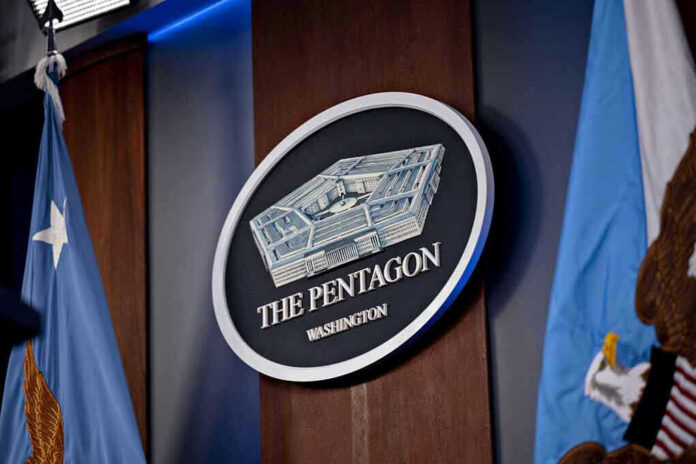
The Pentagon failed its ninth straight department-wide audit, keeping trillions in assets beyond a clean, verifiable accounting.
Story Snapshot
- Auditors issued a “disclaimer of opinion” on the Pentagon’s fiscal 2026 financial statements.
- The review spanned about $4.9 trillion in assets and $5.2 trillion in liabilities.
- Fourteen of 25 Pentagon components received passing opinions, up from 11 last year.
- Officials still target a clean, department-wide audit by 2028, but it is not yet achieved.
Ninth Consecutive Failure: What Auditors Found
The Department of Defense received a “disclaimer of opinion” for fiscal 2026, which means auditors could not get enough evidence to judge the reliability of its top-level books. The Inspector General’s result marks the ninth straight failure of the Pentagon’s agency-wide audit, even as some parts improved. Reuters reported the finding on November 16, 2026, citing the Inspector General and the department’s chief financial officer. A disclaimer is not a clean bill of health, and it is not an approval.
Auditors examined a massive balance sheet. Coverage described about $4.9 trillion in assets and roughly $5.2 trillion in liabilities under review. That size shows why this audit matters to every taxpayer. It is also why clean records are hard to produce. The Pentagon still stands apart as the only major federal agency that has not earned a clean, department-wide opinion in modern audits, according to Government Accountability Office reporting on recent years.
Progress Inside the Building, But Not at the Top Level
The Pentagon’s finance chief said 14 of 25 standalone reporting entities passed in fiscal 2026, up from 11 the year before. Officials also said clean opinions now cover more than half of total assets and over 90 percent of liabilities, according to department statements cited in reporting. This shows component gains. But the final verdict still failed at the consolidated level. Improvements inside individual units have not yet added up to a clean agency-wide result.
Leaders continue to aim for a clean opinion by 2028. Trade press accounts reported five new or improved audit opinions this year and repeated the 2028 target, which remains an announced goal, not a result. History shows this is a long slog. Full-scope, agency-wide audits began in fiscal 2018. Since then, auditors have repeatedly issued disclaimers on the department-wide statements. Some services have earned cleaner reports, but the roll-up continues to break down.
Why Conservative Readers Should Care: Accountability and Readiness
Taxpayers fund the Pentagon to defend the nation, not to lose track of records. Clean books help leaders spot waste, cut broken contracts, and speed money to troops and gear that work. The Government Accountability Office has flagged defense financial management and business systems as high-risk for decades. It has warned that weak controls and systems limit transparency and performance across major programs and purchases. Stronger accounting supports mission readiness and respects every hard-earned tax dollar.
Big defense buys demand tight oversight. Past Government Accountability Office testimony found that poorly structured incentive fees in defense acquisitions can waste billions and fail to hold contractors to results. Clear, auditable records make it easier to tie payments to progress and to shut off money when results lag. That is basic stewardship. It protects service members, deters bloat, and prioritizes real capability over paper promises.
What Comes Next: Concrete Checks Congress and Taxpayers Can Watch
Officials say the department is on a path to a clean audit by 2028, but the milestone must show up on paper, with dated steps and accountable owners. Coverage highlights the need for system fixes, better asset tracking, and stronger internal controls, especially during consolidation into department-wide statements. Congress can press for quarterly dashboards, component-by-component reconciliations, and proof that clean opinions actually cover the shares of assets and liabilities that leaders claim.
The Pentagon Has Flunked Nine Straight Audits, and Now Its Defense Deals Are Under the Microscope https://t.co/lbuHZzKA3b
— Team CRUSH ✝️ 🇺🇸 (@NorCalCrush) November 26, 2026
One key caveat matters here: a disclaimer of opinion does not prove specific dollars went missing; it shows auditors lacked sufficient evidence to conclude the statements are reliable. That said, nine straight failures are unacceptable. Patriots expect the strongest military on earth and honest books to match. Real reform means verified numbers, faster fixes to broken systems, and contracts that reward performance, not process. That is how we defend America and protect the Constitution’s promise of accountable government.
Sources:
redstate.com, reuters.com, thehill.com, bridgenewsaz.co, breakingdefense.com, gao.gov