

With President Trump now resolutely backing Israel and demanding Hamas surrender or face force, the new U.S. administration signals a sharp end to the era of appeasement and weak foreign policy.
Story Snapshot
- Trump and Netanyahu present a tough ultimatum: Hamas must accept a sweeping peace plan or face decisive Israeli military action, fully supported by the U.S.
- The 20-point U.S.-backed plan calls for a Gaza ceasefire, release of hostages, Hamas disarmament, and international oversight, but offers no pathway for Hamas to retain power.
- Arab and European governments have voiced support, increasing diplomatic pressure as Hamas leaders weigh their response.
- This historic move stands in stark contrast to prior U.S. policies, putting American strength and constitutional priorities back at the center of global affairs.
Trump’s Peace Ultimatum: A New Era of U.S. Foreign Policy
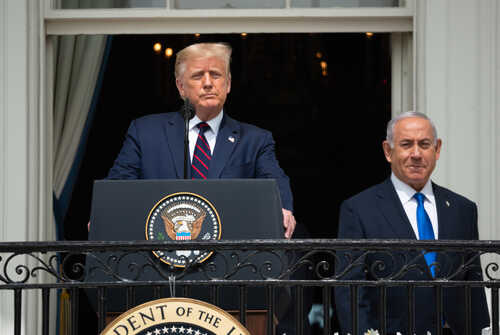
On September 29, 2025, President Donald Trump and Israeli Prime Minister Benjamin Netanyahu stood together at the White House, announcing a comprehensive 20-point Gaza peace plan. Unlike the ambiguous, drawn-out negotiations of past administrations, this plan is blunt: Hamas must agree to sweeping conditions—including a ceasefire, immediate release of all hostages, total disarmament, and withdrawal from governance in Gaza. If Hamas refuses, Netanyahu declared Israel would “finish the job,” with Trump pledging full U.S. support. The plan, a clear departure from years of weak-kneed diplomacy, has sent shockwaves through both the Middle East and the global community.
For years, conservatives watched as American leadership faltered, bowing to international pressure and undermining core values like national sovereignty and the right to self-defense. Trump’s administration, however, has reversed course, restoring clarity and resolve in foreign policy. The peace plan does not require the displacement of Palestinians from Gaza—a critical distinction from previous arrangements—but it leaves no room for terrorist organizations to operate under the guise of political legitimacy. Israeli security, the return of hostages, and regional stability are placed at the forefront, with the U.S. offering both diplomatic and, if necessary, military backing to ensure these goals are achieved.
Trump and Netanyahu Agree: Hamas Must Accept Peace Plan or Israel Will ‘Finish the Job’ https://t.co/pHQdhAEnnE I'd like to see Israel finish the job!
— PoorGrandma (@1PoorGrandma) September 30, 2025
International Support and Pressure on Hamas
Following the announcement, Arab and European governments issued statements of support for the plan. Mediators from Qatar and Egypt are presenting the terms to Hamas, whose leaders remain under intense pressure to respond. The Palestinian Authority has signaled an openness to reforms and outside oversight, breaking with past reluctance to embrace U.S.-led frameworks. Notably, the plan introduces international oversight and amnesty for non-combatant Hamas members, aiming to reduce the risk of further humanitarian disaster while denying Hamas future control over Gaza. While previous efforts failed due to distrust and lack of enforcement, Trump’s direct approach is shifting the diplomatic landscape.
Hamas, weakened after nearly two years of conflict, faces a stark choice: accept the plan and end hostilities, or risk overwhelming Israeli force. The plan’s terms are designed to address the core demands of Israel and its allies, with humanitarian aid and reconstruction contingent on Hamas’s compliance. This approach, supported by a coalition of Arab states, signals a rare moment of unity against extremism and for regional stability. Diplomats warn, however, that a rejection could trigger the fiercest military campaign yet, with devastating consequences for Gaza’s civilian population and regional security.
Implications for U.S. Strength and Conservative Values
This moment marks a sharp rebuke of the globalist, status quo-driven policies that defined the previous administration. By placing U.S. interests and constitutional principles—like the right to secure borders and support for democratic allies—at the center of foreign policy, Trump’s plan restores America’s voice on the world stage. The administration’s resolve stands as a warning to adversaries and a reassurance to allies: U.S. support for Israel’s right to self-defense is not up for debate. For conservatives who endured years of progressive appeasement and international dithering, this is a striking reminder that peace is only possible when America leads with strength and clarity.
While the world waits for Hamas’s response, the consequences of this ultimatum are clear. If Hamas chooses continued violence, it will face an Israeli military campaign with unprecedented U.S. backing. If it accepts, there is a pathway to relief, reconstruction, and a new era for Gaza—one free from the grip of terror. Either way, the days of mixed signals and half-measures from Washington are over. For American conservatives, this is the kind of leadership—rooted in strength, constitutional values, and common sense—that has been missing for far too long.
Watch the report:Donald Trump and Benjamin Netanyahu agree Gaza peace plan | BBC News
Sources:
Trump pushes Netanyahu on Gaza peace plan at White House
Netanyahu and Trump are set to meet as pressure mounts to end war in Gaza
Trump and Netanyahu agree to new US peace plan to end war in Gaza