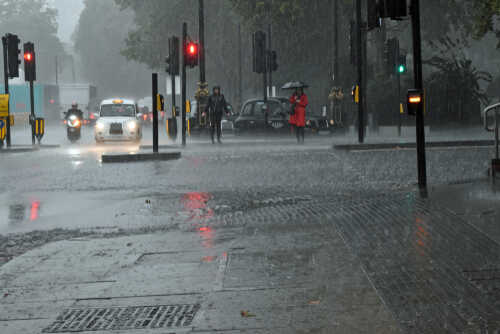
As Britain braces for Storm Bram’s “danger to life” winds and flooding, many are asking how years of green posturing and infrastructure neglect left ordinary families so exposed. Storm Bram is forecast to slam the UK and Ireland with 90 mph gusts, severe flooding, and major transport disruption. Officials have issued “danger to life” rain and wind warnings, signalling risks well beyond a routine winter storm, with western and southwestern regions facing the greatest threat. Years of political focus on climate talking points over hard infrastructure are again leaving working families to pay the price.
Story Snapshot
- Storm Bram is forecast to slam the UK and Ireland with 90 mph gusts, severe flooding, and major transport disruption.
- Officials have issued “danger to life” rain and wind warnings, signalling risks well beyond a routine winter storm.
- Western and southwestern regions face the greatest threat to homes, businesses, and critical infrastructure.
- Years of political focus on climate talking points over hard infrastructure are again leaving working families to pay the price.
Storm Bram: A Named Atlantic Threat, Not Just “Bad Weather”
Storm Bram has been formally named by UK forecasters as a deep Atlantic low-pressure system driving in from the southwest, expected to hammer the British Isles with extremely heavy rain, severe gales, and gusts reaching around 90 miles per hour in exposed locations. The Met Office and Met Éireann have responded by issuing yellow and amber alerts for both rain and wind, explicitly warning that this is a “danger to life” event, not another forgettable bout of drizzle and breezy conditions.
Forecast guidance highlights the next twenty‑four to thirty‑six hours as the critical impact window, as Bram’s rainbands sweep from southern England and Wales into Northern Ireland, northern England, the Midlands, and southern and central Scotland. As the system deepens, winds strengthen markedly along western and southwestern coasts, where Atlantic exposure and long sea fetch magnify wave heights and coastal impacts. The combination of driving rain and storm‑force gusts creates overlapping hazards that strain already tired infrastructure.
Storm Bram named and ‘danger to life’ rain warning issued as 90mph winds forecast https://t.co/bIf2co3DU0
— Global News (@News247Global) December 8, 2025
Warnings, Geography, and Who Will Be Hit Hardest
Amber rain warnings, the second‑highest level on the British scale, have been hoisted for southeast Wales and parts of southwest England, signalling a strong likelihood of flooding to homes, businesses, and key roads. Wider yellow alerts for rain and wind cover much of western England and Wales, with guidance indicating subsequent expansion into parts of Scotland as Bram’s frontal systems march north. In practice, this means not only battered coasts but inland valleys and towns facing swollen rivers and overwhelmed drainage.
Western and southwestern regions such as Cornwall, Devon, south Wales, and the Irish Sea coasts are particularly vulnerable, with hilly terrain squeezing extra rainfall from moisture‑laden air and funnelling runoff into already stressed rivers. Urban areas built up over decades of planning driven by density targets rather than resilience now contend with acres of hard surfaces and aging drains. For residents, that translates into surface water racing down streets, sewage overflows, and the grim prospect of trying to protect family homes with sandbags and plastic sheeting yet again.
Transport, Power, and Everyday Life Thrown Off Course
As Bram bites, transport networks are again on the front line. Roads in low‑lying and coastal areas are susceptible to standing water, landslips, and debris, forcing closures that strand commuters and cut off small communities. Rail operators face flooded tracks, fallen trees, and damaged overhead lines, with passengers told to expect cancellations and severe delays. Ferry crossings and flights from exposed airports are also threatened by crosswinds and rough seas, reminding travellers how quickly nature can expose the fragility of finely tuned schedules.
Electricity and communications infrastructure are also at risk as high winds topple trees into power lines and batter exposed substations. Power cuts, already a familiar frustration for many rural and coastal families, are again on the cards. For small businesses still recovering from past shocks and inflationary pressures, every hour without power or customers is another blow to already thin margins. The short‑term advice from authorities is predictable—avoid non‑essential travel, stay away from floodwater—but the long‑term cost of repeated disruption lands squarely on working households, not the political class that under‑invested in resilience.
Patterns of Policy Failure and the Climate Debate
Storm Bram also lands in a wider debate about how Britain has handled years of increasingly damaging storms. Forecasters stress that individual weather events cannot be blamed solely on climate change, yet they also acknowledge that warmer air carries more moisture, boosting the potential for intense rainfall and flash flooding. For many observers, the real scandal is not the weather itself but how successive governments have talked endlessly about climate while failing to harden basic infrastructure against precisely these well‑known risks.
Repeated storms like Babet and Ciarán showed how saturated soils, aging drainage, and under‑maintained defences transform heavy rain into life‑threatening floods. Yet vulnerable communities still wait for upgraded river barriers, expanded drainage, and common‑sense planning that keeps new building away from high‑risk flood plains. As Bram’s winds rise and rain intensifies, families across the UK again find themselves relying on personal responsibility, local solidarity, and sandbags—while watching a familiar pattern of political promises, disruption, and clean‑up unfold.
Watch the report: Storm Bram to batter UK as Met Office issues 8 severe weather warnings
Sources:
Storm Bram named and ‘danger to life’ rain warning issued as 90mph winds forecast (The Independent)
Week ahead forecast: Multiple warnings in place as Storm Bram arrives – Met Office
Storm Bram alerts as 90mph gusts and heavy rain to batter Scotland