
Iran’s Islamic Republic is currently facing a significant succession crisis, marked by the absence of a unified government-in-waiting. Exiled Crown Prince Reza Pahlavi is positioning himself as a catalyst for a democratic transition, advocating for a referendum to determine the new form of government. However, his efforts are complicated by a fragmented opposition, which includes secular republicans, internal reformists, and ethnic movements. Ultimately, the outcome of any power transition will likely be determined by the powerful security apparatus, including the Islamic Revolutionary Guard Corps (IRGC), which controls the military and economic networks of the state.
Story Overview
- Reza Pahlavi leads opposition visibility but denies seeking office, advocating for referendum on government form.
- Fragmented opposition includes secular republicans, internal reformists, and ethnic movements with no unified authority.
- Security apparatus (IRGC, military) will likely determine any power transition outcome.
- Multiple scenarios possible: internal regime succession, negotiated transition, or violent fragmentation.
Pahlavi’s Democratic Transition Framework
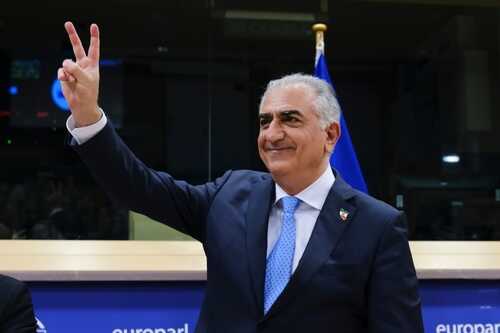
Reza Pahlavi, eldest son of the last Shah, has evolved from declaring himself “Reza Shah II” in 1980 to positioning himself as a facilitator of democratic transition. The 65-year-old exile advocates separation of religion and state, free elections, and Western alignment while insisting he will not run for political office if the regime falls.
His Iran National Council, co-founded in 2013, serves as an opposition framework promoting liberal democracy and constitutional monarchy decided by referendum. Pahlavi claims a 100-day transition plan exists and has urged Iranian security forces to defect, declaring in June 2025 that the Islamic Republic stands “on the verge of collapse.”
Competing Opposition Factions and Internal Dynamics
The fragmented opposition landscape includes secular republican coalitions advocating parliamentary systems, ethnic movements seeking federalism or autonomy, and internal reformist figures with residual credibility. Many non-monarchist opposition figures view the Pahlavi brand with suspicion due to historic grievances about the Shah’s autocratic rule and political repression.
Internal reformists like former President Mohammad Khatami and Green Movement leaders face severe restrictions but maintain some legitimacy among older generations. Pragmatic conservative technocrats understand state apparatus operations and could serve as interlocutors in negotiated transitions, though younger activists increasingly reject reform as exhausted.
Security Apparatus as Kingmaker Institution
The Islamic Revolutionary Guard Corps controls parallel military, economic, and ideological networks that will decisively shape any succession scenario. The regular army (Artesh) maintains more nationalist orientations, making it a potential target for opposition appeals, while Basij militias and intelligence services serve as primary repression instruments.
These institutions control coercive force, large economic assets, and extensive patronage networks, positioning them to determine whether Iran experiences internal elite succession, negotiated opposition inclusion, or violent territorial fragmentation. Pahlavi’s strategy explicitly appeals to military defections, recognizing that sustainable transitions require security apparatus cooperation rather than confrontation.
Watch the report: ‘Topple The Government…’ | Reza Pahlavi Calls for Nationwide Uprising as Protests Shake Iran | 4K
Sources:
- Khamenei’s greatest challenger? Iran at its lowest point in 50 years — enter Reza Pahlavi and the 1979 connection – The Times of India
- Prince Reza Pahlavi says he is ready to ‘lead transition’ in Iran