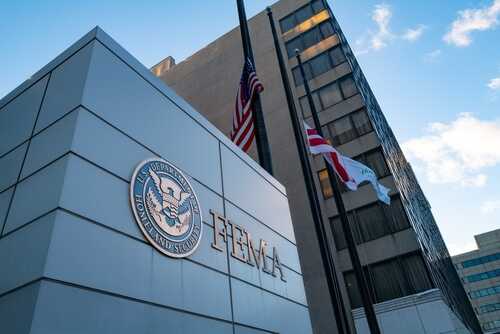
A coalition of 181 current and former FEMA employees has warned that a new Trump administration policy could compromise the agency’s ability to rapidly respond to disasters.
At a Glance
- 181 current and former FEMA staff signed a warning letter
- Policy requires Homeland Security Secretary Kristi Noem’s approval for all FEMA contracts, grants, and assignments above $100,000
- FEMA employees argue the requirement could delay urgent disaster response operations
- The administration defends the change as improving oversight and accountability
FEMA Staff Raise Concerns
In a letter released Monday, 181 current and former employees of the Federal Emergency Management Agency expressed alarm over a new Trump administration directive. The policy requires Homeland Security Secretary Kristi Noem to personally review and approve every FEMA contract, grant, or mission assignment exceeding $100,000. Staff argue this centralization of authority risks slowing critical emergency relief work, particularly during fast-moving crises such as hurricanes, wildfires, or floods.
The signatories contend the policy undermines FEMA’s capacity to execute its statutory mission of rapid disaster response. They argue that FEMA’s operational model depends on delegating contracting and resource allocation to career officials who can act quickly in the field, rather than waiting for decisions routed through the uppermost levels of the Department of Homeland Security.
Watch now: FEMA staff warn Trump officials’ actions risk a Katrina-level disaster · Washington Post
Administration’s Oversight Rationale
The Trump administration has presented the new rule as a measure to tighten financial accountability and ensure closer scrutiny of FEMA’s spending. A DHS spokesperson stated that Noem’s role in reviewing contracts will bring “responsibility and transparency” to an agency that manages billions of dollars in annual disaster relief funding.
Supporters of the policy argue that FEMA’s contracting processes have historically faced criticism for waste and inefficiency, particularly following high-profile disasters such as Hurricane Katrina in 2005 and Hurricane Maria in 2017. Centralizing approval authority, they suggest, could reduce the risk of mismanagement.
Historical Context and Potential Impacts
FEMA’s history shows that speed and agility in disaster response can determine the effectiveness of recovery efforts. During Hurricane Katrina, delays in procurement and supply distribution became a central point of criticism, leading to widespread reforms aimed at improving FEMA’s responsiveness. Many of the employees now warning about the Trump-era policy were involved in those post-Katrina reforms and argue that new bottlenecks could undo years of progress.
The threshold of $100,000 for DHS sign-off is particularly significant because FEMA regularly executes contracts in excess of that amount during emergencies. From temporary shelter services to debris removal, many critical operations depend on contracts above the designated threshold. Employees caution that requiring cabinet-level review of each transaction could create systemic delays in situations where minutes and hours often matter.
The broader concern expressed in the letter is that disaster victims could ultimately bear the consequences. If FEMA is forced to slow its contracting pace during a hurricane response, for instance, survivors might face longer waits for housing, supplies, and medical assistance. Critics within FEMA argue that the policy not only hampers efficiency but also undermines morale among the agency’s workforce, which is accustomed to exercising a degree of operational autonomy.
Sources
Reuters
Associated Press
Politico