
Kola Bay is emerging as one of Russia’s most strategic strongholds—home to its nuclear-powered icebreaker fleet, a launchpad for military operations, and a critical node for mineral and energy exports.
At a Glance
- Kola Bay houses Russia’s nuclear icebreaker fleet, enabling Arctic access year-round
- The bay supports resource exports, including nickel, copper, and fossil fuels
- Adjacent naval bases at Severomorsk and Polyarny enhance military capability
- Russia is building next-gen icebreakers to expand its Arctic dominance
- Melting ice is accelerating the militarization and economic use of the Northern Sea Route
Icebreakers, Submarines, and Global Reach
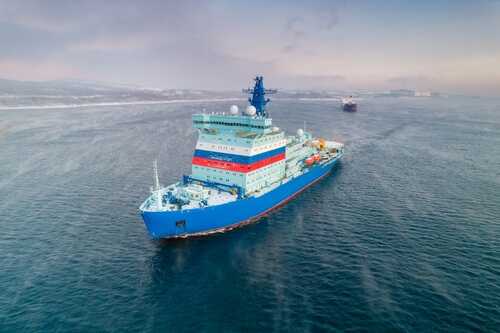
Kola Bay, located near Murmansk, is a critical operational center for Russia’s nuclear icebreaker fleet, operated by Atomflot. These vessels enable uninterrupted year-round navigation of Arctic shipping lanes—essential for both trade and military logistics. Russia is currently expanding this capability with its Project 22220 and Project 10510 icebreaker programs.
Watch a report: This Bay Is Key to Russia’s Militarization of the Arctic
Nearby bases at Severomorsk and Polyarny house submarines and advanced weapons systems, including capabilities linked to Poseidon nuclear drones. This tight integration of civilian and military infrastructure makes Kola Bay both a commercial artery and a strategic flashpoint.
Resource Corridor to the World
The broader Murmansk Oblast is mineral-rich—home to key deposits of nickel, copper, cobalt, and other rare metals. With ports on the bay handling massive volumes of cargo, Kola Bay also functions as a high-value logistics zone. Warming Arctic waters are making these assets more accessible, and Russia is aggressively scaling its Northern Sea Route infrastructure to capitalize.
Arctic Ice Melts, Ambition Heats Up
Russia’s Arctic posture reflects long-term planning. As the Wall Street Journal reports, Kola Bay is no longer just a military hub—it’s a staging ground for a new era of Arctic economic expansion and geopolitical tension.
If global warming continues and Arctic ice recedes, Russia’s early investment in Kola Bay infrastructure could make it the dominant force in the region—commercially, logistically, and militarily.